Vertical Garden Solutions: Repurpose Ladders for Beautiful Plant Displays
Transform an old ladder into a stunning tiered planter that saves space and showcases your favorite plants
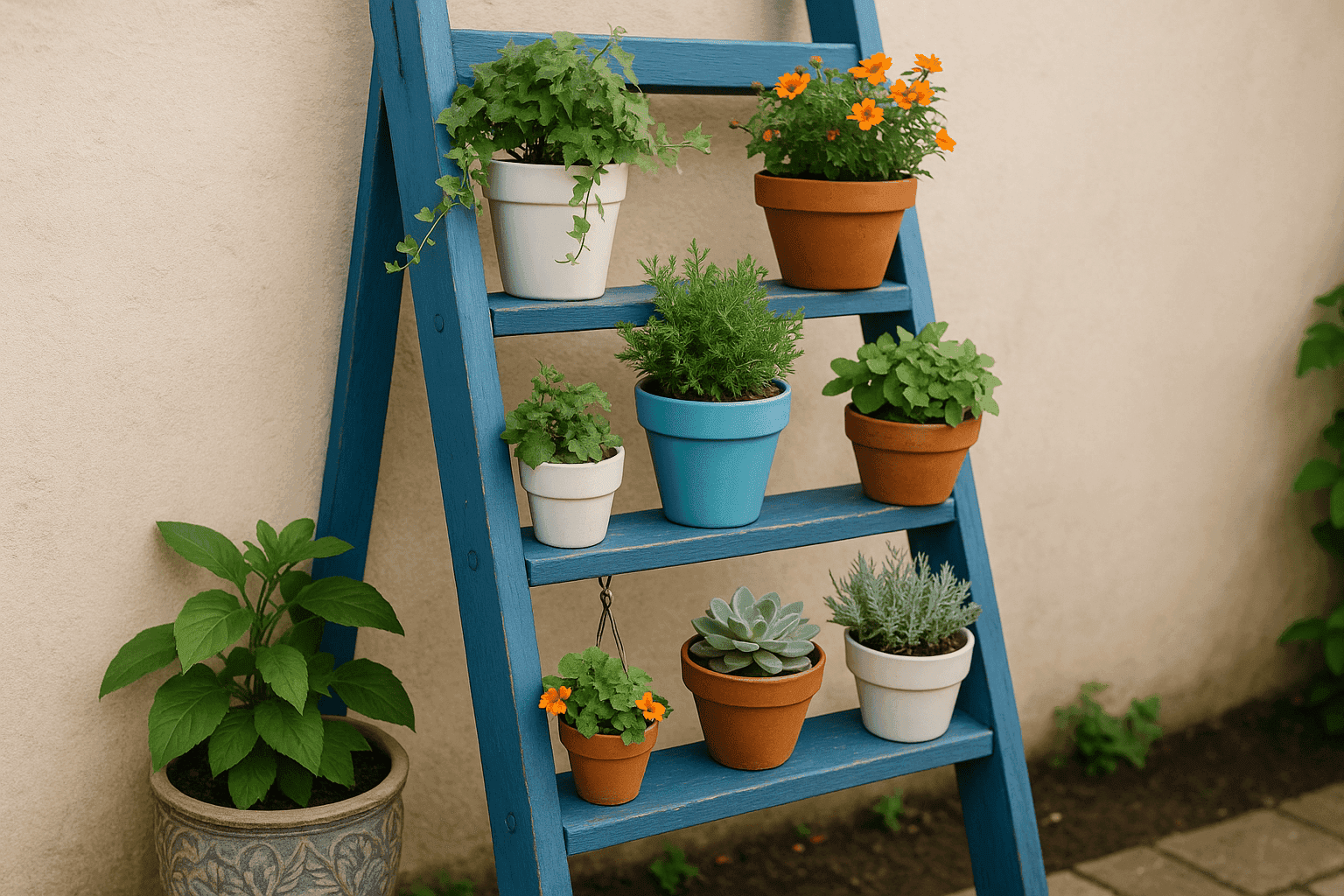
Old wooden ladders have a charming, rustic appeal that makes them perfect candidates for upcycling. By transforming a ladder into a vertical plant stand, you create a space-saving garden that adds dimension and visual interest to any area. Whether displayed against a fence, wall, or as a standalone feature, a ladder plant stand allows you to showcase multiple plants in a small footprint while adding height and structure to your garden or patio.
What You'll Need
| • Wooden ladder (A-frame or straight) |
| • Sandpaper (medium and fine grit) |
| • Wood cleaner |
| • Exterior paint or wood stain |
| • Clear outdoor sealer (if using stain) |
| • Paintbrushes |
| • Drill with bits |
| • Screws (weather-resistant) |
| • Wood planks (optional, for shelves) |
| • Small L-brackets (optional, for shelves) |
| • Plant pots in various sizes |
| • Potting soil and plants |
| • Wire or plastic coated hooks |
| • Landscape fabric (optional) |
| • Cable ties or garden twine |
| • Wall anchors (if mounting to a wall) |
How To Do It
- Assess and clean your ladder: Examine the ladder for structural integrity. Replace or reinforce any damaged parts. Clean thoroughly with wood cleaner to remove dirt, grease, and mildew. Let dry completely.
- Sand the surface: Sand the entire ladder to remove splinters and rough patches. Start with medium-grit sandpaper, then finish with fine-grit for a smooth surface. Wipe away all dust with a damp cloth.
- Apply finish: Choose either paint or stain:
- For paint: Apply primer if changing colors dramatically, then add 2 coats of exterior paint in your chosen color, allowing proper drying time between coats.
- For stain: Apply wood stain according to product instructions, wipe off excess, and let dry. Follow with 2 coats of clear outdoor sealer for weather protection.
- Determine your display style: Decide how you'll use the ladder:
- Leaning style: Simply lean against a wall or fence at a slight angle. Secure top to the structure with brackets or wire for safety.
- A-frame style: Use a step ladder in its open position, placing plants on both sides.
- Flat against wall: Mount a straight ladder horizontally or vertically on a wall using sturdy brackets and wall anchors.
- Add shelving (optional): For more surface area to hold plants, attach wood planks across ladder steps using L-brackets or screws. Ensure shelves are level and secure.
- Install hooks (optional): Add hooks to the underside of steps or rungs for hanging plants or garden tools. Ensure they're securely attached and rated for the weight they'll hold.
- Position your ladder: Place in your chosen location. For outdoor displays, ensure the ladder is stable and won't tip over in wind. Secure to a wall or fence if necessary, or sink legs slightly into the ground for stability.
- Prepare your plants: Select plants appropriate for your location's light conditions. Use a variety of plant sizes, colors, and textures for visual interest. Consider trailing plants for upper levels and larger specimens for lower rungs.
- Arrange your display:
- Position larger, heavier pots on lower rungs for stability.
- Create a balanced display with varying heights and plant types.
- For pots sitting directly on rungs, use landscape fabric underneath to prevent soil and water from dripping through.
- Secure pots to the ladder with inconspicuous cable ties or garden twine if needed for stability.
- Final touches: Add decorative elements like small garden ornaments, battery-operated string lights, or decorative rocks to enhance your display. Consider adding a small watering can or plant mister nearby for convenient maintenance.
For a cohesive, designer-worthy ladder garden, coordinate your plant containers rather than using a mismatched collection. Consider a monochromatic scheme with pots in varying shades of the same color, or choose containers made from the same material (terracotta, ceramic, or galvanized metal) in complementary colors. Position your ladder where it receives appropriate light for your plants but also serves as a focal point—perhaps near an entrance or in a corner that needs visual interest. For indoor ladder displays, place a waterproof tray on each step to protect wooden rungs from moisture damage. Finally, think seasonally: use your ladder as a flexible display that can showcase spring bulbs, summer annuals, autumn chrysanthemums, or even winter evergreens and twinkling lights as the seasons change.