Vintage Revival: Transform a Suitcase Into a Rolling Bar Cart
Turn a thrift store find into a charming portable bar that's perfect for entertaining all year
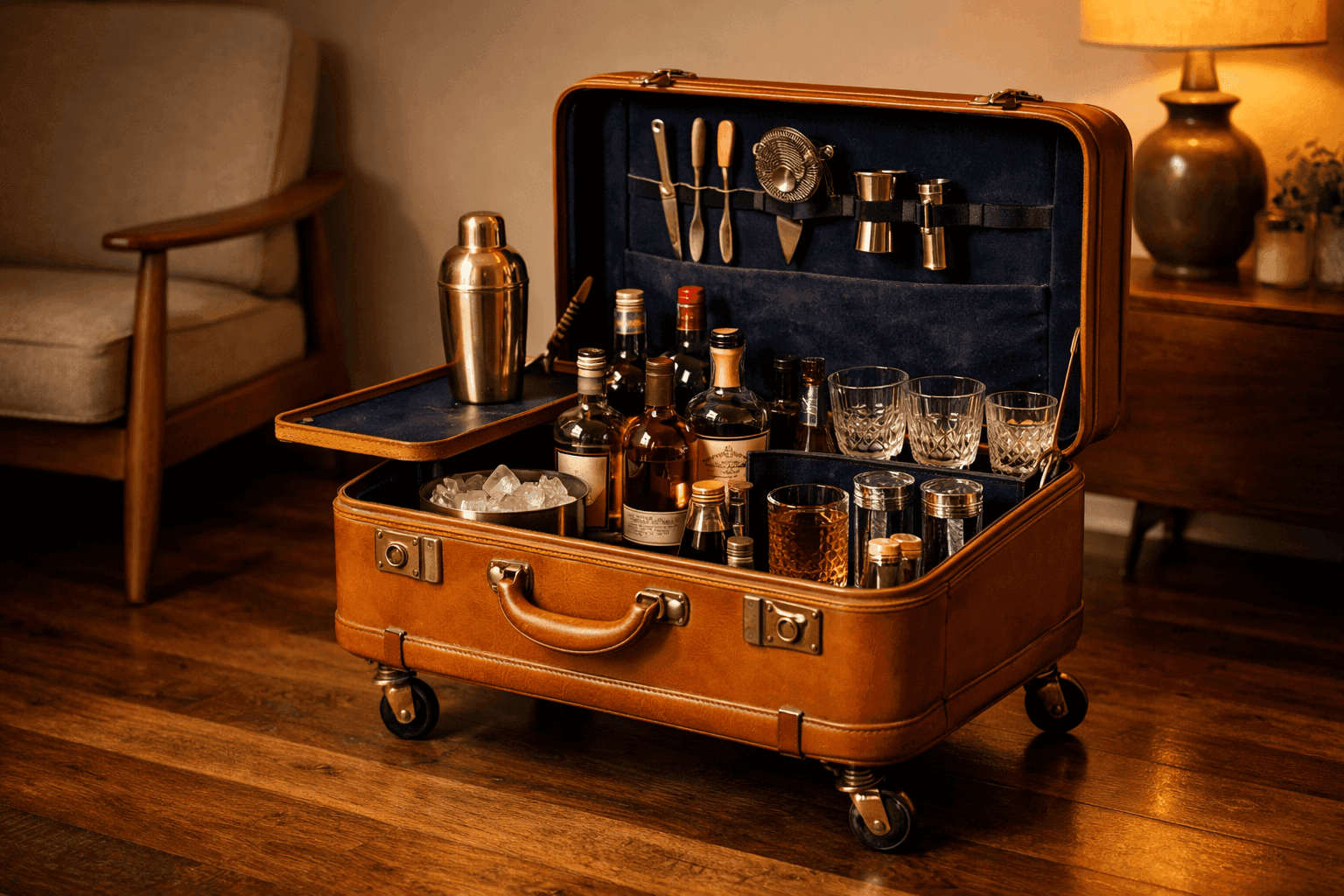
Bar carts have become the ultimate entertaining essential, but spending $200-500 on a new one feels ridiculous when you're essentially buying a fancy shelf on wheels. That vintage hard-shell suitcase collecting dust in your attic or sitting unloved at the thrift store has better bones than most store-bought bar carts—it's already compartmentalized for storage, built to withstand travel abuse so it's plenty sturdy, and it has way more character than anything you'll find at a furniture store. Converting a suitcase into a mobile bar cart takes about three hours and costs $15-25 for hardware, but you get a genuinely unique conversation piece that stores completely flat when not in use and wheels wherever the party moves. This project combines practical functionality with quirky vintage charm, creating something that's actually useful for entertaining rather than just decorative furniture that takes up permanent real estate in your living room.
What You'll Need
- Vintage Suitcase: Hard-shell style from thrift store or attic, 20-28 inches works best ($5-15)
- Casters: Four furniture wheels with mounting plates, locking wheels recommended ($12-18)
- Hardware: Screws for attaching casters, folding table leg bracket for lid support ($5-8)
- Cleaning Supplies: All-purpose cleaner, leather conditioner or spray paint for exterior
- Interior Finishing: Fabric, vintage wallpaper, or contact paper for lining ($5-10)
- Organization: Small bins, dividers, or repurposed containers for interior compartments
- Tools: Drill with bits, screwdriver, measuring tape, scissors or craft knife
Step-by-Step Method
- Select a suitcase with sturdy construction and a lid that stays open at 90 degrees or more—avoid flimsy modern luggage in favor of vintage hard-shell cases built before planned obsolescence
- Clean the interior and exterior thoroughly, using leather conditioner for leather cases or gentle soap for vinyl—remove musty smells by airing it outside for a day before starting
- Attach casters to the bottom corners by drilling pilot holes and securing mounting plates with screws, ensuring wheels are positioned so the case rolls smoothly when upright
- Test stability by loading weight inside and rolling—if it tips easily, add a folding brace between the lid and base to prevent the open top from pulling backward
- Install a folding table leg bracket to the lid's interior so it can support serving items when propped open—this transforms the lid from decorative to functional
- Line the interior with fabric or wallpaper using spray adhesive or double-sided tape, covering stained or dated original lining with something fresh and coordinated
- Organize the interior with small containers for different bar essentials—one section for bottles, another for glassware wrapped in napkins, tools in side pockets
- Customize the exterior if desired by spray painting in a bold color, adding vintage travel stickers, or simply polishing the existing finish to let the retro character shine
Interior designers who specialize in vintage repurposing recommend choosing suitcases with interesting interiors rather than focusing only on exterior appearance—cases with built-in compartments, elastic straps, or multiple pockets already have organizational systems you can leverage for bar supplies. Also, consider adding LED battery-operated puck lights inside the lid to illuminate your bottles like a professional bar display, creating dramatic ambiance at evening parties while solving the practical problem of seeing what you're pouring in dim lighting. The beauty of this project is that when you're not entertaining, you can remove the bar supplies and use the suitcase for its original purpose—seasonal storage, craft supplies, or even actual travel if you choose a functional vintage piece rather than a purely decorative one. This versatility makes it far more practical than a dedicated bar cart that serves exactly one purpose and takes up permanent floor space.