Wall Bloom: Create Captivating Floral Wall Art
Design custom botanical artwork that brings nature's beauty indoors
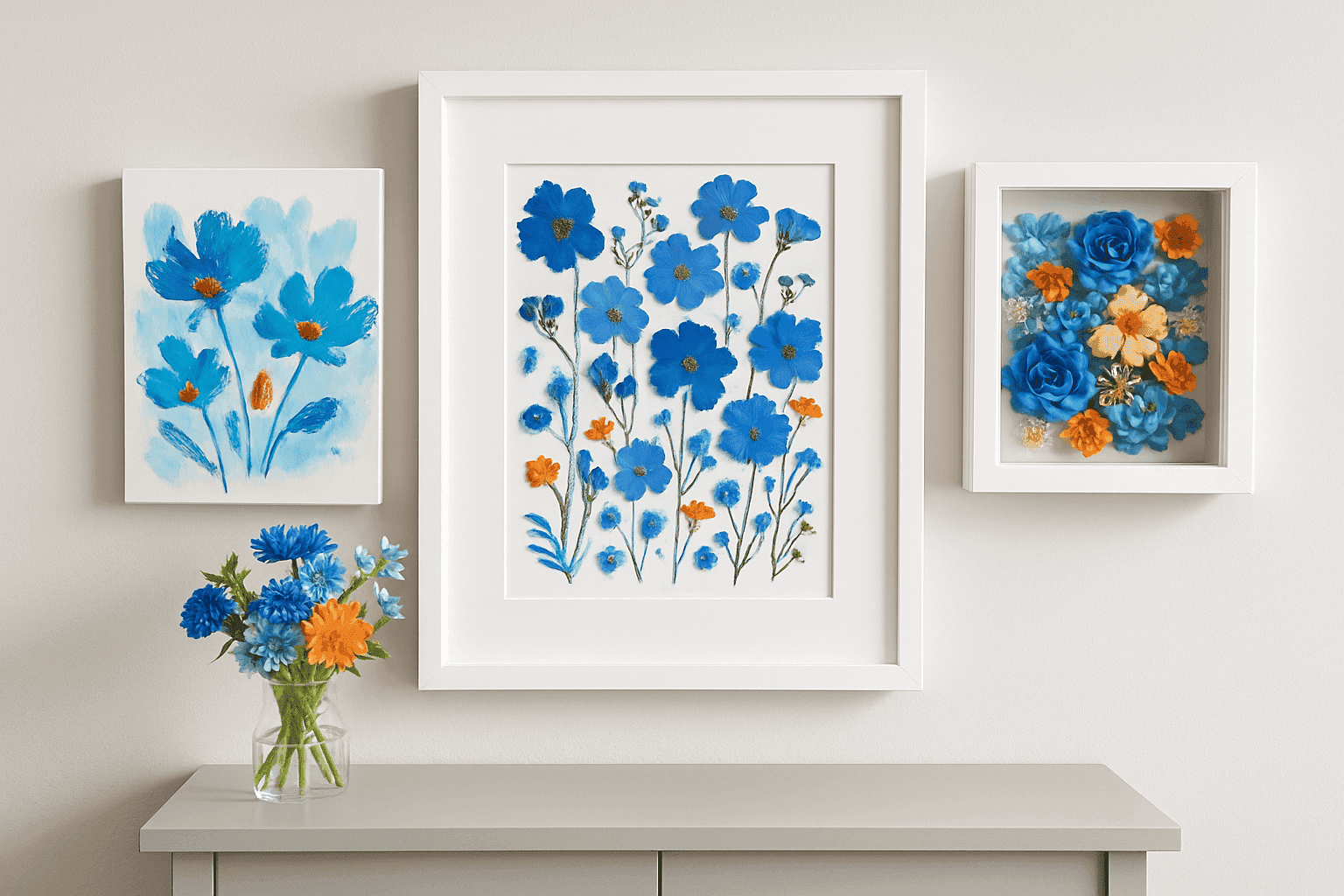
Custom floral wall art adds a personal touch to your home décor while bringing the beauty of nature indoors. Unlike store-bought pieces, DIY botanical artwork can be tailored to perfectly complement your color scheme and style. Whether you prefer pressed flowers, painted designs, or modern abstract interpretations, creating your own floral wall art is satisfying, affordable, and results in unique pieces that reflect your personality and artistic vision.
What You'll Need
| For Pressed Flower Art: |
| • Fresh flowers and foliage |
| • Heavy books or flower press |
| • Acid-free paper |
| • Frame with glass front |
| • Acid-free mounting adhesive |
| • Fine tweezers |
| For Painted Floral Canvas: |
| • Canvas or wood panel |
| • Acrylic or watercolor paints |
| • Paintbrushes (various sizes) |
| • Palette |
| • Water container |
| • Pencil and eraser |
| • Reference photos or real flowers |
| For 3D Floral Display: |
| • Shadow box frame |
| • Artificial flowers or dried preserved blooms |
| • Floral foam or backing board |
| • Wire cutters |
| • Hot glue gun and glue sticks |
| • Decorative moss or filler |
| For Abstract Floral Design: |
| • Canvas |
| • Acrylic paints in your color scheme |
| • Palette knives and brushes |
| • Textured mediums (modeling paste, etc.) |
| • Spray bottle with water |
How To Do It
- Pressed Flower Art:
- Press your flowers: Place flowers between sheets of acid-free paper inside heavy books or a flower press. Leave for 2-3 weeks until completely dry and flat.
- Design your composition: Arrange pressed flowers on your background paper without adhesive first. Experiment with layouts until you find a pleasing design.
- Mount your design: Working in small sections, carefully apply tiny dots of acid-free adhesive to the back of each flower using a toothpick. Use tweezers to position each element on your paper.
- Frame your artwork: Once complete and fully dry, place in a frame with glass to protect the delicate specimens. Consider using UV-protective glass for long-lasting preservation.
- Painted Floral Canvas:
- Prepare your canvas: Apply a base coat in your background color. For textured backgrounds, add subtle color variations before it dries.
- Sketch your design: Lightly draw your floral composition with pencil. Keep lines minimal—they're just guides.
- Paint background elements: Add leaves, stems, and foliage first, working from background to foreground.
- Add the flowers: Build up petals in layers, starting with base colors and adding highlights and shadows. Allow each layer to dry before adding details.
- Finish with details: Once the main elements are in place, add fine details like stamens, vein lines on leaves, and small accent blooms.
- 3D Floral Shadow Box:
- Prepare your frame: Remove the glass from a shadow box frame. Paint the interior if desired to complement your flowers.
- Create your base: Cut floral foam or backing board to fit inside the frame, secure with hot glue if needed.
- Trim your flowers: Cut artificial flower stems to appropriate lengths based on their position in your design. Leave 1-2 inches of stem for insertion.
- Arrange the composition: Insert larger focal flowers first, then add smaller blooms and greenery to fill spaces. Step back frequently to check balance.
- Secure all elements: Once satisfied with the arrangement, carefully add hot glue to the base of each stem where it meets the foam/backing to prevent shifting.
- Add finishing touches: Fill visible gaps with small flowers, moss, or decorative elements. Replace the frame backing and hang.
- Abstract Floral Design:
- Create texture: Apply modeling paste or textured medium in floral-inspired shapes. Allow to dry completely.
- Apply base colors: Paint broad strokes of your main colors, allowing them to blend in places for a soft, organic feel.
- Develop flower forms: Using round brush strokes, palette knife techniques, or even finger painting, create abstract flower shapes with varying sizes and colors.
- Add dimension: Use darker tones to create depth and lighter colors for highlights. Consider metallic accents for special interest.
- Finishing details: Once nearly complete, add delicate lines, dots, or splatter techniques to suggest flower centers, stamens, or pollen.
For a cohesive gallery wall with professional appeal, create a series of three or more floral artworks using the same technique but with subtle variations. Consider a monochromatic color scheme where each piece features different flowers in varying shades of the same color family, or a progressive series showing different stages of a single flower type from bud to full bloom. When framing multiple pieces, use identical frames to unify the collection, or choose complementary frame styles in the same finish for an eclectic yet coordinated look. For maximum impact, hang floral artwork against a solid-colored wall rather than busy wallpaper—this creates a stunning focal point and allows the botanical details to stand out. Remember that proper lighting is crucial; install picture lights or directed track lighting to highlight the dimensional qualities and colors of your handcrafted floral art.