Wall-Mounted Wonder: Creating Custom Floating Shelves
Maximize vertical space with sleek, invisible-bracket shelving
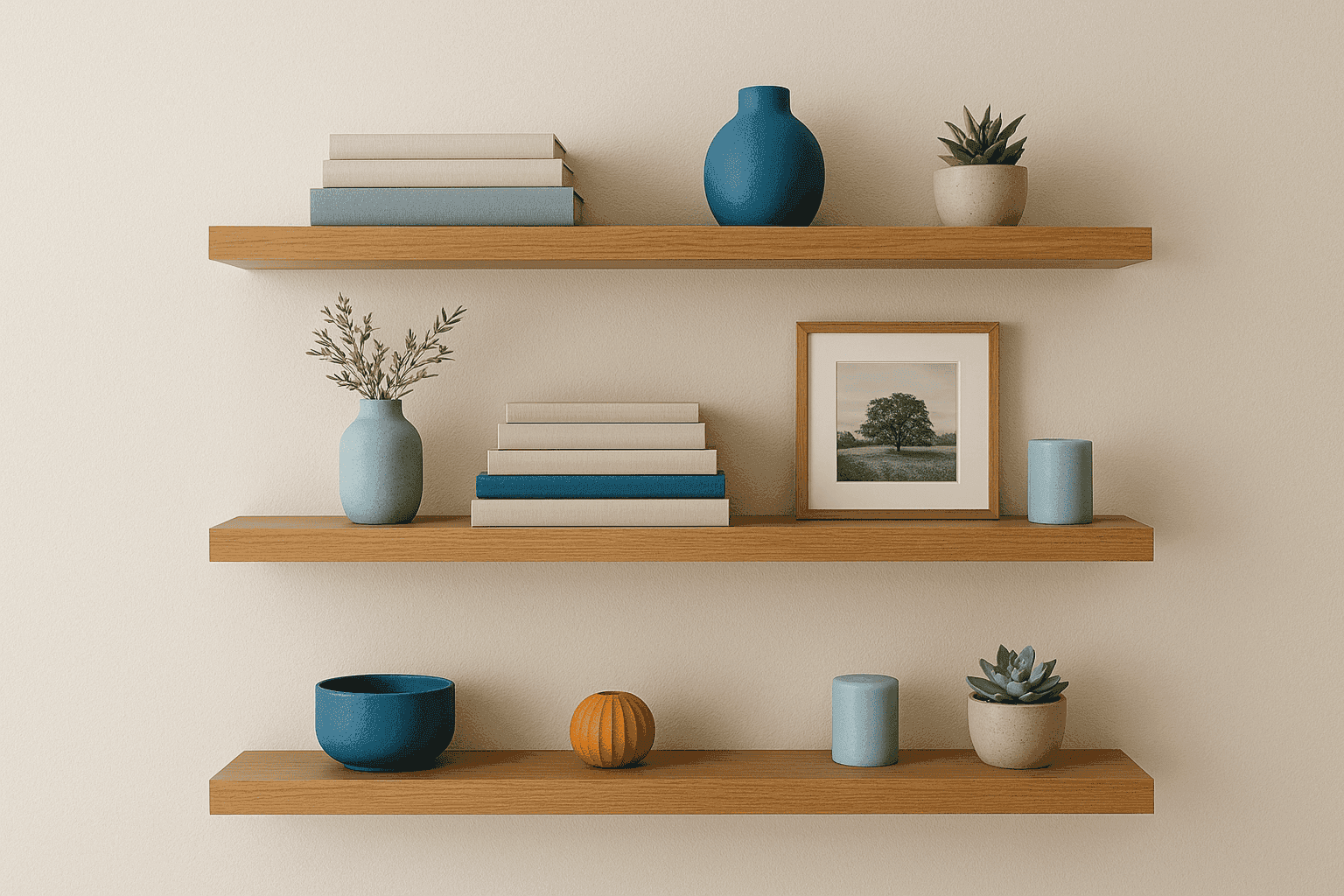
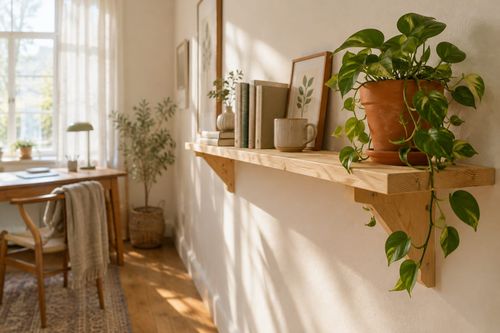
Floating shelves offer the perfect combination of form and function—providing valuable storage space with a sleek, minimalist aesthetic. Unlike traditional bracket shelves, floating shelves appear to "hover" against your wall, creating a clean, contemporary look. This weekend project allows you to customize dimensions, finishes, and placement to perfectly suit your space and storage needs.
What You'll Need
| 1x10 or 1x12 lumber for shelf faces |
| 1x2 lumber for inner frame |
| 1/4" plywood for bottom panel |
| Wood screws (1 1/4" and 2 1/2") |
| Stud finder |
| Drill and drill bits |
| Level |
| Circular saw or miter saw |
| Wood glue |
| Wood filler |
| Sandpaper (120 and 220 grit) |
| Stain or paint and finishing supplies |
How To Build Them
- Determine dimensions - Plan your shelf length, depth, and thickness based on your space and what you'll display. Standard depths range from 8-12".
- Cut lumber to size - Cut your 1x10 or 1x12 boards to your desired shelf length for top, front, and side pieces. Cut 1x2s to create the inner support frame.
- Build the inner frame - Create a rectangular frame with 1x2s that's 3/4" narrower and shorter than your outer dimensions to allow for the face boards.
- Assemble the shelf box - Attach the 1x10/1x12 face boards to the inner frame using wood glue and screws. Add the plywood bottom.
- Sand and finish - Fill screw holes with wood filler, sand all surfaces smooth, then apply your chosen stain or paint. Allow to dry completely.
- Locate wall studs - Use a stud finder to locate and mark wall studs where your shelf will be mounted.
- Mount the inner frame - Attach the inner support frame to the wall, driving screws through the 1x2s into the wall studs. Use a level to ensure it's straight.
- Slide shelf onto frame - Carefully slide your finished shelf box over the mounted inner frame, securing with small screws from underneath if needed.
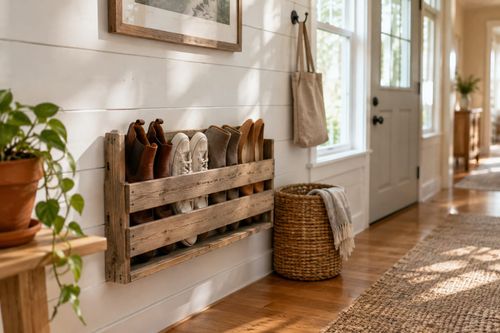
When planning your floating shelf installation, think beyond single shelves. Staggered arrangements create visual interest, while vertical stacks maximize storage in narrow spaces. For a designer-worthy display, follow the "rule of three" by varying the height of objects, incorporating different textures, and including something organic like a small plant. If installing multiple shelves, maintain consistent spacing between them (typically 12-18") and use a paper template to plan your layout before drilling any holes.