Welcome Home: Creating a Cheerful DIY Spring Doormat
Customize your entryway with a stylish hand-stenciled design
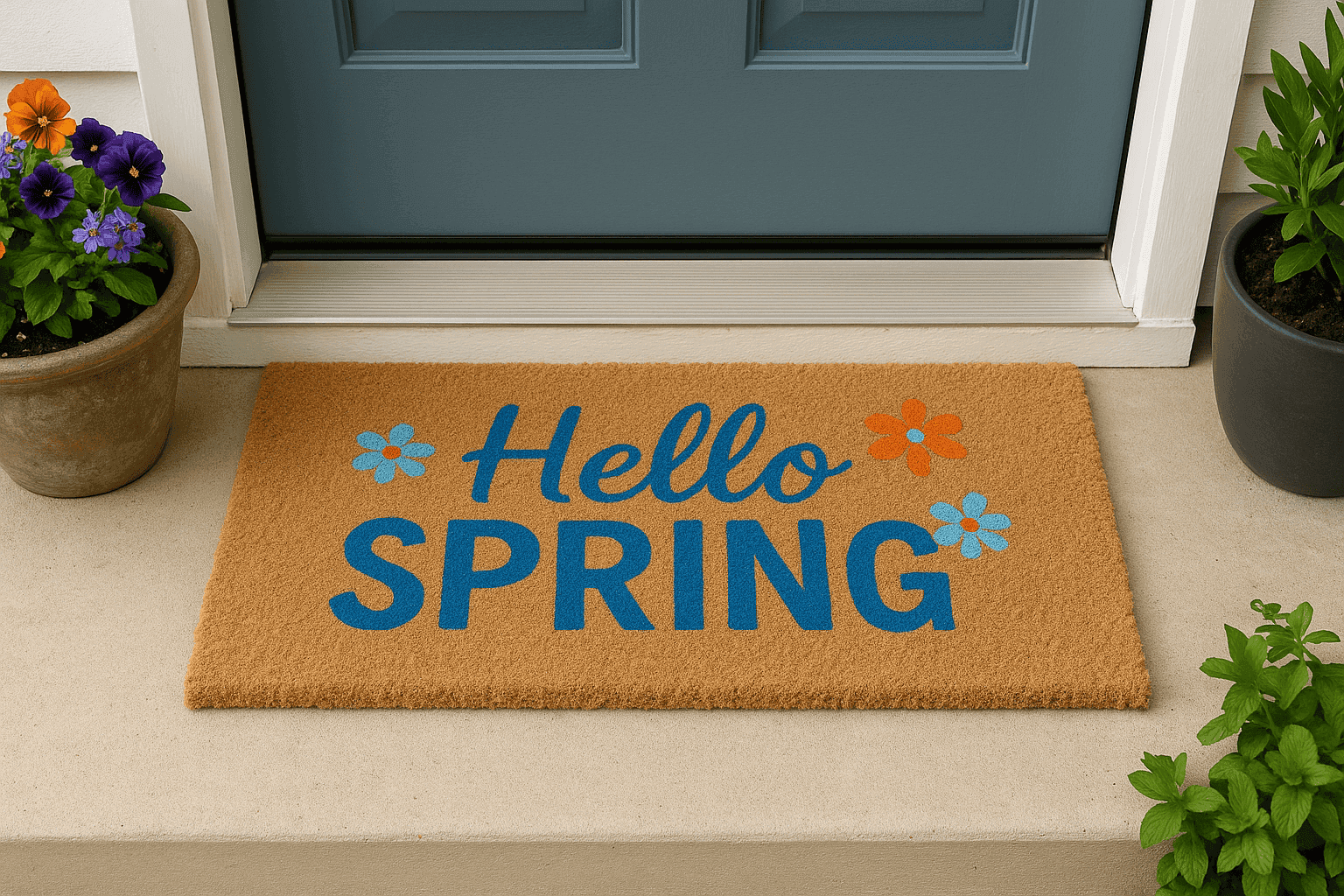
A custom doormat is a simple way to add personality to your entryway and create a welcoming first impression for guests. Store-bought options can be expensive and generic, but with a plain coir mat and some basic supplies, you can create a unique, seasonally-appropriate design that perfectly complements your home's exterior. This easy weekend project requires minimal artistic skill but delivers professional-looking results that will brighten your porch or entryway all season long.
What You'll Need
| • Plain coir doormat (natural fiber) |
| • Exterior acrylic paint in your chosen colors |
| • Stencil sheets (purchased or DIY) |
| • Stencil brushes or foam pouncer |
| • Painter's tape |
| • X-acto knife (if making your own stencil) |
| • Spray adhesive (temporary) |
| • Cardboard larger than your mat |
| • Small paint tray |
| • Paper towels |
| • Clear acrylic sealer spray (optional) |
How To Do It
- Prepare your workspace: Set up in a well-ventilated area, preferably outdoors or in a garage. Cover your work surface with cardboard larger than your doormat.
- Clean and prepare the mat: Shake out your new doormat thoroughly to remove loose fibers. For the best paint adhesion, lightly vacuum the surface to remove any remaining debris.
- Create or prepare your stencil:
- For purchased stencils: Carefully remove from packaging, keeping any "floating" pieces (like centers of letters) organized.
- For DIY stencils: Draw or print your design on stencil material, then cut out carefully with an X-acto knife on a cutting mat.
- Popular spring designs include "Hello Spring," floral patterns, bee motifs, or simple phrases like "Welcome" surrounded by flowers.
- Position your stencil: Center the stencil on your doormat, ensuring it's straight. Use painter's tape along the edges to secure it in place. For complex designs, apply light spray adhesive to the back of the stencil for better adhesion to the textured surface.
- Prepare your paint: Pour a small amount of exterior acrylic paint into a paint tray. Less is more—start with a small amount and add as needed.
- Apply the paint using proper technique:
- Load your stencil brush or foam pouncer with paint, then dab excess onto paper towels until the brush is almost dry.
- Using an up-and-down dabbing motion (not brushing), apply paint through the stencil openings.
- Build up color gradually with multiple light coats rather than one heavy application.
- Hold down floating pieces with a toothpick or small piece of tape while painting around them.
- Remove the stencil: Once you've achieved the desired coverage, carefully peel away the stencil while the paint is still slightly wet to prevent pulling. Lift straight up to avoid smudging.
- Add multi-color elements (optional): For multi-colored designs, allow the first color to dry completely, then reposition stencil precisely over the existing design and apply additional colors.
- Allow to dry thoroughly: Let your doormat dry completely for at least 24 hours before placing it in its intended location.
- Apply sealer (optional): For locations with heavy foot traffic or exposure to elements, consider applying a clear acrylic sealer spray for added durability.
For a truly professional-looking doormat, consider the visual weight and balance of your design. Center-weighted designs like wreaths with text inside them tend to look most balanced, while asymmetrical designs can add playful energy. When choosing colors, limit your palette to 2-3 complementary hues that coordinate with your home's exterior and front door color. Black, white, and one accent color often create the most striking, professional appearance. If you're nervous about free-handing a design, start with geometric patterns like stripes or dots around the border—these are forgiving and still add tremendous visual impact. Consider making seasonal doormats that you can rotate throughout the year for a constantly fresh entryway look.