Wooden Doormat: Rustic Welcome Mat That Weathers Beautifully
Craft a naturally elegant entrance mat using cedar strips and rope connections that improve with age
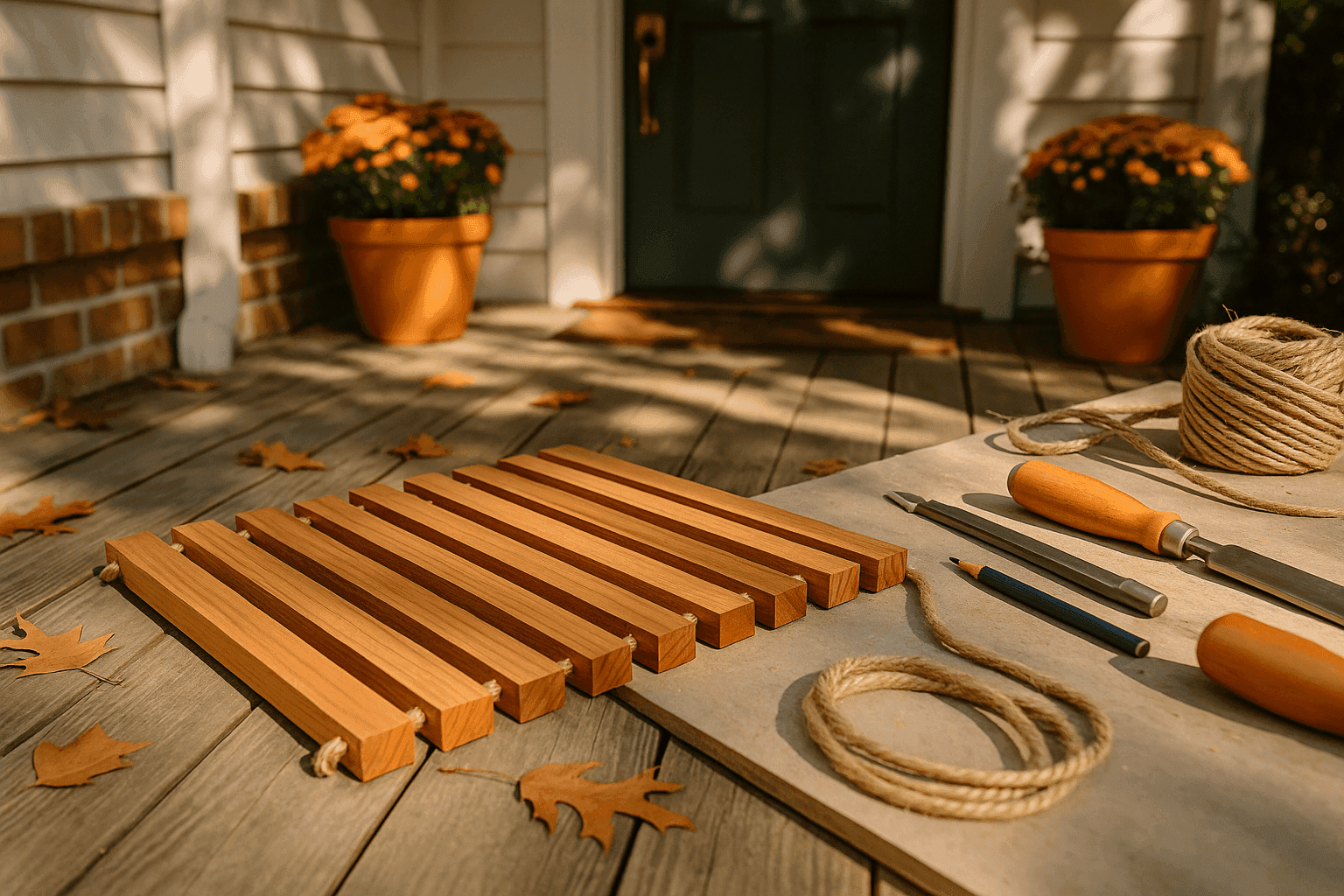
There's something deeply satisfying about crafting a doormat from natural materials that actually becomes more beautiful as it weathers and ages, developing a rich patina that store-bought mats simply cannot replicate. A wooden doormat made from cedar or teak strips connected with sturdy rope combines the functional durability of quality lumber with the rustic charm that makes guests feel genuinely welcomed before they even knock on your door. The natural oils in cedar and teak provide inherent weather resistance, while the slatted design allows dirt and moisture to fall through rather than collecting on the surface like traditional mats. This weekend woodworking project costs less than high-end commercial doormats while delivering decades of service and the unique satisfaction that comes from greeting guests with something you built with your own hands.
Woodworking Materials
- Wood Selection: Cedar or teak strips (1x2 inches, 18-24 inches long), enough for 12-15 slats depending on desired width
- Connection Materials: Marine-grade rope or galvanized wire, drill bits sized for rope diameter
- Tools Required: Miter saw or hand saw, drill with bits, measuring tape, pencil for marking
- Finishing Supplies: Sandpaper (120 and 220 grit), natural wood oil or leave unfinished for weathered look
- Hardware: Clamps for assembly, ruler or square for alignment, safety glasses and hearing protection
Construction Process
- Cut all wood strips to identical length using miter saw, ensuring clean, square ends for professional appearance
- Sand each strip starting with 120-grit then finishing with 220-grit for smooth, splinter-free surface
- Layout strips side by side with consistent 1/4-inch spacing between each slat for drainage
- Mark drill points 2 inches from each end on every strip, ensuring holes align across all pieces
- Drill rope holes through all strips at marked locations, using backing board to prevent tearout
- Thread marine-grade rope through holes, leaving 6-inch tails for knotting and adjustment
- Adjust spacing between slats to ensure even gaps, then tie secure knots on rope ends
- Finish with natural oil if desired, or leave untreated to develop natural weathered patina over time
Master woodworkers recommend using a drill press or drilling jig to ensure perfectly aligned holes that keep your doormat lying flat and professional-looking over time. If you don't have access to precision tools, create a simple template by drilling holes in a scrap piece of wood that you can clamp to each slat for consistent hole placement. For the longest-lasting results, use genuine marine rope rather than standard utility rope – the extra cost is minimal but the UV and weather resistance is dramatically better, ensuring your doormat maintains its structural integrity through years of outdoor exposure.