Wooden Kitchen Utensils: Handcraft Heirloom-Quality Tools
Create beautiful, functional cooking tools from hardwood that improve with every use
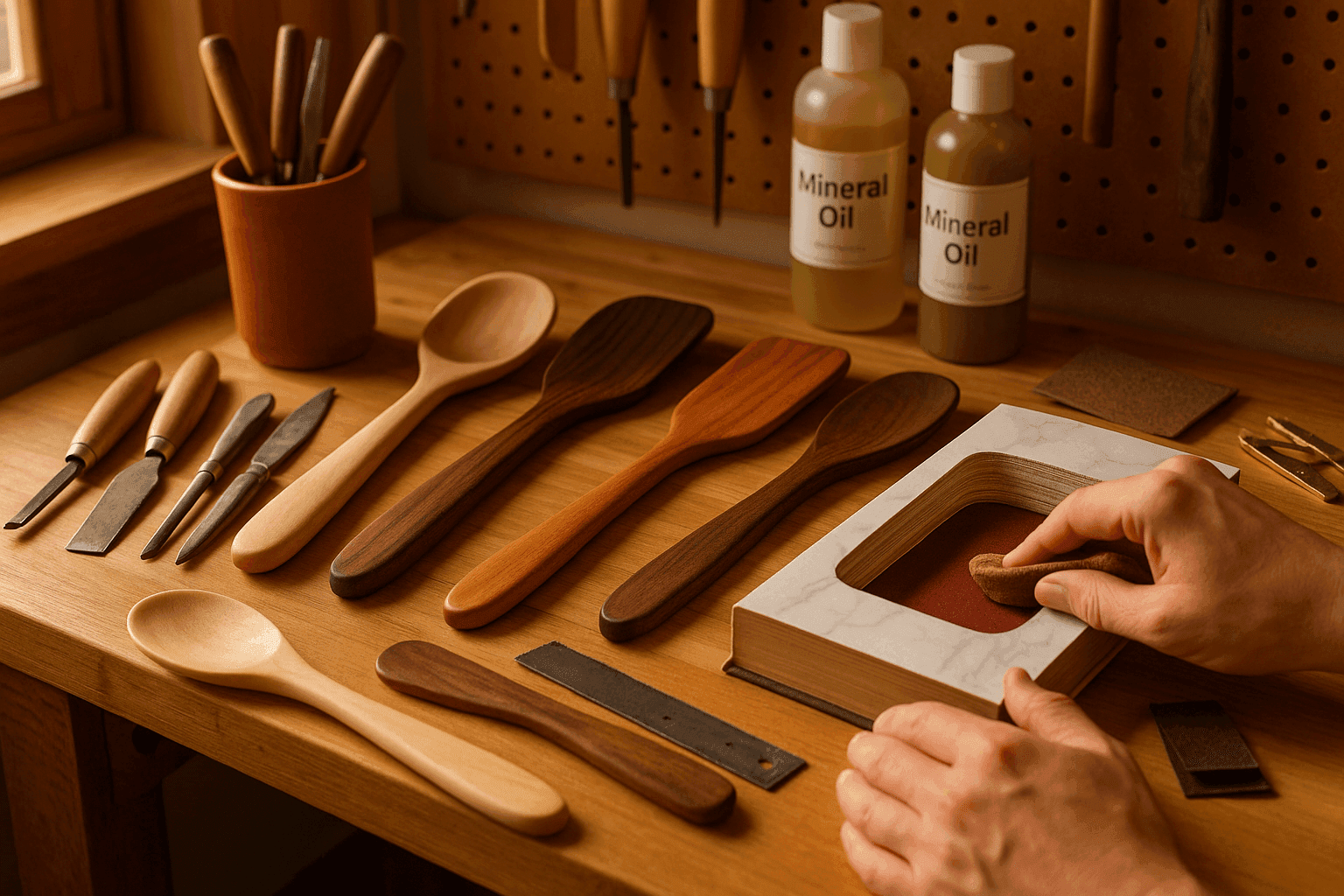
There's something deeply satisfying about cooking with wooden utensils you've carved and finished yourself, tools that carry the warmth of natural materials and the pride of handcraftsmanship that mass-produced kitchen implements simply cannot match. Crafting wooden spoons, spatulas, and spreaders from hardwood blanks connects you to centuries of woodworking tradition while creating functional pieces that actually improve with age and use as the wood develops its own patina. The process teaches fundamental woodworking skills – shaping, sanding, and finishing – through projects small enough to complete in an afternoon yet beautiful enough to display or give as thoughtful gifts that recipients will treasure for decades. Starting with pre-cut hardwood blanks eliminates the need for advanced equipment while still delivering the satisfaction of transforming raw wood into smooth, elegant tools that feel perfect in your hand and work beautifully in your kitchen.
Woodworking Materials
- Wood Selection: Hardwood blanks in maple, cherry, walnut, or beech (spoon blanks $5-10 each), avoid softwoods and toxic woods
- Carving Tools: Carving knife or hook knife for spoon bowls, whittling knife, wood rasp for shaping
- Sanding Supplies: Sandpaper in progressively finer grits (80, 120, 220, 320), sanding blocks
- Finishing Products: Food-safe mineral oil, beeswax for additional protection, clean application cloths
- Safety Equipment: Cut-resistant gloves, dust mask, well-ventilated workspace, first aid kit nearby
- Optional Tools: Rotary tool for faster shaping, wood burner for decorative details, templates for consistent shapes
Crafting Process
- Select hardwood blank appropriate for desired utensil type, checking grain direction for strength
- Sketch basic shape on wood blank using pencil, planning handle thickness and bowl or blade dimensions
- Rough shape using rasp or carving knife, removing excess material while maintaining structural integrity
- Carve bowl cavity for spoons using hook knife, working with grain for smooth cuts
- Refine shape gradually, testing handle comfort and tool balance in your hand frequently
- Sand progressively through all grits, spending most time on finest grits for silky-smooth finish
- Apply mineral oil generously, allowing wood to absorb fully before wiping excess
- Maintain by re-oiling monthly during first year of use, establishing protective coating that deepens beauty
Master wood carvers always work slowly with sharp tools rather than forcing dull blades, which causes tear-out and potential injury from slipping. For spoons that won't crack during use, ensure grain runs lengthwise down the handle rather than across, providing strength where stress is highest. The secret to professional-looking wooden utensils is patience with sanding – rushing through grits leaves scratches visible after oiling, while spending time on each progression creates glass-smooth surfaces that feel luxurious in hand and showcase wood's natural beauty perfectly.