Zesty Displays: Creating Citrus Fruit Bowl Centerpieces
Brighten your table with vibrant, fragrant arrangements of lemons, limes, and oranges
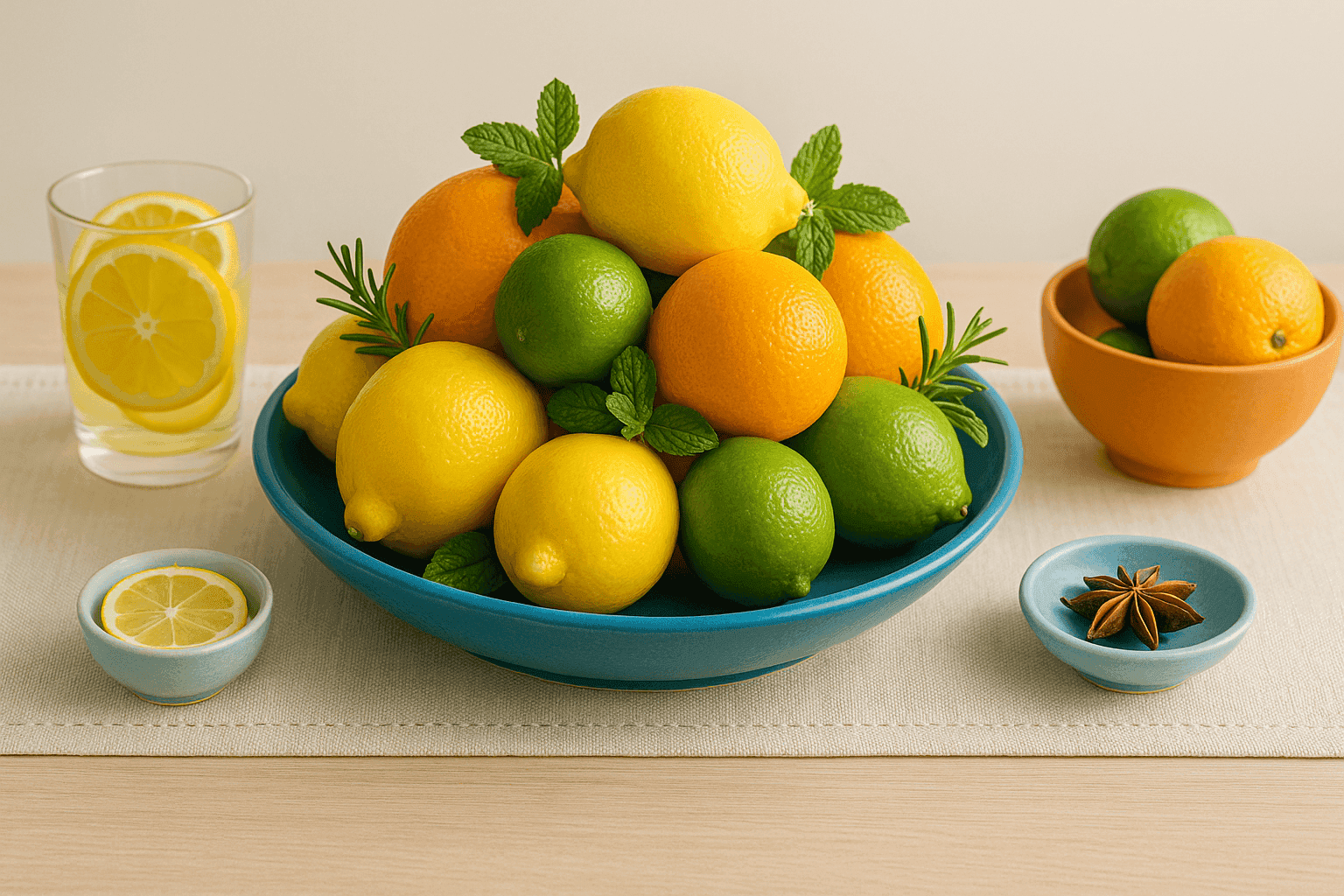
Citrus fruits offer a perfect spring decorating solution—bringing vibrant color, natural beauty, and refreshing fragrance to your home. Unlike floral arrangements that wilt within days, fruit displays can last for weeks while serving double duty as both decoration and ready-to-use ingredients. From sophisticated monochromatic lemon arrangements to colorful mixed citrus displays, these edible centerpieces create instant visual impact with minimal effort and expense. With a few creative techniques, you can transform everyday fruit into designer-worthy tablescapes perfect for spring entertaining.
What You'll Need
| Fruit Options: |
| • Lemons (regular or Meyer) |
| • Limes (Persian, Key, or Kaffir) |
| • Oranges (navel, blood, Cara Cara, or mandarin) |
| • Grapefruits (pink, ruby red, or white) |
| • Kumquats, clementines, or other small citrus |
| Display Vessels: |
| • Shallow decorative bowls or platters |
| • Tiered serving stands |
| • Clear glass vases or hurricanes |
| • Footed compotes or trifle dishes |
| • Wooden bowls or trays |
| Accent Materials: |
| • Fresh herb sprigs (mint, rosemary, thyme) |
| • Citrus leaves or other greenery |
| • Small spring flowers |
| • Cinnamon sticks or star anise |
| • Whole cloves |
| • Ribbon, twine, or decorative wire |
| Optional Tools: |
| • Sharp knife for slicing fruit |
| • Cutting board |
| • Toothpicks or floral picks |
| • Citrus zester |
| • Clear spray sealant (optional, for longer-lasting displays) |
How To Do It
- Choose your display style:
- Monochromatic: Using a single citrus fruit for elegant simplicity
- Ombré: Arranging fruits in a gradient (yellow lemons to orange tangerines)
- Colorful mix: Combining various citrus for maximum visual impact
- Sliced display: Featuring cut fruit to showcase the colorful interiors
- Layered arrangement: Combining whole and sliced fruits for dimension
- Prepare your fruits:
- Select firm, unblemished fruits with vibrant color
- Wash and thoroughly dry all fruits (moisture accelerates spoilage)
- For cut fruit displays, slice fruits thinly and pat dry with paper towels
- For longer-lasting cut displays, lightly brush fruit with lemon juice
- Optional: Apply clear spray sealant to whole fruits for extended display life
- Create a simple mounded display:
- Select a bowl with enough depth to hold multiple layers of fruit
- Arrange largest fruits at the bottom, building up to smaller fruits
- Create a gentle dome shape rising from the edges to the center
- Tuck small sprigs of greenery between fruits for contrast
- For dining tables, keep the arrangement low enough for conversation
- Design a clear container layered display:
- Choose a clear hurricane vase or trifle dish
- Create alternating layers of different citrus fruits
- Consider adding layers of greenery between fruit layers
- For extra interest, add a layer of cinnamon sticks or star anise
- Fill completely to the top for the most polished look
- Craft a floating citrus arrangement:
- Select a wide, clear glass container
- Fill halfway with water
- Float thinly sliced citrus rounds on the surface
- Add floating candles or small flowers for extra elegance
- Change water daily to keep the display fresh
- Make a citrus garland for table runners:
- Slice citrus fruits into 1/4-inch rounds
- Pat slices dry with paper towels
- Arrange along the center of your table in an overlapping pattern
- Intersperse with small herb sprigs and flowers
- Create for same-day entertaining, as this style has shorter longevity
- Elevate with herbs and botanicals:
- Tuck fresh herb sprigs between fruits for fragrance and color contrast
- Add small flowers like daisies or baby's breath for a spring garden feel
- Consider citrus leaves or other evergreen foliage as a base layer
- Use herbs that complement citrus (mint, rosemary, lavender)
- Keep botanical additions proportional to fruit size
- Maintain your display:
- Place arrangement away from direct sunlight and heat sources
- Rotate fruits every few days to prevent pressure spots
- Remove any fruits that show signs of spoilage immediately
- Replace cut fruit displays every 1-2 days
- Whole fruit arrangements can last 1-2 weeks with proper care
- Transform for practical use:
- Use displayed fruits for cooking or cocktails before they spoil
- Consider a progressive display that transitions from decoration to use
- Place small cards with recipe ideas near the display
- Include a small basket nearby for guests to select fruits for drinks
Professional stylists know that the most impactful citrus displays follow the principle of "thoughtful abundance"—creating arrangements that look naturally generous without appearing overcrowded. Achieve this by creating a stable base structure with larger fruits, then building upward while maintaining negative space between some elements. For sophisticated color harmony, interior designers often apply the "complementary citrus" technique: pairing fruits with décor in the complementary color family (blues with oranges, purples with yellows) to create dynamic visual tension. When styling for photographs or special events, professionals often create "semi-faux" arrangements by combining real fruit exteriors with lightweight cores (using halved fruits hollowed and dried) to prevent shifting and extend longevity. Finally, consider "context styling" by adding one or two relevant objects near your arrangement—a small cocktail muddler, antique citrus reamer, or vintage citrus crate label—to tell a visual story.