Architectural Upgrade: Transform Molding Into Display Ledges
Add character while creating functional display spaces for treasures
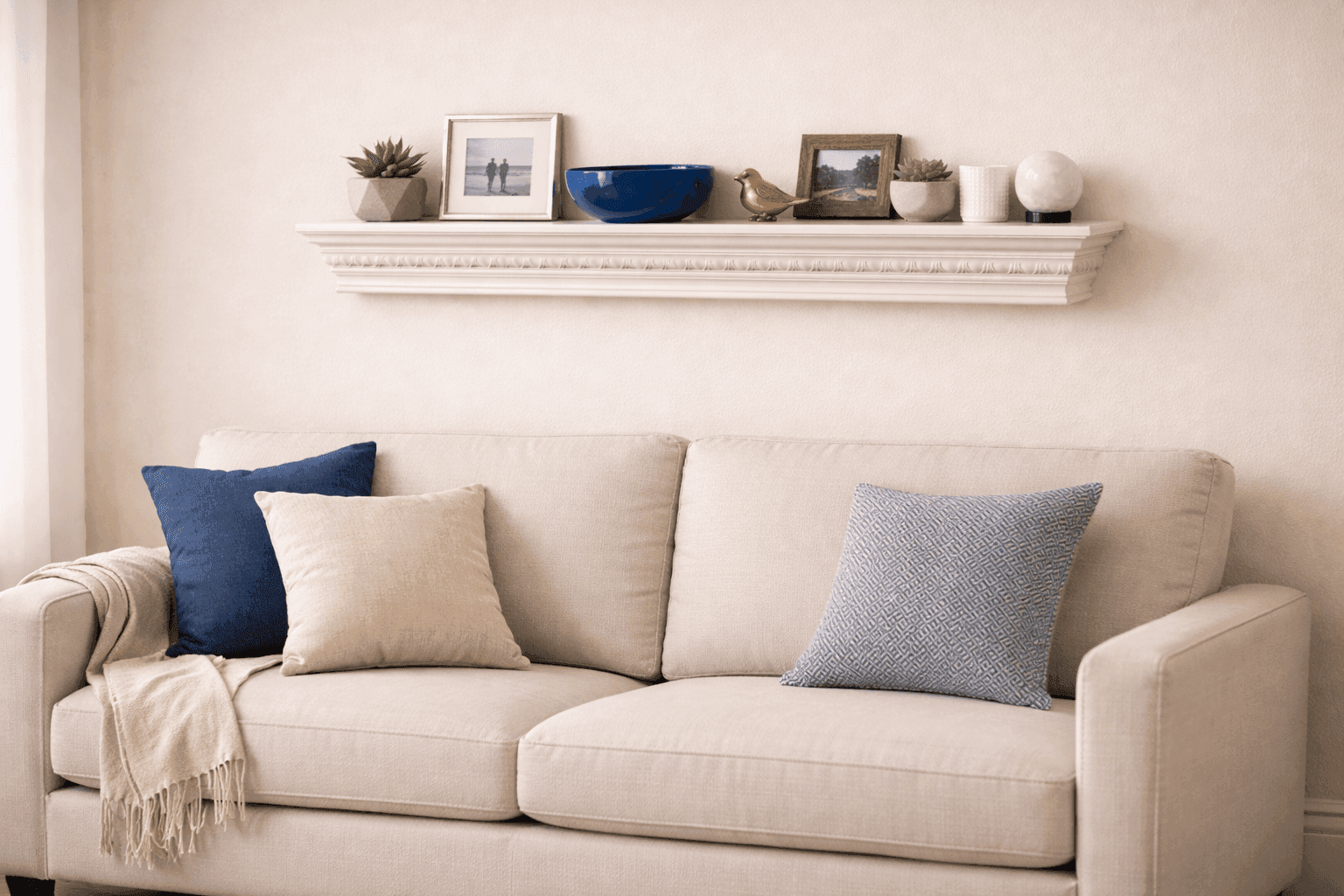
Plain walls lack the architectural character and visual interest that make spaces feel finished and intentional rather than generic rental boxes, while traditional shelving often appears utilitarian rather than decorative when you want storage that enhances aesthetics. Crown molding shelf ledges solve both challenges simultaneously—mounting decorative molding horizontally creates shallow display ledges that add architectural detail while providing perfect perches for small plants, photos, collectibles, or art that would be overwhelming on deeper traditional shelves. This 2-3 hour project costs $30-50 for materials including quality crown molding, mounting hardware, and finish supplies, producing results that look like custom millwork rather than DIY additions when executed properly. The shallow depth (typically 3-5 inches depending on molding profile) makes these ledges ideal for items you want to display without dominating wall space—small succulents, framed photos, decorative objects, or rotating seasonal décor that adds personality without the visual weight of standard shelving. Beyond function, crown molding ledges create elegant horizontal lines that draw the eye around rooms, making spaces feel larger and more sophisticated while the decorative profiles add dimension that flat walls simply cannot provide. This technique works beautifully in living rooms for displaying art and plants, dining rooms for showcasing serveware, bedrooms for personal treasures, nurseries for books and toys, or entryways for keys and small essentials—anywhere you need both storage and style working together rather than fighting for attention.
Materials & Tools
- Crown Molding ($20-30):
- Choose profile depth of 3-5 inches for functional ledge
- 8-12 feet total length depending on wall width
- Primed MDF or solid wood in preferred finish
- Decorative profile adds visual interest
- Mounting Hardware ($8-12):
- Finish nails or brad nails for securing to wall
- Construction adhesive for additional strength
- Wall anchors if not mounting into studs
- Wood screws for reinforcement (2-3 inches)
- Finish Supplies ($5-8):
- Paint or stain matching your walls or trim
- Caulk for seamless wall connection
- Wood filler for nail holes
- Sandpaper for smooth finish
- Tools Required:
- Miter saw or hand saw for cutting
- Stud finder for locating wall studs
- Level (essential for straight installation)
- Nail gun or hammer
- Measuring tape and pencil
- Caulk gun
Install Your Ledges
- Measure your wall space carefully, determining ideal ledge length and height placement that works with existing furniture, windows, and architectural features rather than fighting against room proportions.
- Locate wall studs using a stud finder along your planned ledge path—mounting into studs provides vastly superior strength compared to drywall anchors alone, especially for items with any weight.
- Cut crown molding to precise length using a miter saw, creating clean 90-degree cuts for straight runs or 45-degree miters if creating returns at corners for professional finished edges.
- Paint or stain molding before installation if using unfinished wood, allowing complete drying time—finishing before mounting produces cleaner results than trying to paint around wall connections after installation.
- Apply construction adhesive to the back flat surface of your molding in a zigzag pattern, which provides additional holding power beyond nails alone and helps create seamless wall connection.
- Position molding at your marked height, using a level to ensure perfect horizontal alignment before securing—crooked ledges are immediately obvious and impossible to hide once items are displayed.
- Nail through molding into wall studs at multiple points, spacing fasteners every 16-24 inches for secure attachment that won't sag under the weight of displayed items over time.
- Fill nail holes with wood filler, caulk the gap between molding and wall for seamless appearance, touch up paint if needed, and allow everything to cure before loading ledges with treasures.
Interior designers create the most impact by installing multiple ledges at staggered heights rather than single lonely shelves, building gallery-style arrangements that command attention and provide varied display opportunities for objects of different sizes. Paint ledges the same color as walls for subtle architectural detail that blends seamlessly, or use contrasting colors that make ledges pop as intentional design features—white ledges on colored walls or vice versa creates definition that highlights both surfaces. For rooms with existing crown molding at the ceiling, choose coordinating profiles for ledges that echo the ceiling treatment, creating cohesive design language throughout the space that feels professionally considered. Install ledges at strategic heights: eye level (60 inches) for primary display, lower (36-48 inches) for frequently accessed items, or higher (72+ inches) for decorative objects you want visible but not interactive. The decorative bottom edge of crown molding naturally creates a small lip that prevents lightweight items from sliding off, but test stability with your intended display items before loading ledges heavily—add small museum putty dots for extra security with valuable or wobbly objects. For renters, this project remains removable—carefully fill nail holes and touch up paint when moving out, though landlords often appreciate the upgraded millwork enough to request you leave it installed for future tenants who benefit from the enhanced architectural character you've added.