Bold & Unapologetic: Paint Your Stairs Into a Rainbow Cascade
Turn boring steps into an Instagram-worthy statement that proves you don't play it safe
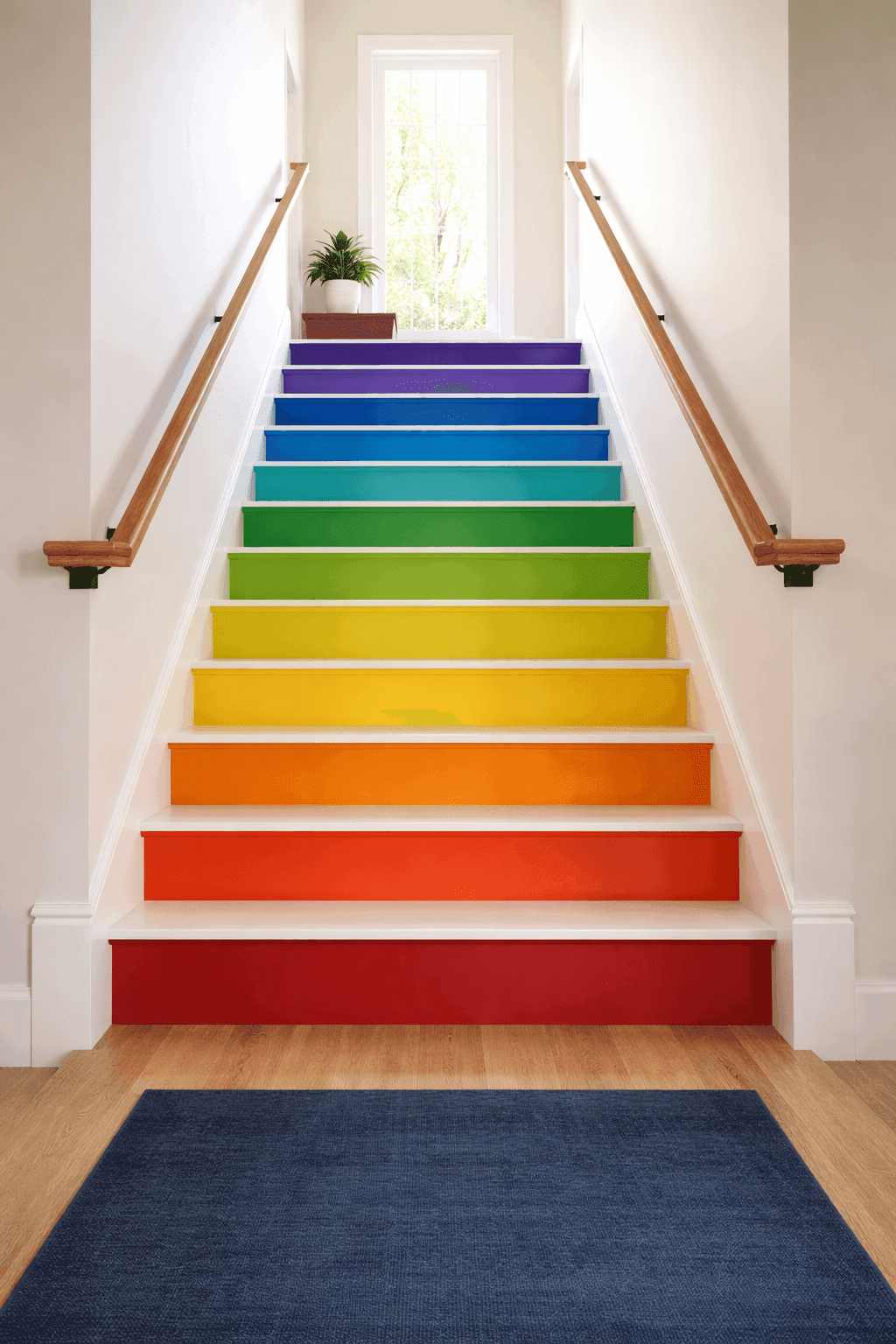
Let's be honest—most staircases are tragically boring, especially those basement or back stairs that nobody pays attention to beyond making sure they don't trip on the way to the laundry room. But here's the thing: stairs are vertical real estate just begging for a personality injection, and painting them in a bold rainbow gradient is the kind of unapologetic design move that announces "yes, I'm interesting and no, I don't care if that makes you uncomfortable." This project costs maybe $30-50 in paint but delivers the kind of jaw-dropping impact that interior designers charge thousands to create, transforming utilitarian stairs into a legitimate art installation that stops guests mid-climb to pull out their phones. The best part? It's actually easier than it looks because you're painting flat surfaces with clean lines, not wrestling with intricate patterns or precise measurements. Fair warning: once you unleash this kind of color confidence in your home, you might find yourself emboldened to paint other things in shockingly bold hues, and honestly, the world needs more people willing to take those kinds of decorating risks.
What You'll Need
- Floor Paint: High-quality porch and floor paint in rainbow colors—red, orange, yellow, green, blue, purple (one quart per 2-3 risers, approximately $30-50 total)
- Neutral Tread Paint: Black, white, or clear polyurethane for natural wood treads to keep the color focus on risers and ensure safe, non-slip walking surfaces
- Cleaning Supplies: TSP cleaner or heavy-duty degreaser, scrub brush, vacuum, clean rags for removing dirt, oil, and old finish residue
- Prep Materials: Primer suitable for your stair surface, painter's tape (2-inch width works best), drop cloths to protect surrounding areas
- Painting Tools: 2-inch angled brush for precise edges, small foam roller for smooth coverage on flat riser surfaces, paint tray
- Optional Upgrades: Small artist brushes for geometric patterns, sponges for ombré effects, stencils for added details
Step-by-Step Instructions
- Clean thoroughly using TSP or degreaser because paint adhesion depends entirely on a grease-free, dirt-free surface—this unglamorous step makes the difference between paint that lasts years versus paint that chips in months.
- Map your color scheme by deciding whether you want classic rainbow order (red at bottom, purple at top) or a custom gradient, then tape off your plan using sticky notes on each riser so you don't lose track mid-project.
- Prime all surfaces if your stairs are previously painted, bare wood, or laminate—yes, it's an extra step, but primer is what allows those vibrant colors to pop instead of looking muddy and sad.
- Tape off risers carefully using painter's tape along the top and bottom edges where risers meet treads, pressing firmly to prevent paint bleed that ruins those crisp, professional-looking lines.
- Paint risers boldly starting from the top and working down so you're not stepping on wet paint, applying two coats of your chosen rainbow colors and letting each fully dry before adding the second coat for maximum vibrancy.
- Keep treads neutral by painting them in black or white, or applying clear polyurethane over natural wood—this contrast makes the colored risers absolutely sing while keeping the stairs safe and functional for actual walking.
- Add optional details like ombré fading within each riser using a damp sponge to blend two shades, geometric triangles or stripes for extra visual interest, or even hand-painted patterns if you're feeling particularly ambitious.
- Seal everything with a durable polyurethane topcoat once all paint is completely dry (wait 24-48 hours), because stairs take a beating and this final protection layer ensures your bold statement stays bold for years.
Here's the insider move that separates amateur rainbow stairs from designer-level rainbow stairs: instead of using straight-from-the-can primary colors that can look a bit juvenile or arts-and-crafts, choose sophisticated, slightly muted versions of each hue that read as intentional and curated. Think burnt orange instead of traffic cone orange, deep teal instead of bright turquoise, wine red instead of fire engine red. Professional color consultants know that adjusting the saturation and depth of rainbow colors makes them feel expensive and deliberate rather than like you just grabbed whatever was on the craft store shelf. Visit a paint store and ask for their "heritage" or "historical" collections—these pre-mixed palettes often include gorgeous, complex versions of basic rainbow colors that have enough depth and character to work in sophisticated adult spaces while still delivering that joyful color impact that makes the whole project worthwhile.