Charred Beauty: Build an Artisan Serving Board With Dramatic Edges
Transform simple hardwood into showpiece charcuterie boards that rival expensive boutiques
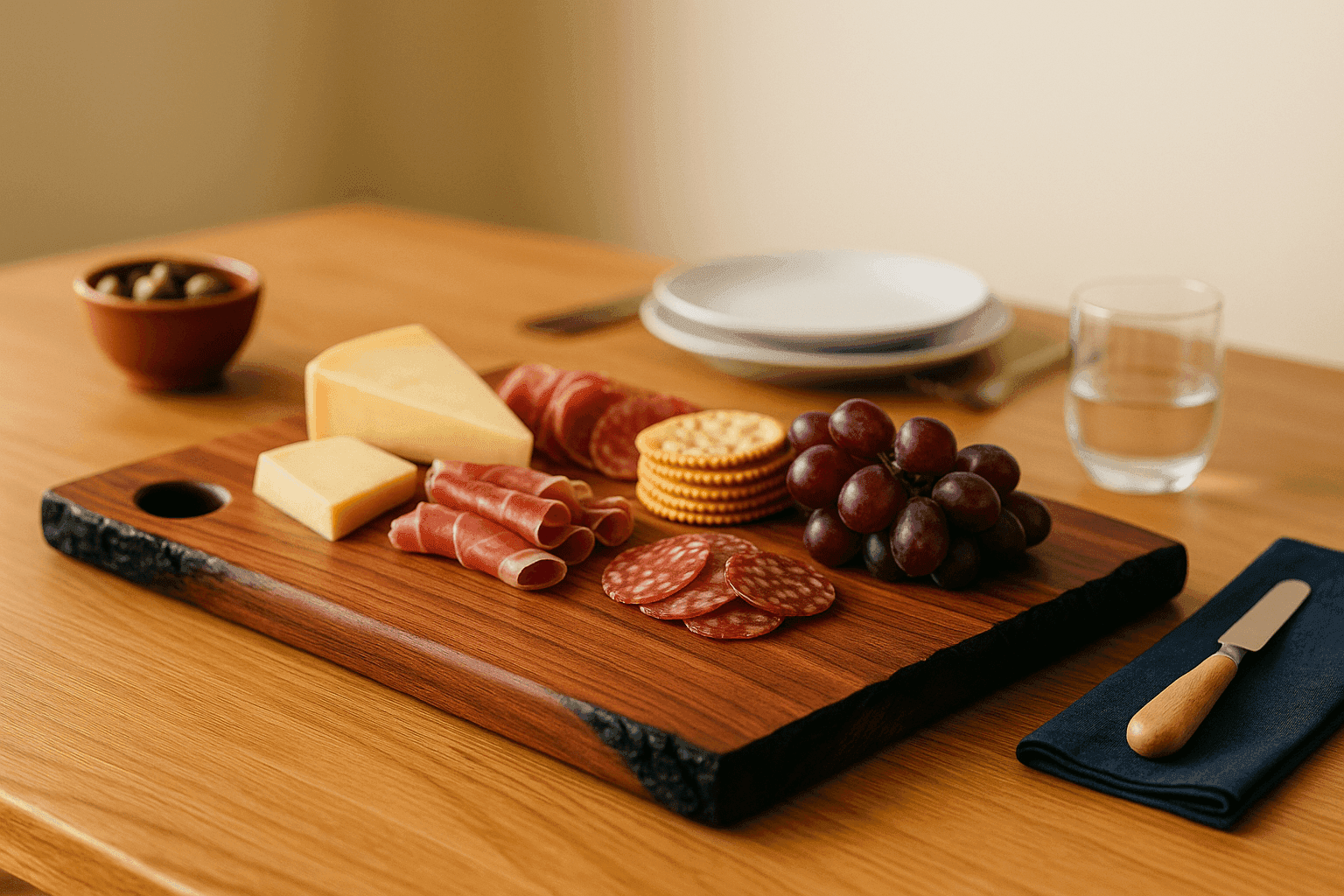
There's something deeply impressive about presenting holiday appetizers or charcuterie on a handmade wooden board featuring dramatic charred edges that create striking contrast against smooth natural wood—instantly elevating your entertaining from "here's some cheese" to "I clearly care about presentation details that make this gathering special." This woodworking project transforms a simple hardwood plank into artisan serving pieces that rival $80-150 boutique boards, costs just $15-25 depending on wood selection and size, and takes about 2-3 hours including sanding, burning, and multiple finishing coats that build food-safe protection while enhancing natural grain beauty. The burned edge technique is the secret weapon here—using a propane torch or wood-burning tool to char the perimeter creates visual drama and professional polish that separates this from basic cutting boards, while the process itself is surprisingly simple and forgiving since you're aiming for rustic character rather than machine-perfect uniformity. Whether you're building boards for your own holiday entertaining, creating impressive last-minute gifts for hosts, or starting a side business selling custom serving pieces, these boards demonstrate that sometimes the most valuable woodworking projects aren't complicated furniture—they're functional art pieces that get used regularly and appreciated visually every single time someone reaches for crackers and cheese.
What You'll Need
- Wood Selection:
- Hardwood board 12"x18" and 3/4" thick ($15-25)
- Maple for light, neutral appearance
- Walnut for rich, dark elegance
- Cherry for warm reddish tones
- Must be food-safe hardwood, no treated lumber
- Sanding Supplies:
- Sandpaper in 80, 120, 180, 220 grit
- Orbital sander or sanding block
- Tack cloth or damp rag for dust removal
- Burning Tools:
- Propane torch for edge charring ($15-25)
- OR wood-burning tool for more control ($20-40)
- Work in well-ventilated area or outdoors
- Fire extinguisher or water nearby for safety
- Finishing Materials:
- Food-safe mineral oil ($8-12)
- OR butcher block conditioner ($10-15)
- Clean lint-free rags for application
- Paper towels for wiping excess
- Tools Required:
- Drill with 3/4" or 1" spade bit for handle hole
- Clamps to secure board while working
- Safety glasses and dust mask
- Work gloves for handling
Building Steps
- Start with quality hardwood cut to your desired serving board dimensions—12x18 inches works beautifully for charcuterie, or adjust sizing based on intended use and available wood.
- Sand the entire board progressively starting with 80-grit to remove mill marks and flatten the surface, then work through 120, 180, and finishing with 220-grit until wood feels silky smooth to touch.
- Round all corners slightly using sandpaper to soften edges, which prevents splintering during use and creates more refined appearance than sharp factory corners that feel unfinished.
- Drill a finger hole approximately 1 inch in diameter near one end of the board, positioned 1-2 inches from the edge, which provides functional lifting grip while adding visual interest to the design.
- Sand the drilled hole smooth inside and out, removing any rough edges or splinters that could catch fingers, ensuring the handle feels as polished as the board surface itself.
- Char the edges using a propane torch held at an angle, moving steadily around the perimeter to create even burning without lingering in one spot which creates uneven charring or actual scorching that goes too deep.
- Control burn depth by adjusting torch distance and movement speed—closer and slower creates darker char, while faster passes create lighter browning, so experiment on scrap wood first to master your technique.
- Wipe charred edges with damp cloth to remove loose carbon and soot, revealing the dramatic contrast between burned edges and natural wood that makes this technique so visually striking and professional-looking.
- Apply food-safe mineral oil or butcher block conditioner liberally across entire board surface, letting it soak in for 15-20 minutes before wiping away excess, which protects wood while enhancing grain beauty.
- Repeat oil application 3-4 times over several hours or days, building protective layers that seal wood against moisture and food stains while creating that rich, deep color that makes hardwood serving pieces so beautiful.
- Cure the finished board overnight before first use, allowing oil to fully penetrate and dry, then maintain by reapplying mineral oil monthly or whenever wood appears dry to preserve beauty and functionality indefinitely.
Professional woodworkers create more dramatic burned edge effects by varying the char depth around the board—burning corners darker than straight edges creates visual interest and makes the piece look more artisan than uniformly charred borders that read as overly controlled. The wood grain consideration that matters: burning highlights grain patterns differently across various hardwoods, with maple showing subtle contrast, walnut displaying rich chocolate-on-black drama, and cherry developing warm amber-to-charcoal transitions that photograph beautifully. For gift-giving, personalize boards by wood-burning names, dates, or simple designs into one corner before applying finish coats, creating custom serving pieces that become treasured keepsakes rather than generic kitchen tools eventually relegated to drawer storage. Consider the juice groove debate: some prefer boards without grooves for versatile serving that works equally well for cheese, bread, or desserts, while others add routed grooves around perimeters to contain meat juices—choose based on primary intended use rather than assuming grooves improve every board. The finishing schedule that maximizes protection: apply first coat immediately after final sanding while wood pores are open and receptive, subsequent coats 4-6 hours apart, and consider finishing the underside too which prevents warping from uneven moisture absorption through exposed bottom surface. Store handmade serving boards standing upright or hanging rather than stacked flat with other kitchen items, which allows air circulation that prevents moisture buildup and potential mold while displaying these beautiful pieces as functional art rather than hiding them in cabinets. The care instructions that ensure longevity: hand wash only with mild soap and dry immediately, never submerge or put in dishwashers, reapply mineral oil when wood appears thirsty or dry, and occasionally sand very lightly with 220-grit to remove stains and refresh the surface for decades of continued use. Remember that boards develop character over time—small knife marks, subtle staining, and gentle wear patterns add patina that makes pieces more beautiful and personal rather than detracting from value, so embrace the evolution rather than trying to maintain factory-fresh perfection that fights against the nature of functional handcrafted items meant for regular enjoyment.