Command Central: Build a Home Maintenance Binder That Works
Create a comprehensive system that tracks maintenance tasks and keeps crucial documents accessible
Your water heater manual is buried in a kitchen drawer, your furnace warranty is somewhere in the basement filing cabinet, and you have no idea when you last changed the HVAC filter or cleaned the dryer vent because those tasks just happen whenever you randomly remember them. This scattered approach to home maintenance means you're constantly scrambling for information during emergencies, missing warranty deadlines, and letting preventive tasks slide until they become expensive repairs. Creating a comprehensive home maintenance binder takes about two hours to set up initially and costs $15-20 for supplies, but it transforms home care from reactive chaos into a proactive system where you actually know what needs doing and when. This isn't about creating Pinterest-perfect organization for the sake of aesthetics—it's about building a functional reference system that saves you money by catching problems early, protects your investment by ensuring regular maintenance, and eliminates the stress of never knowing if you're forgetting something important.
What You'll Need
- Binder: 2-3 inch three-ring binder with clear pocket on front for labeling ($5-8)
- Dividers: Tabbed section dividers for organizing categories ($3-5)
- Sheet Protectors: Clear plastic sleeves for protecting documents (pack of 50, $5-8)
- Labels: Label maker or printable labels for clear identification
- Hole Punch: Three-hole punch for adding documents to binder
- Storage: Designated spot where binder lives and everyone can find it
- Time Investment: 2 hours initial setup, 15 minutes monthly maintenance
Step-by-Step Method
- Gather every appliance manual, warranty, and receipt you can find scattered throughout your home—check kitchen drawers, filing cabinets, and that junk drawer where important papers go to die
- Create logical sections using dividers: Appliances, HVAC/Plumbing, Electrical, Exterior Maintenance, Service Contacts, Warranties, Home Improvement Records
- Download any missing manuals from manufacturer websites rather than leaving gaps that will frustrate you during future troubleshooting
- Organize documents into sheet protectors within appropriate sections, grouping related items like all kitchen appliance manuals together
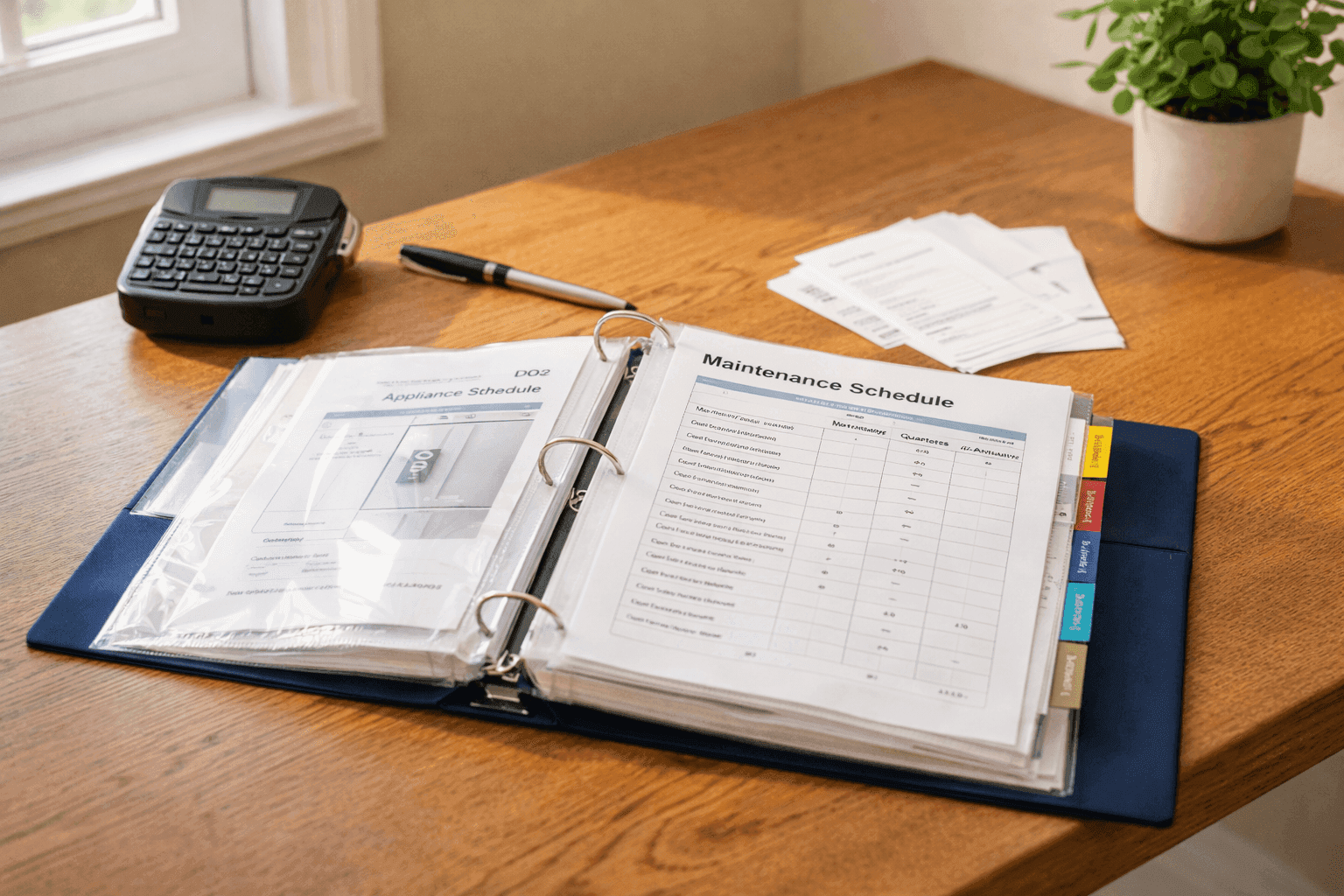
- Add a maintenance schedule page listing monthly, quarterly, and annual tasks with spaces to check off completion dates
- Include a service contacts page with phone numbers for your regular plumber, electrician, HVAC technician, and other trusted professionals
- Document major systems like noting your water heater installation date, HVAC filter size, paint colors used in each room—information you'll desperately need someday
- Store the binder somewhere accessible where family members actually know to look when they need information, not hidden in a closet nobody opens
Professional property managers recommend creating a "Quick Reference" page at the very front of your binder listing critical information you might need in emergencies: main water shutoff location, electrical panel location, gas shutoff location, septic tank location if applicable, and emergency contact numbers. This single page can prevent panic during crises when you need information immediately. Also, take photos of your major systems and appliances with their model numbers visible, printing these photos to include with manuals—this makes ordering replacement parts dramatically easier when you're not crawling behind appliances trying to read worn labels. For the maintenance schedule section, be realistic about what you'll actually do rather than creating an aspirational list that makes you feel guilty. Start with essential quarterly tasks like HVAC filter changes and dryer vent cleaning, adding more as habits develop. The binder that succeeds isn't the most comprehensive one; it's the one you actually maintain because the system feels manageable rather than overwhelming.