December Calendar Command Center That Tames Schedule Chaos
Create a visual hub where everyone sees parties, events, and commitments at a glance instead of asking constantly
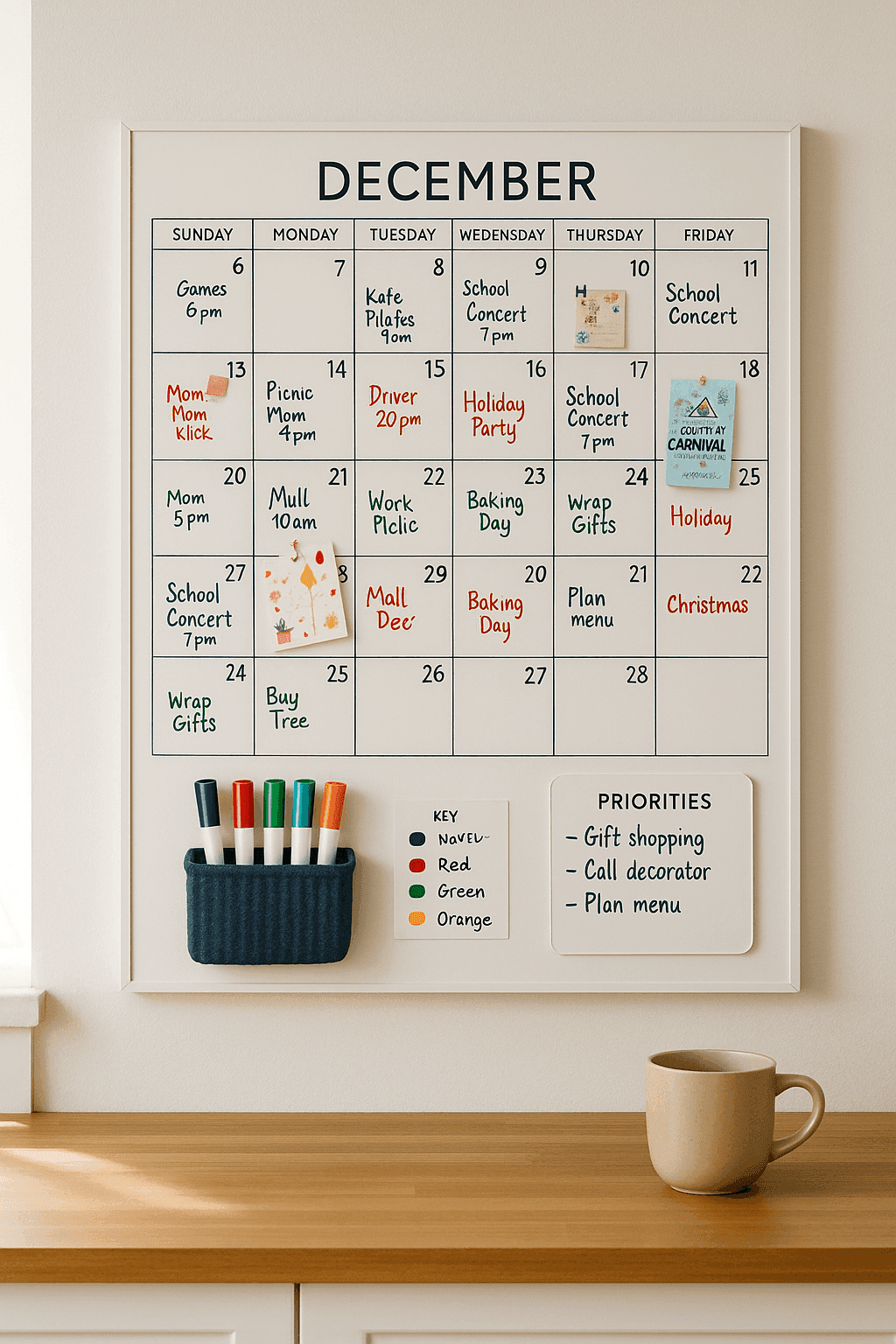
The December I finally created a visual family calendar after years of frantic "wait, when is that party?" conversations and missing events because information lived scattered across four different phone calendars was genuinely transformative for our household stress levels. A physical command center calendar isn't redundant technology in our smartphone era—it's visible infrastructure that prevents the constant interruptions of family members asking about schedules, creates shared accountability for commitments, and provides at-a-glance overview that digital calendars simply can't match. This setup costs $25-40 depending on calendar choice and takes about an hour to establish, but delivers immediate returns in reduced chaos, fewer missed activities, and genuine household harmony when everyone can see exactly what's happening and when. I position ours in the kitchen where we naturally gather multiple times daily, and the simple act of having color-coded visibility into December's packed schedule has eliminated probably 80% of the "what's going on this weekend?" questions that used to pepper every conversation. Beyond logistics management, a family calendar creates opportunities for anticipation and preparation—kids can see upcoming activities and plan accordingly, adults can identify conflicts before they become crises, and the whole family develops shared awareness of the season's rhythm rather than stumbling through December in reactive chaos.
What You'll Need
- Calendar Options:
- Large wall calendar (24x36 inches minimum)
- Or dry-erase calendar board with monthly grid
- Or DIY calendar using poster board and markers
- Printable free calendars available online
- Choose size everyone can easily read from distance
- Color-Coding System:
- Different colored markers for each family member
- Or assign colors to activity categories
- Dry-erase markers if using wipeable surface
- Fine-tip markers for detailed entries
- Cost: $10-15 for marker set
- Mounting & Display:
- Command strips for damage-free hanging
- Or bulletin board with pushpins
- Cork board for pinning invitations and flyers
- Positioned at family eye level in high-traffic area
- Supporting Elements:
- Small basket or pocket for holding markers
- Clips or magnets for attaching invitations
- Sticky notes for temporary reminders
- Key legend explaining color codes
- Small whiteboard for daily priorities (optional)
- Organization Additions:
- Mail sorter for permission slips
- Hooks for keys and backpacks
- Charging station for devices
- Weekly meal plan section
- Total Cost: $25-40 for complete setup
Setup Steps
- Choose strategic location by identifying a wall in your kitchen, mudroom, or main hallway where family members naturally pass multiple times daily and have space to stop and update entries. The calendar only functions if positioned where people actually see it rather than tucked away in rarely-visited spaces.
- Select calendar format based on your family's needs and preferences—large paper calendars offer maximum writing space, dry-erase boards enable easy changes, cork boards allow pinning invitations directly to dates. Consider how much detail you'll add and whether you need permanence or flexibility.
- Establish color system by assigning each family member their own color or categorizing by activity type (work/school, social events, appointments, holidays), then creating a visible legend that everyone understands. Consistent color coding allows instant visual recognition of who has what scheduled when.
- Mount securely at appropriate height where adults can write comfortably and children can view easily, using Command strips that won't damage walls or traditional mounting hardware if you prefer permanence. Ensure the calendar sits flat against the wall without curling corners that obscure dates.
- Transfer existing commitments by gathering information from digital calendars, school handouts, sports schedules, and verbal commitments, filling in December's calendar completely during initial setup. This comprehensive transfer prevents the calendar from becoming just another place that's missing information and therefore ignored.
- Add marker storage by mounting a small basket, cup, or magnetic holder directly below or beside the calendar so writing tools are always immediately available when someone needs to add entries. If markers require a search mission, people won't use the system consistently.
- Create update routine by designating Sunday evenings as "calendar sync" time when the family reviews the upcoming week together, ensuring everyone knows what's coming and has opportunity to add new commitments discovered during the week. This ritual prevents information gaps and last-minute surprises.
- Attach supporting materials by adding clips or magnetic strips for holding party invitations, school flyers, or permission slips directly on or near the calendar, creating one-stop information hub rather than papers scattered across counters. Physical documents attached to relevant dates provide complete context at a glance.
- Include important details in calendar entries beyond just event names by adding times, locations, and any special requirements like "bring gift" or "ugly sweater" so family members have complete information without asking follow-up questions. Comprehensive entries eliminate confusion and forgotten logistics.
- Maintain consistently by making calendar updates a non-negotiable habit for all family members when new commitments arise, and reviewing it together during breakfast or dinner to keep everyone informed. The calendar only works if it's current, complete, and consulted regularly rather than created with enthusiasm then gradually ignored.
Professional organizers and family therapists who specialize in household systems have advanced strategies that transform basic calendars into true command centers that reduce family stress and improve communication. The most sophisticated approach involves creating a "modular system" with multiple components beyond just the calendar—add a weekly meal planning section, daily priorities whiteboard, and "this week's focus" area that highlights the three most important upcoming events to prevent overwhelm. Professional organizers recommend the "icon system" where you develop simple symbols for recurring activity types—a soccer ball for sports, musical note for rehearsals, wrapped gift for parties—which allows faster visual scanning than reading every entry. For families with young children who can't yet read, use picture symbols or stickers representing different activities so even preschoolers can see their schedules and develop time awareness. The most effective systems include a "master list" section where family members write requests for calendar additions that get formally transferred during weekly sync sessions, preventing the chaos of multiple people writing in different handwriting styles at random times. Interior designers who create functional family spaces emphasize aesthetics matter—choose calendar styles and mounting solutions that complement your home's decor rather than looking purely utilitarian, since attractive systems you're proud to display get used more consistently than ugly ones you wish were hidden. Finally, savvy organizers maintain digital backups by photographing the completed calendar monthly, creating archives that help with future year planning ("oh right, we always have that party the second weekend") and providing records if disputes arise about who committed to what when. For December specifically, consider adding a "gift tracking" section where you list recipients, gift ideas, purchase status, and wrapping completion to prevent the holiday shopping chaos of forgotten people or duplicate purchases.