Ditch Disposable Swiffer Pads Forever with This Towel Hack
Transform worn towels into washable cleaning pads that save hundreds yearly
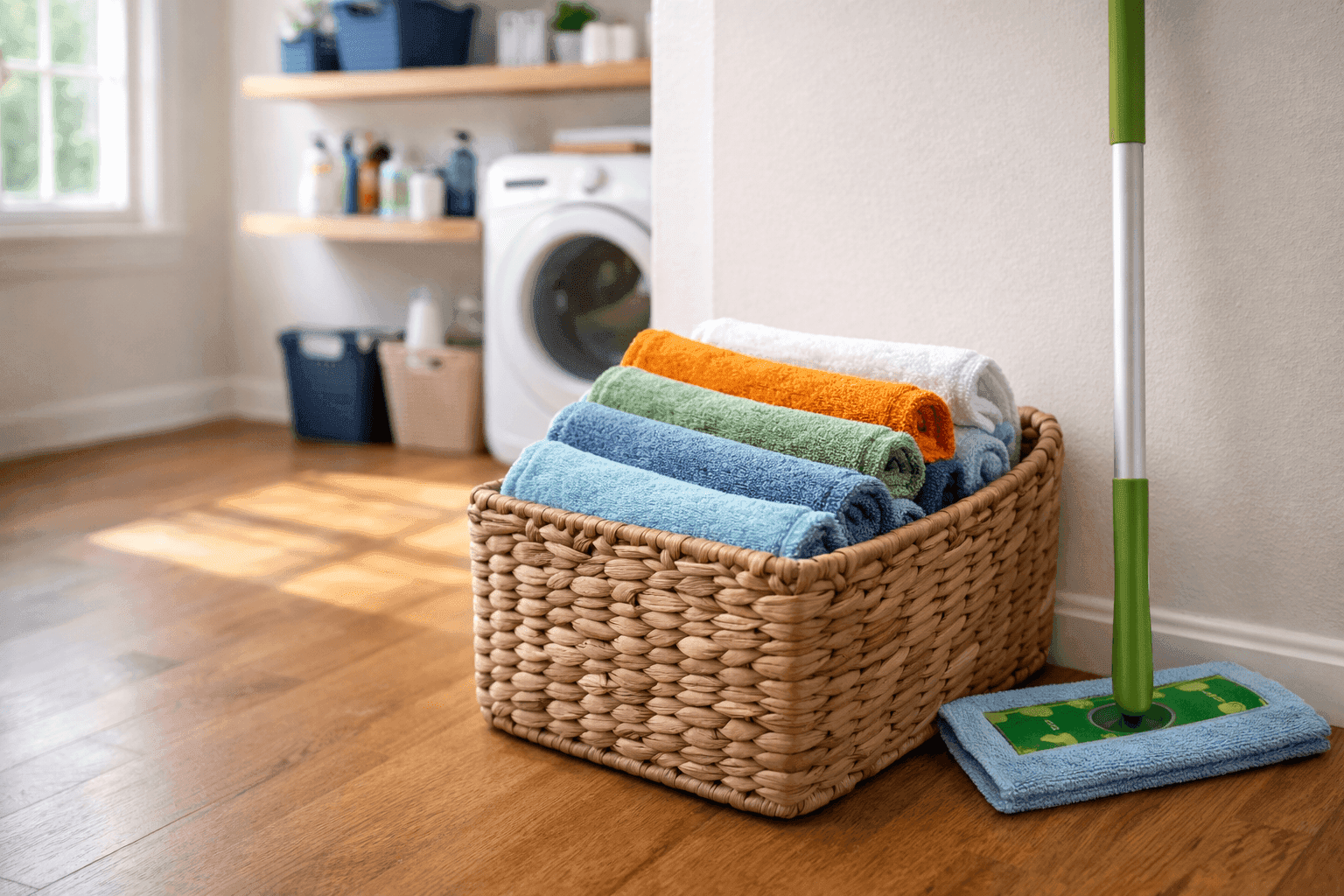
If you've ever calculated how much you spend on disposable Swiffer pads over a year, that moment of realization probably hurt—we're talking $150-300 annually for something you use once and throw away. Those worn-out towels taking up space in your linen closet are the perfect raw material for washable, reusable cleaning pads that work just as well as the disposable ones and cost essentially nothing to make. I switched to homemade pads three years ago after watching myself buy yet another overpriced refill pack, and honestly, the reusable ones actually clean better because you can use them slightly damp without worrying about wasting an expensive pad. The sewing takes about 10 minutes per pad if you're hand-stitching or literally two minutes with a machine, you can make a dozen pads from two old bath towels, and they last for years of repeated washing. Think of it as giving yourself permission to clean floors as often as you want without the guilt of generating trash or draining your budget on disposable products that accomplish the exact same thing.
What You'll Need
- Old towels: Worn bath towels, hand towels, or washcloths that are past their prime but still absorbent (use what you already own)
- Swiffer or similar mop: To measure pad dimensions (standard Swiffer pads are approximately 10x5 inches)
- Scissors or rotary cutter: For cutting fabric to size
- Ruler or measuring tape: For marking consistent pad sizes
- Fabric marker or chalk: For marking cutting lines on towels
- Sewing machine or needle and thread: For hemming edges to prevent fraying (basic zigzag stitch works perfectly)
- Pins: For holding fabric while sewing if needed
- Mesh laundry bag: For washing your finished pads without losing them in the wash ($3-5 if you don't own one)
Step-by-Step Instructions
- Measure your Swiffer head by placing a disposable pad on top and noting dimensions—standard size is about 10x5 inches, but measure yours to confirm since models vary slightly
- Add hem allowance by marking rectangles that are 1 inch larger in each direction than your mop head (so 11x6 inches for standard size), which gives you a half-inch hem all around
- Cut your rectangles from old towels using sharp scissors or a rotary cutter with ruler for cleanest edges—you can get 8-12 pads from two standard bath towels depending on their size
- Fold and pin hems by folding each edge over about half an inch to the wrong side and pinning in place—this step prevents fraying during washing and use
- Sew around all edges using a simple straight stitch or zigzag stitch about a quarter-inch from the folded edge—backstitch at corners for durability since these will get heavy use
- Trim loose threads and give each pad a quick press if they're wrinkled, though this step is optional since they'll get wet during first use anyway
- Test attachment method by sliding your homemade pad onto the Swiffer head—the textured towel fabric grips the Velcro strips better than you'd expect, working exactly like disposable pads
- Use and wash freely by cleaning floors as normal, then tossing used pads in a mesh laundry bag and washing with your regular towels—they'll last for years of repeated use and hundreds of floor cleanings
Professional cleaners who've switched to reusable pads recommend making two distinct sets—lighter colored towels for general cleaning and darker colors for bathroom or heavy-duty jobs, which prevents cross-contamination worries and lets you see dirt pickup clearly. Terry cloth works beautifully, but microfiber towels create an even more effective pad for hardwood floors since they grab dust without needing dampness. For wet mopping, slightly dampen your reusable pad before attaching rather than using spray cleaners, which saves even more money on expensive Swiffer cleaning solutions you can replace with simple vinegar-water mixture. Make extra pads so you always have clean ones ready—a dozen pads means you can go weeks between laundry loads dedicated to cleaning supplies. Some people add elastic corners or simple ties to their homemade pads for more secure attachment, though most find the towel texture grips Velcro strips perfectly without modification. Store your clean pad collection in a basket near your mop so they're always accessible, and keep a separate small bin for used ones waiting to be washed. The best part about making your own is you can customize thickness—use single-layer towel for quick touch-ups and double-layer for deep cleaning jobs. Calculate your annual savings by tracking how many disposable pads you used to buy monthly, multiply by $0.40-0.60 per pad, and celebrate redirecting that $150-300 toward literally anything else.