Door Revival: Transforming Interior Doors Without Replacement
Update your home's look with a simple door refinishing project that delivers dramatic results
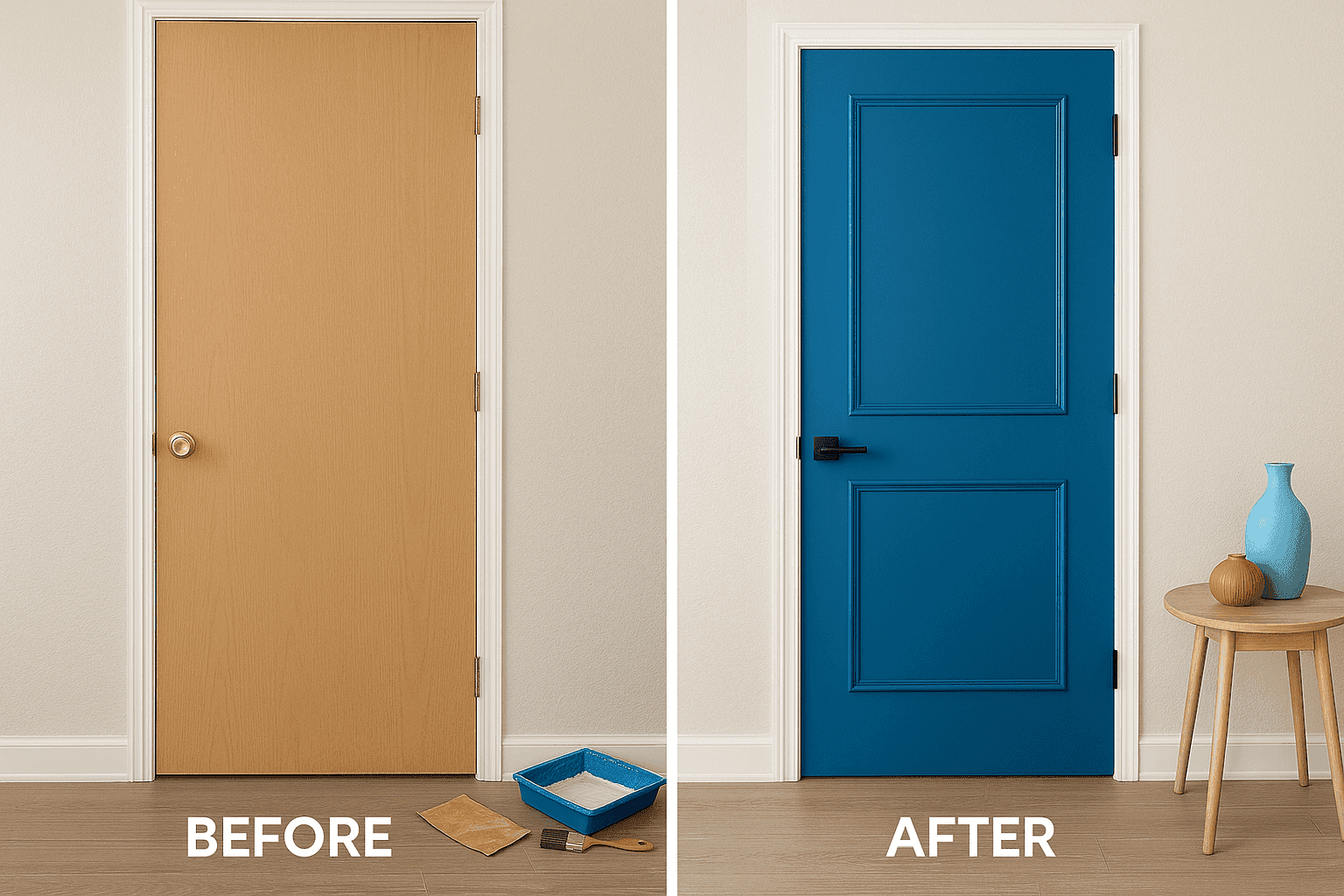
Interior doors are often overlooked during home renovations, yet they significantly impact your home's overall aesthetic. Dated, worn, or mismatched doors can detract from even the most beautifully designed rooms. The good news: refinishing existing doors is far more cost-effective than replacement, allowing you to achieve a custom, high-end look without the expense or hassle of installing new doors. With just a weekend's effort, you can transform these functional elements into design features that complement your updated décor.
Materials & Tools
| • Cleaning Supplies: TSP cleaner, sponges, rags |
| • Sanding Materials: 120, 180, and 220-grit sandpaper |
| • Paint/Stain Options: Primer, paint, or wood stain |
| • Application Tools: Brushes, rollers, paint trays |
| • Protective Finishes: Polyurethane, wax, or sealant |
| • Hardware: New hinges, door handles, knobs |
| • Optional Upgrades: Trim pieces, molding, panels |
| • Tools: Screwdriver, drill, paintable caulk |
| • Protection: Drop cloths, painter's tape, gloves |
Refinishing Process
- Prepare your workspace. Set up a well-ventilated area with adequate lighting. Lay drop cloths to protect floors. For optimal results, remove doors from hinges and hardware from doors, labeling each door's location and hardware placement for easier reassembly.
- Clean thoroughly. Remove all dirt, oils, and residues using TSP cleaner or another degreasing agent. Rinse with clean water and allow to dry completely. This step ensures proper adhesion of new finishes.
- Assess door condition. Examine doors for dents, holes, or damaged areas that need repair. Fill small imperfections with wood filler, and repair larger damage with wood putty or automotive body filler for hollow-core doors. Allow repairs to dry completely before sanding.
- Sand surfaces. For previously finished doors, start with 120-grit sandpaper to remove old finish and create a smooth base. Progress to finer 180 and 220-grit for a polished surface. Sand with the wood grain, and remove all dust with a tack cloth before proceeding.
- Apply primer (for painting). Use a high-quality primer designed for interior woodwork. Apply with a brush for panels and a small roller for flat surfaces. Allow primer to dry completely according to manufacturer's instructions, typically 24 hours.
- For painted finish: Apply two coats of semi-gloss or satin paint designed for interior trim and doors. Allow adequate drying time between coats, and lightly sand with fine-grit paper between applications for a professional result. Use a paintbrush for detailed areas and a small foam roller for flat surfaces to minimize brush marks.
- For stained finish: Apply wood stain using a lint-free cloth, working with the grain. For even results, apply stain liberally, allow it to penetrate according to desired darkness (usually 5-15 minutes), then wipe away excess with a clean cloth. Allow to dry completely before applying protective topcoat.
- Add protective finish. Once paint or stain has dried completely, apply a clear protective coat such as polyurethane for stained doors or a clear sealer for painted doors. This step enhances durability, especially important for high-traffic areas and doors with children or pets.
- Update hardware. Install new hinges, handles, and doorknobs for a complete transformation. Choose finishes that coordinate with other fixtures in your home for a cohesive look. Consider upgrading to soft-close hinges for a luxury touch.
- Reinstall doors. Once finishes are completely dry (allow at least 24-48 hours), rehang doors and check for proper operation. Make any necessary adjustments to hinges to ensure doors swing freely and latch properly.
For a designer upgrade that goes beyond basic refinishing, consider adding architectural interest to flat panel doors. Apply thin strips of decorative molding in geometric patterns—create simple rectangles or more complex designs like a Shaker or craftsman style. Secure with construction adhesive and finishing nails, then caulk seams before painting the entire door for a custom look. For consistent results when painting multiple doors, use a paint sprayer rather than brushes and rollers—the investment in rental equipment pays off with a flawless, streak-free finish that rivals factory-painted doors.