Door Transformations: Elevating Ordinary Closet Doors
Simple upgrades that turn bland closet doors into stunning design features
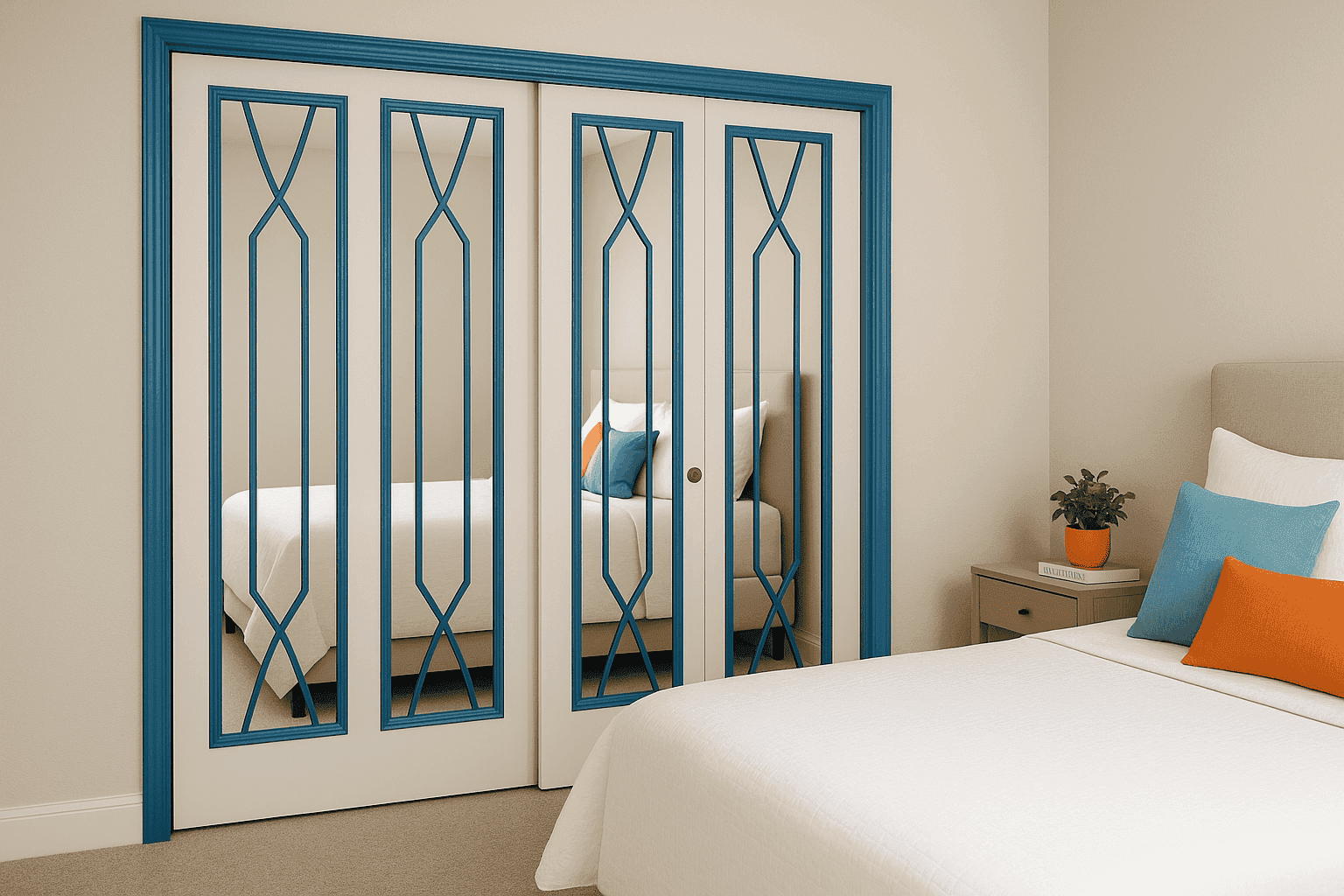
Closet doors occupy significant visual real estate in bedrooms and hallways, yet they're often the most overlooked design elements in a home. Standard builder-grade doors—whether sliding, bifold, or hinged—present perfect blank canvases for creative transformations. With modest investment and basic DIY skills, you can elevate these utilitarian surfaces into custom statement pieces that enhance your home's style while maintaining their essential function.
Customization Options
| • Reflective Elements: Mirror panels, mirrored tiles |
| • Decorative Coverings: Wallpaper, fabric, decals |
| • Architectural Details: Trim, molding, paneling |
| • Painting Techniques: Stencils, color blocking, ombré |
| • Hardware Updates: Handles, knobs, pulls |
| • Style Conversion: Barn door hardware, pocket doors |
| • Functional Add-ons: Chalkboard paint, cork panels |
| • Tools: Depends on method (saw, adhesive, drill) |
| • Finishing Materials: Paint, sealants, clear coat |
Transformation Projects
- Mirror Installation
- Purchase mirror panels cut to size (slightly smaller than door panels).
- Clean doors thoroughly and ensure surfaces are completely dry.
- Apply mirror mastic adhesive in small dollops across the back of the mirror.
- Carefully position mirror on door, applying gentle, even pressure.
- Support mirror with painter's tape until adhesive cures (24 hours).
- For a polished look, add decorative trim around mirror edges.
- Consider mirroring only the upper panels of multi-panel doors for a custom look.
- Decorative Trim Application
- Clean and lightly sand door surfaces.
- Determine your pattern—classic rectangles, geometric designs, or Shaker style.
- Measure and mark trim placement using a level and pencil.
- Cut trim pieces to size using a miter saw for clean 45° corner joints.
- Attach trim using construction adhesive and finish nails.
- Fill nail holes with wood filler and sand smooth when dry.
- Prime and paint the entire door for a cohesive, high-end look.
- Consider painting the inset panels a contrasting color for added dimension.
- Wallpaper or Fabric Application
- Remove doors from tracks or hinges for easier working access.
- Measure and cut wallpaper or fabric approximately 2" larger than door on all sides.
- For wallpaper: Apply wallpaper adhesive to door surface and position paper.
- For fabric: Use spray adhesive or liquid starch for a removable application.
- Smooth material from center outward using a plastic smoothing tool.
- Trim excess material using a sharp utility knife and straightedge.
- For sliding doors, ensure material doesn't interfere with track operation.
- Apply a clear protective finish over fabric for durability if needed.
- Barn Door Conversion
- Remove existing bifold or sliding doors completely.
- Install barn door track hardware above the door opening, ensuring it's anchored into studs.
- Select a door: repurpose an existing door or create a custom door from plywood and trim.
- Add barn door hardware (hangers, handle, floor guide) to the door.
- Hang door on track and adjust hardware for smooth operation.
- Customize with paint, stain, or decorative elements to match your décor.
- Consider adding a soft-close mechanism for quiet operation.
- Glass Panel Insertion
- This works best with panel doors where center sections can be removed.
- Carefully remove the center panel from the door frame.
- Measure the opening and order tempered glass cut to size.
- Consider decorative options: frosted, reeded, textured, or stained glass.
- Install rubber gaskets in the frame to cushion the glass.
- Carefully insert glass panel and secure with glazing points or thin molding.
- This technique works particularly well for closets containing display items.
- Functional Surface Additions
- Create organizational doors by adding:
- Chalkboard paint for messages and reminders
- Magnetic primer under paint for a magnetic surface
- Cork tiles for pinning notes or photos
- Pegboard panels for hanging lightweight accessories
- These options are particularly useful in children's rooms or home offices.
- Apply these materials to the entire door or just to inset panels.
- Frame functional areas with decorative molding for a finished appearance.
- Create organizational doors by adding:
When customizing closet doors, consider how they'll look both open and closed, particularly in small spaces. For sliding doors, create complementary but different designs on each panel so they create a cohesive pattern when closed but function as independent design elements when partially open. With bifold doors, consider the visual impact of the accordion effect when they're open—geometric patterns that align whether open or closed create an especially sophisticated look. For statement-making closet doors in bedrooms, coordinate their design with other major elements like headboards or accent walls to create intentional design harmony rather than competing focal points.