Eclectic Display: Create Gallery Walls With Thrifted Charm
Celebrate family memories with personality over perfection
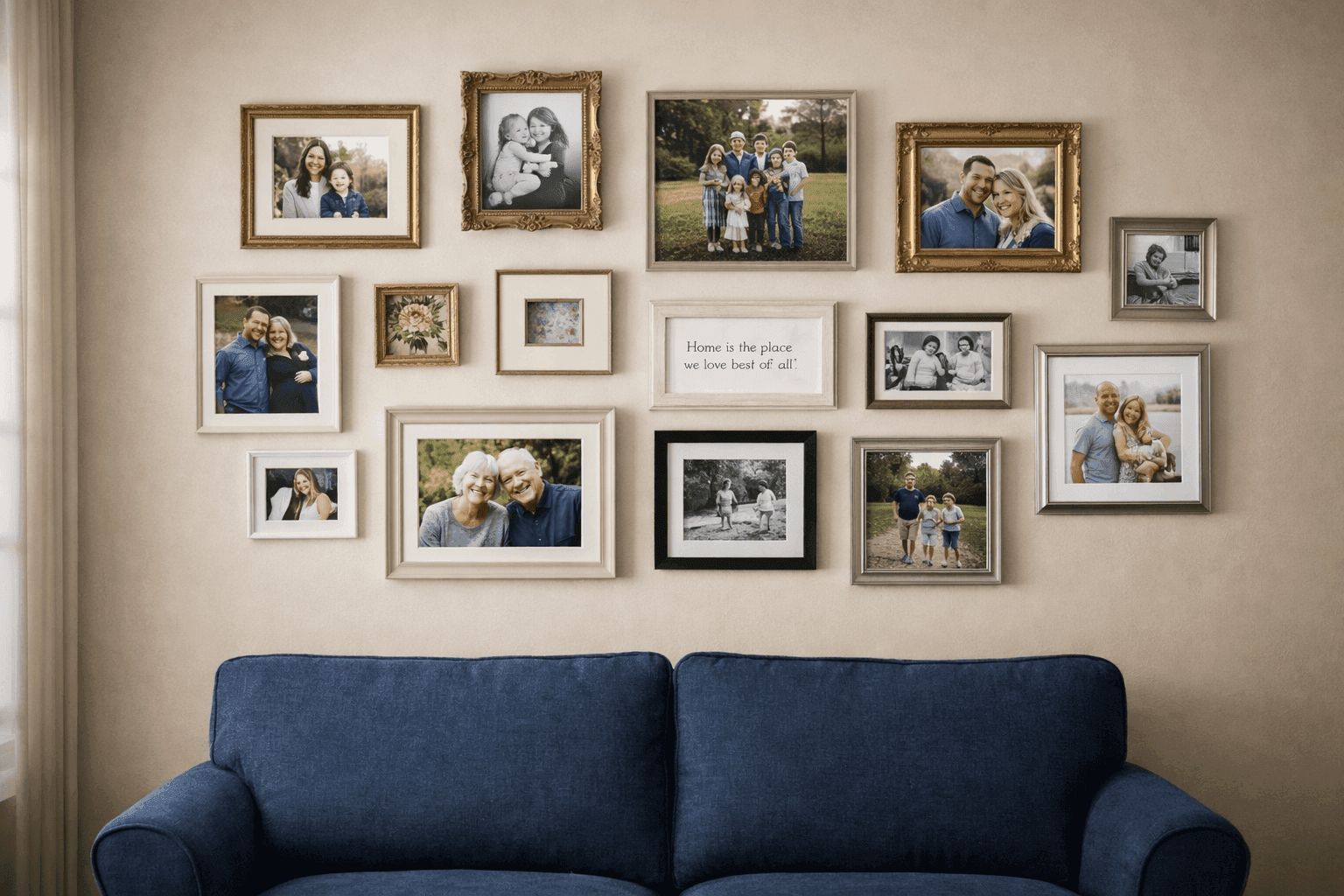
Perfect matching frame sets from home stores cost $200-400 while producing sterile, generic gallery walls that lack the personality and collected-over-time charm that makes spaces feel genuinely lived-in rather than catalog-staged. Mismatched frame gallery walls embrace eclectic aesthetics by combining frames in various sizes, styles, finishes, and eras—thrift store finds mixed with inherited pieces, ornate gold frames beside simple black ones, vintage wood alongside modern metal—creating dynamic displays that tell stories through both the photos and the frames holding them. This approach costs $40-60 for 8-12 frames when you shop strategically at thrift stores, estate sales, and discount retailers, producing results substantially more interesting than uniform sets while celebrating the imperfect, collected nature of real family histories. The key to making mismatched frames look intentionally curated rather than accidentally random is finding unifying elements: similar color palettes even if finishes differ, complementary styles even if not identical, or consistent matting that ties disparate frames together visually. These gallery walls work beautifully for families whose photos span decades and styles, for renters who want personality without permanent modifications, or for anyone whose aesthetic leans toward bohemian, eclectic, farmhouse, or collected-vintage rather than minimalist-modern perfection that feels cold and impersonal. Creating the layout takes two hours including hanging time, but the result is walls that genuinely reflect your family's story with character that grows more meaningful as time passes and you add new frames celebrating new memories.
What You'll Need
- Frame Collection ($30-50):
- 8-12 frames in various sizes (thrift stores, estate sales)
- Mix of large anchors (11x14, 16x20) with smaller accents
- Variety of styles: ornate, simple, vintage, modern
- Unifying element: similar colors OR complementary finishes
- Photos & Prints:
- Family photos printed to fit frame sizes
- Mix of color and black-and-white for visual variety
- Art prints or quotes to break up photo monotony
- Consider reprinting favorites in multiple sizes
- Optional Updates ($5-10):
- Spray paint to unify mismatched finishes
- Matching mats to create cohesion
- New backing or glass for damaged frames
- Hanging Supplies ($5-10):
- Picture hanging strips or nails
- Hammer and level
- Measuring tape and pencil
- Kraft paper for template-making
Create Your Gallery
- Hunt for frames at thrift stores, estate sales, and discount retailers with open minds about transformation—ugly finishes can be spray-painted, dated mats replaced, and scratched glass polished or swapped for better visual results.
- Unify your collection if needed by spray-painting mismatched frames in coordinating colors—all white, all black, or complementary metallics create cohesion while maintaining size and style variety that keeps things interesting.
- Select photos and prints thoughtfully, mixing formal portraits with candid moments, color images with black-and-white, and family photos with meaningful quotes or art that reflects your interests beyond just faces staring from walls.
- Arrange frames on the floor in front of your target wall, playing with configurations until you find balanced asymmetry where visual weight distributes evenly despite mismatched elements—this trial period prevents wall holes from rejected layouts.
- Create paper templates by tracing each frame onto kraft paper or newspaper, cutting them out and taping to the wall in your final arrangement—this allows adjustments without putting holes in walls prematurely.
- Maintain consistent spacing between frames (typically 2-3 inches) even though frame sizes vary wildly—uniform gaps create the visual rhythm that makes mismatched collections look intentional rather than accidentally chaotic.
- Start hanging from the center anchor piece and work outward, using levels to ensure individual frames hang straight even if the overall arrangement is asymmetrical—crooked frames ruin otherwise perfect eclectic displays.
- Step back frequently during hanging to assess overall balance from normal viewing distance rather than getting lost in close-up details that matter less than how the complete wall reads from across the room.
Interior designers create the most successful mismatched galleries by identifying one unifying element that ties disparate frames together—either similar color palettes (all warm metallics even if gold, brass, and copper), complementary styles (all vintage even if different eras), or consistent matting (white mats in every frame regardless of frame finish). The "salon-style" hanging approach where frames extend from floor to ceiling or fill entire walls works beautifully for maximalist personalities, while more restrained arrangements with intentional negative space suit those preferring cleaner aesthetics. Mix in three-dimensional objects like small shelves, mirrors, or wall-mounted plants to break up the flatness that happens when every element is a framed photo at the same depth. For renters or commitment-phobes, arrange frames leaning on picture ledges or mantels instead of hanging them, creating flexible galleries that rearrange easily as your photo collection grows. The most dynamic galleries include variety in content, not just frames—family photos mixed with children's artwork, vacation snapshots beside meaningful quotes, portraits alongside abstract prints or botanical illustrations that reflect broader interests. Remember that gallery walls evolve over time rather than being finished permanent installations—start with what you have, add frames as you find perfect pieces at thrift stores, and swap photos seasonally or as family grows, embracing the collected nature that makes these displays feel authentically personal rather than professionally staged.