Fix Loose Cabinet Hardware in 15 Minutes: Stop the Wobble for Good
Simple techniques to tighten those annoying loose pulls and prevent them from falling off completely
You know that annoying wobble when you grab a drawer pull, or that slight rattle every time you close a cabinet door? Those loose handles and knobs aren't just irritating—they're on their way to falling off completely, and once the hardware is gone, you're dealing with a much bigger problem. The good news is that tightening loose cabinet hardware is one of the easiest home maintenance tasks you can tackle, and catching it early prevents the stripped screw holes that make repairs more complicated. Most pulls loosen simply from repeated use over months and years, and a quick tightening session can fix an entire kitchen's worth of hardware in just 15-20 minutes. I make this part of my seasonal maintenance routine because it's so much easier than dealing with lost knobs or damaged cabinet faces. Whether you're dealing with simple looseness or stripped screw holes, these techniques will have your cabinet hardware feeling solid and secure again.
Tools & Materials Needed
- Basic Tools:
- Screwdriver (Phillips or flathead depending on your hardware)
- Flashlight for seeing inside cabinets
- For Stripped Screws:
- Plumber's tape (Teflon tape)
- Small rubber washers
- Wood filler or wooden toothpicks
- Wood glue
- Small drill bit for pilot holes
- Prevention Products:
- Clear nail polish or thread-locking compound (like blue Loctite)
- Small container to hold removed screws
Repair Steps
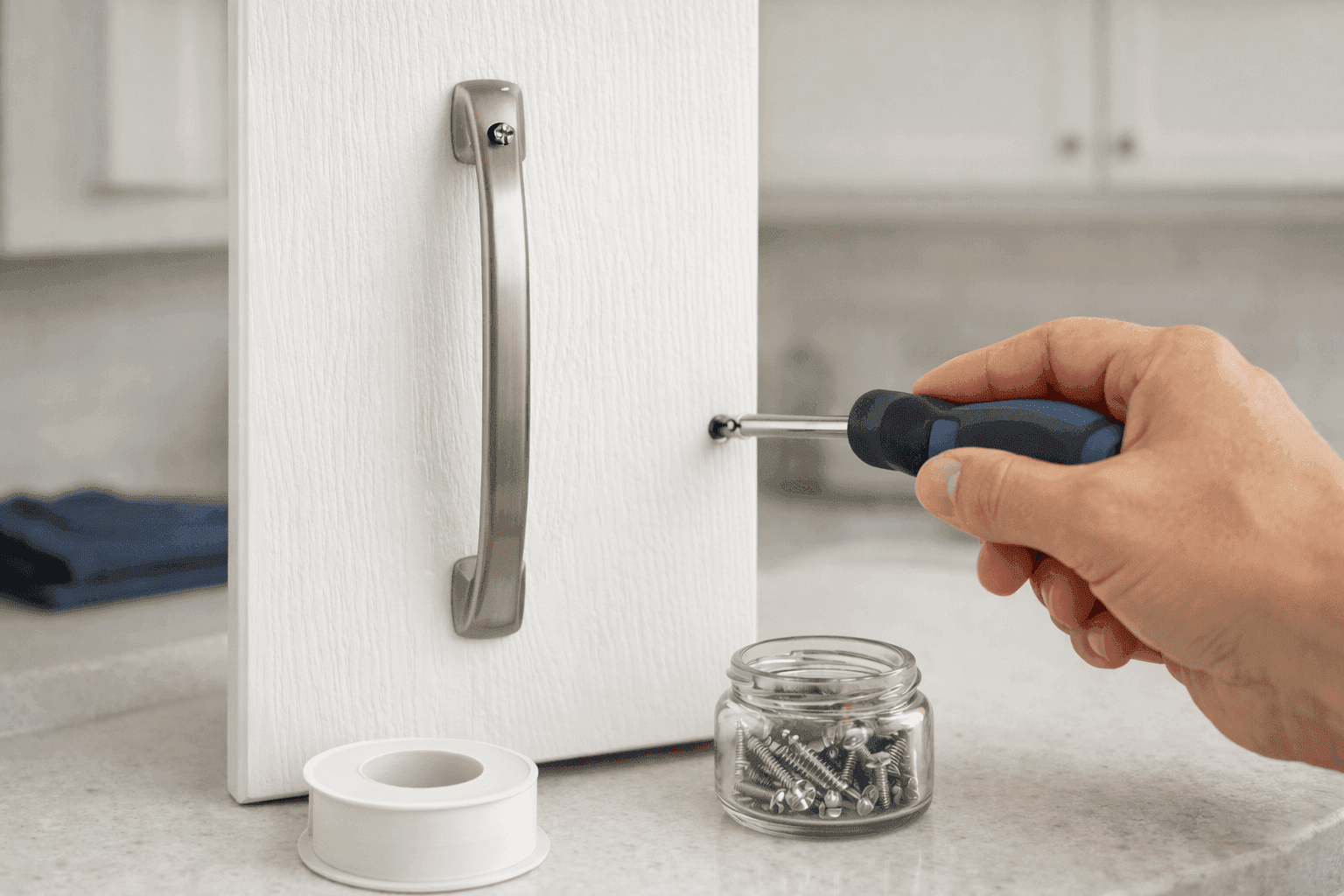
- Access the mounting screw by opening the cabinet door or drawer and locating the screw head on the interior side—this is where you'll do all your tightening work.
- Test each handle by trying to tighten the screw clockwise with your screwdriver—if it tightens normally, you're done with that one and can move to the next.
- Diagnose stripped screws by noticing if the screw spins freely without tightening—this means the threads have worn away the wood and need reinforcement before they'll hold.
- Remove the screw completely from any stripped holes and wrap 2-3 layers of plumber's tape around the screw threads, which adds thickness so threads can grip fresh wood.
- Reinforce severely stripped holes by filling them with wood filler or inserting a toothpick coated in wood glue, letting it dry completely for several hours before proceeding.
- Re-drill a pilot hole in the filled area using a bit slightly smaller than your screw diameter, which gives the screw fresh wood to grip without splitting.
- Apply a tiny drop of clear nail polish or blue thread-locking compound to the screw threads before final installation—this creates just enough friction to prevent loosening without making removal impossible later.
- Tighten all repaired screws firmly but not overly tight, since over-tightening is actually what causes many stripped holes in the first place.
Make this a seasonal maintenance task rather than waiting until hardware actually falls off—check all your cabinet and drawer pulls twice a year, perhaps when you change your clocks for daylight saving time. If you're consistently having problems with certain locations (high-traffic drawers or cabinets), consider upgrading to longer screws that go deeper into the cabinet material for a more secure hold. For cabinets with particularly thin walls where screws keep stripping, switch to bolt-style hardware that goes completely through the cabinet face with a nut on the back—this distributes pressure more evenly and creates a much stronger connection. The five extra minutes this inspection takes prevents the frustration of lost hardware and damaged cabinet faces that require much more extensive repairs.