Flutter & Feather: Bringing Spring's Winged Wonders Indoors
Incorporate subtle bird and butterfly motifs that capture spring's renewal and bring playful movement to your decor
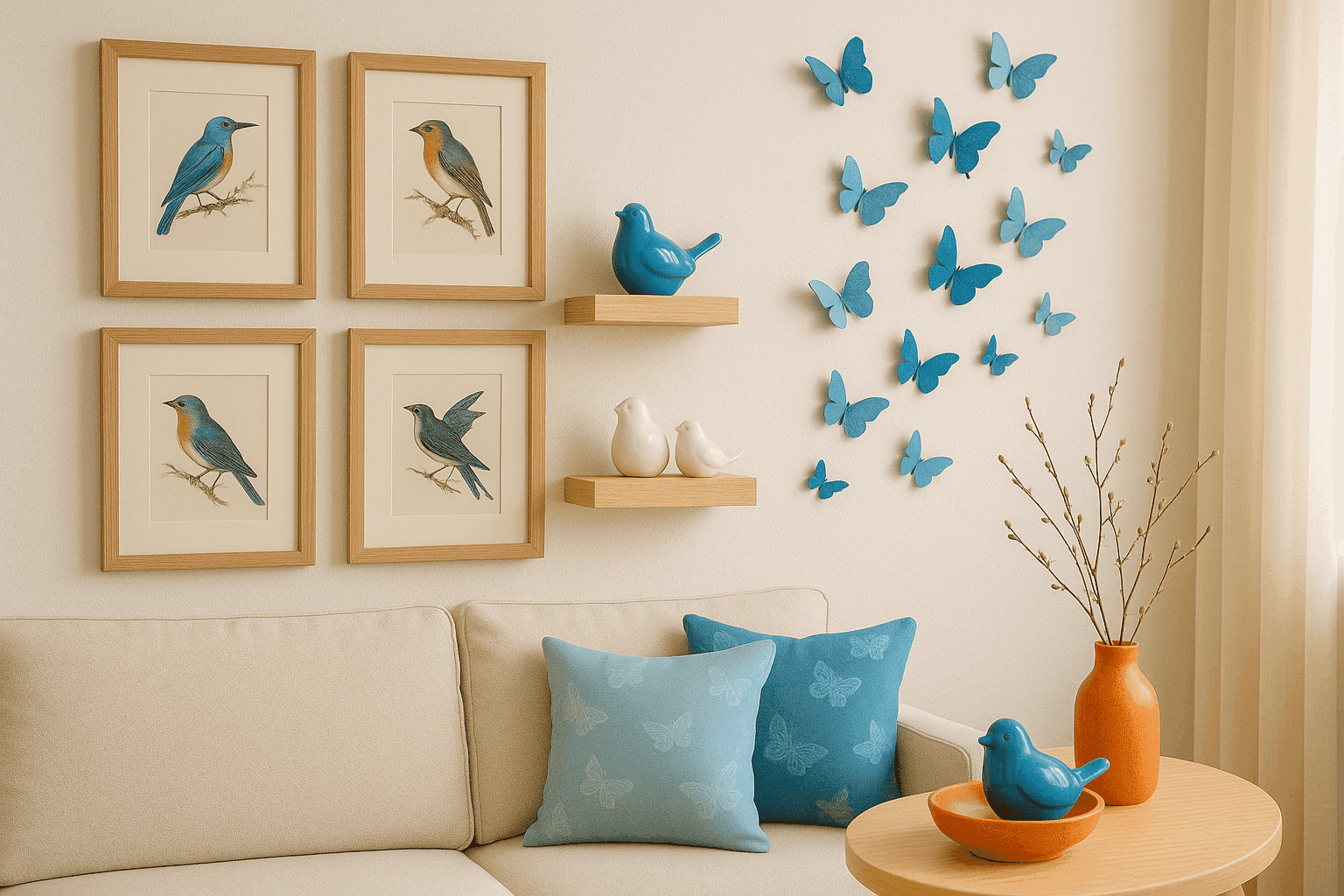
Birds and butterflies represent the essence of spring—rebirth, transformation, and the joyful return of nature's activity after winter's stillness. Incorporating these winged creatures into your home decor creates instant seasonal resonance without resorting to obvious or kitschy spring themes. When thoughtfully selected and strategically placed, bird and butterfly motifs add movement, color, and natural patterns that enliven your spaces while remaining sophisticated. From subtle accents to statement pieces, these elements connect your interior to the awakening world outside your windows, bringing the delightful sense of spring's freedom and lightness indoors for you to enjoy regardless of weather.
What You'll Need
| Wall Art & Prints: |
| • Framed bird or butterfly illustrations |
| • Vintage Audubon prints or botanical art |
| • Canvas prints with winged subjects |
| • Bird or butterfly photography |
| • Shadow boxes with preserved specimens (ethically sourced) |
| Sculptural Elements: |
| • Ceramic or porcelain bird figurines |
| • Metal butterfly wall sculptures |
| • Wooden carved birds |
| • Glass bird paperweights or decorative objects |
| • Wire or paper butterfly mobiles |
| Textiles & Soft Furnishings: |
| • Throw pillows with bird or butterfly motifs |
| • Light throws with subtle winged patterns |
| • Table linens featuring delicate illustrations |
| • Window treatments with bird or butterfly prints |
| • Area rug with nature-inspired design |
| Tabletop & Decorative Items: |
| • Decorative boxes with bird or butterfly motifs |
| • Bookends shaped like birds |
| • Butterfly or hummingbird salt and pepper shakers |
| • Ceramic vases with relief designs |
| • Candle holders with nature-inspired details |
| DIY Project Supplies: |
| • Paper butterfly cutouts or templates |
| • Decorative scrapbook paper in spring colors |
| • Fine wire for creating 3D effects |
| • Craft scissors, including decorative edge scissors |
| • Adhesive mounting squares or removable wall hooks |
How To Do It
- Choose a sophisticated approach:
- Select realistic versus stylized representations based on your decor style
- For contemporary spaces, choose abstract or geometric interpretations
- For traditional rooms, opt for classic Audubon-style illustrations
- Consider vintage or antique pieces for timeless appeal
- Limit motifs to specific species for a curated, intentional look
- Create wall art displays:
- Frame botanical prints featuring birds or butterflies
- Group complementary prints in gallery wall arrangements
- Mix bird illustrations with related elements like nests or feathers
- Consider large-scale single prints as statement pieces
- Install three-dimensional wall sculptures for added texture
- Incorporate textiles with subtle motifs:
- Add 2-3 throw pillows with bird or butterfly patterns
- Layer in a lightweight throw with a subtle winged design
- Consider sheer curtains with delicate butterfly patterns
- Use table runners or placemats featuring botanical illustrations
- Select pieces where the motif is secondary to overall design
- Add sculptural elements:
- Display small groups of bird figurines on shelves or mantels
- Use bookends shaped like birds to add functional decoration
- Place a decorative bird cage with planted flowers as a centerpiece
- Incorporate butterfly sculptures in mixed metal finishes
- Consider glass or ceramic pieces that reflect light beautifully
- Create dimensional butterfly displays:
- Arrange paper or fabric butterflies in flight patterns on walls
- Mount butterflies at different distances from the wall for depth
- Create a butterfly mobile to hang in a window or corner
- Cluster butterflies around mirrors or picture frames
- Consider ombré color arrangements for sophisticated impact
- Style tabletop vignettes:
- Arrange decorative boxes or containers with bird motifs
- Display small bird figurines among books on shelves
- Place butterfly-themed items on trays for cohesive groupings
- Layer pieces of varying heights for visual interest
- Include natural elements like feathers or small nests
- DIY paper butterfly art:
- Cut butterfly shapes from decorative paper in complementary colors
- Fold wings slightly upward for dimensional effect
- Mount on canvas or in shadow boxes
- Create ascending patterns that suggest flight
- Use removable adhesive for temporary seasonal displays
- Incorporate lighting elements:
- Select lamps with bases featuring bird motifs
- Consider lampshades with butterfly silhouettes
- Use butterfly-shaped string lights for subtle evening glow
- Position lighting to create shadow patterns from sculptural pieces
- Look for candleholders with delicate winged details
- Balance with complementary natural elements:
- Pair bird decorations with botanical elements
- Add fresh flowers that attract butterflies in nature
- Include branches or twigs as natural perches for bird figurines
- Consider small potted plants that complement the winged theme
- Add natural textures like woven grass or raffia elements
- Maintain sophistication through restraint:
- Limit winged motifs to a few key areas in each room
- Choose quality over quantity for figurines and sculptures
- Mix bird and butterfly elements with non-themed decor
- Consider scale—balance small detailed pieces with larger simple ones
- Edit displays to avoid overcrowding or "theme park" feeling
Professional stylists employ what designers call the "naturalist's eye" when incorporating bird and butterfly motifs into sophisticated spaces. Rather than selecting obviously decorative pieces, they seek out scientifically accurate representations that capture the authentic beauty of these creatures. Museum-quality prints from antique natural history books or modern limited-edition illustrations by wildlife artists provide gravitas that purely decorative interpretations lack. Another designer secret is the "implied movement" technique—arranging elements to suggest the flight patterns of birds or butterflies, creating visual pathways that guide the eye through the space. For instance, a grouping of butterfly specimens might be arranged in an ascending spiral, or bird figurines positioned to suggest a flock in motion. To achieve a curated look, top designers also recommend focusing on native species from your region rather than exotic varieties, creating a subtle connection between your interior and the local natural environment—an approach that feels both more authentic and more personally meaningful.