Fresh Greens: Decorating with Living Botanicals
Bring spring indoors with stylish arrangements of eucalyptus, ferns, and fresh-cut stems
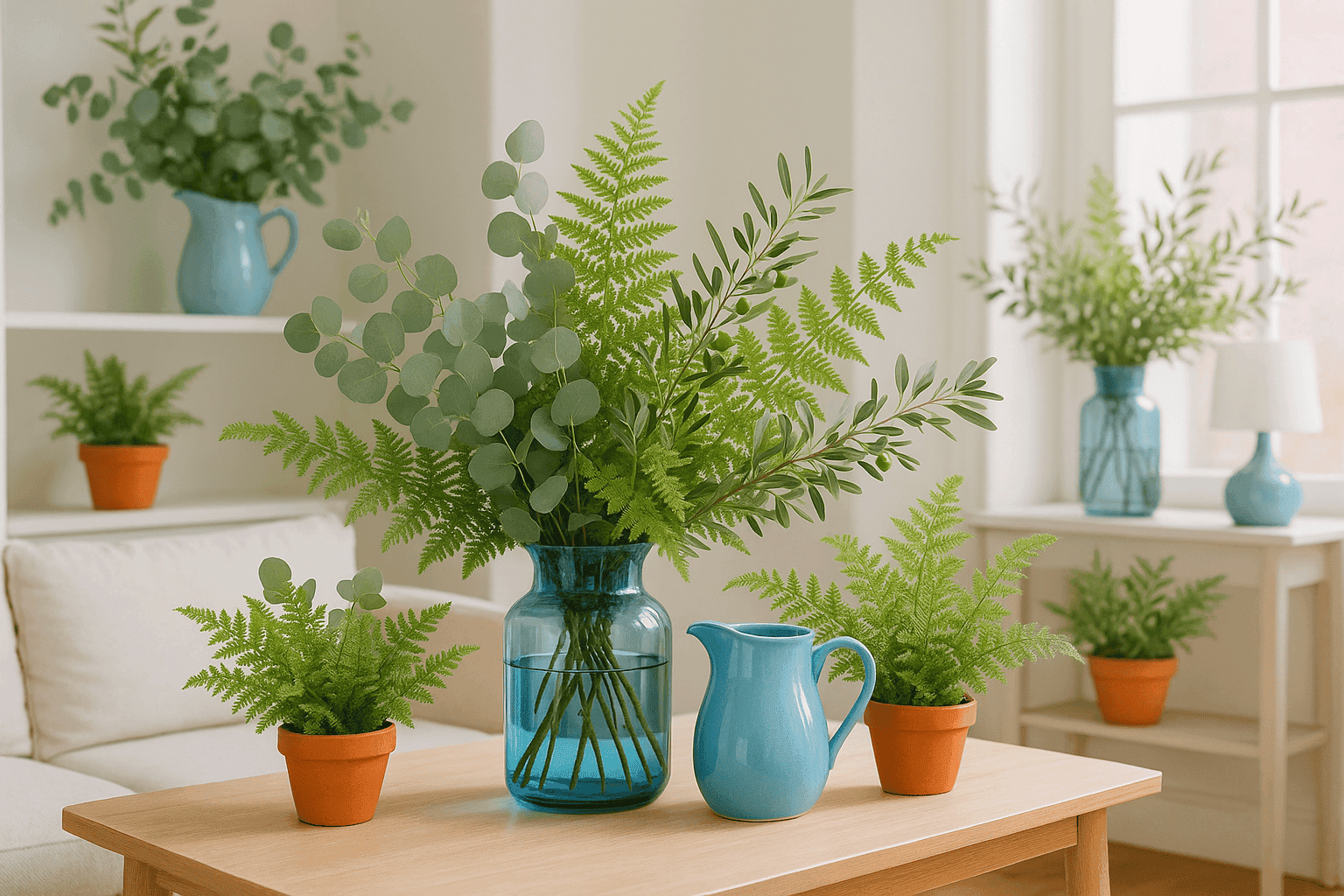
Fresh greenery is the designer's secret weapon for bringing spaces to life, particularly during spring. Unlike flowers that may wilt quickly, many types of foliage remain beautiful for weeks with minimal care. Eucalyptus, ferns, and various fresh-cut stems add texture, color, and organic energy to any room. By strategically placing these natural elements throughout your home, you create a connection to the outdoors while enhancing your existing decor with living, breathing accents that engage the senses.
What You'll Need
| Greenery Options: |
| • Eucalyptus (silver dollar, seeded, or baby blue) |
| • Ferns (maidenhair, boston, or bird's nest) |
| • Olive branches or Italian ruscus |
| • Magnolia leaves |
| • Lemon leaf or salal |
| • Bay leaf or rosemary sprigs |
| • Moss varieties (sheet moss, reindeer moss) |
| Display Vessels: |
| • Clear glass vases in various heights |
| • Ceramic pitchers or jugs |
| • Vintage bottles or apothecary jars |
| • Terracotta or concrete planters |
| • Small bud vases for individual stems |
| Tools and Supplies: |
| • Floral shears or sharp scissors |
| • Floral preservative |
| • Floral tape or clear tape |
| • Small river rocks or clear glass pebbles |
| • Spray bottle for misting |
How To Do It
- Select and prepare your greenery:
- Choose fresh, unblemished stems with vibrant color
- Remove any leaves that will sit below the waterline
- Cut stems at a 45-degree angle to maximize water absorption
- Place cut stems in water immediately after cutting
- Consider mixing different textures and shades of green
- Create a statement arrangement:
- Choose a prominent vessel for high-impact areas like entryways or dining tables
- Fill vessel halfway with fresh, room-temperature water
- Add floral preservative if using commercially purchased greens
- Create a loose framework with larger branches (eucalyptus or magnolia)
- Add in mid-sized foliage to fill gaps
- Finish with delicate elements like fern fronds for movement
- Design a mantel or shelf display:
- Arrange a series of small vessels at varying heights
- Place single statement stems in each for a curated look
- Incorporate a trailing element like ivy that cascades over the edge
- Add moss around the base of vessels for a cohesive display
- Consider grouping vessels in odd numbers (3 or 5) for visual interest
- Create botanical vignettes:
- Place small foliage groupings in unexpected spots throughout your home
- Try a small fern on a bathroom shelf or eucalyptus in the kitchen
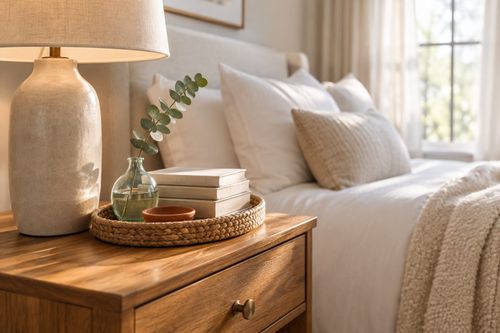
- Use bud vases with single stems on nightstands or coffee tables
- Group mini arrangements on trays to create portable displays
- Tuck sprigs of aromatic herbs like rosemary near seating areas
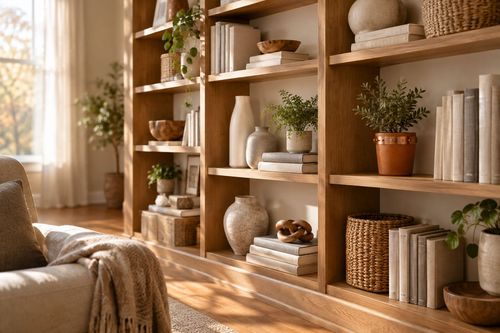
- Style open shelving with greenery:
- Intersperse small vessels among books and decorative objects
- Use taller arrangements for the top shelf, graduated to smaller on lower shelves
- Create depth by placing some arrangements toward the back of shelves
- Consider draping longer stems like ivy to connect multiple shelf levels
- Keep arrangements relatively sparse on shelves to avoid a cluttered look
- Maintain your botanical displays:
- Change water every 2-3 days to prevent bacterial growth
- Mist ferns and delicate foliage daily to extend freshness
- Remove any yellowing leaves promptly
- Recut stems every few days to improve water uptake
- Keep arrangements away from direct sunlight and heat sources
- Create botanical transitions:
- Use similar greenery throughout your home for visual continuity
- Gradually increase the density of arrangements in gathering spaces
- Place smaller echoes of your main arrangements in adjacent rooms
- Consider the view from one room to another when placing arrangements
Professional stylists use a technique called "reflective symmetry" when decorating with fresh greenery. Rather than creating identical arrangements, they design complementary pairings that balance each other through similar height, density, or silhouette while varying the specific elements. This creates a sophisticated harmony without appearing overly matched. Another designer secret is to create depth in arrangements by positioning foliage at different distances from the viewing angle—some branches extending forward, others receding, creating a three-dimensional effect that makes even simple greenery look professionally arranged. For longevity, professionals often combine fresh elements with high-quality preserved or dried components, allowing you to refresh only certain stems while maintaining the arrangement's overall structure. Finally, consider the principle of "negative space" by allowing some breathing room around your greenery rather than packing it densely, which creates a more elegant, intentional look.