Look Up: Transform Your Room with Statement Ceiling Designs
Elevate your space by decorating the most overlooked surface in your home
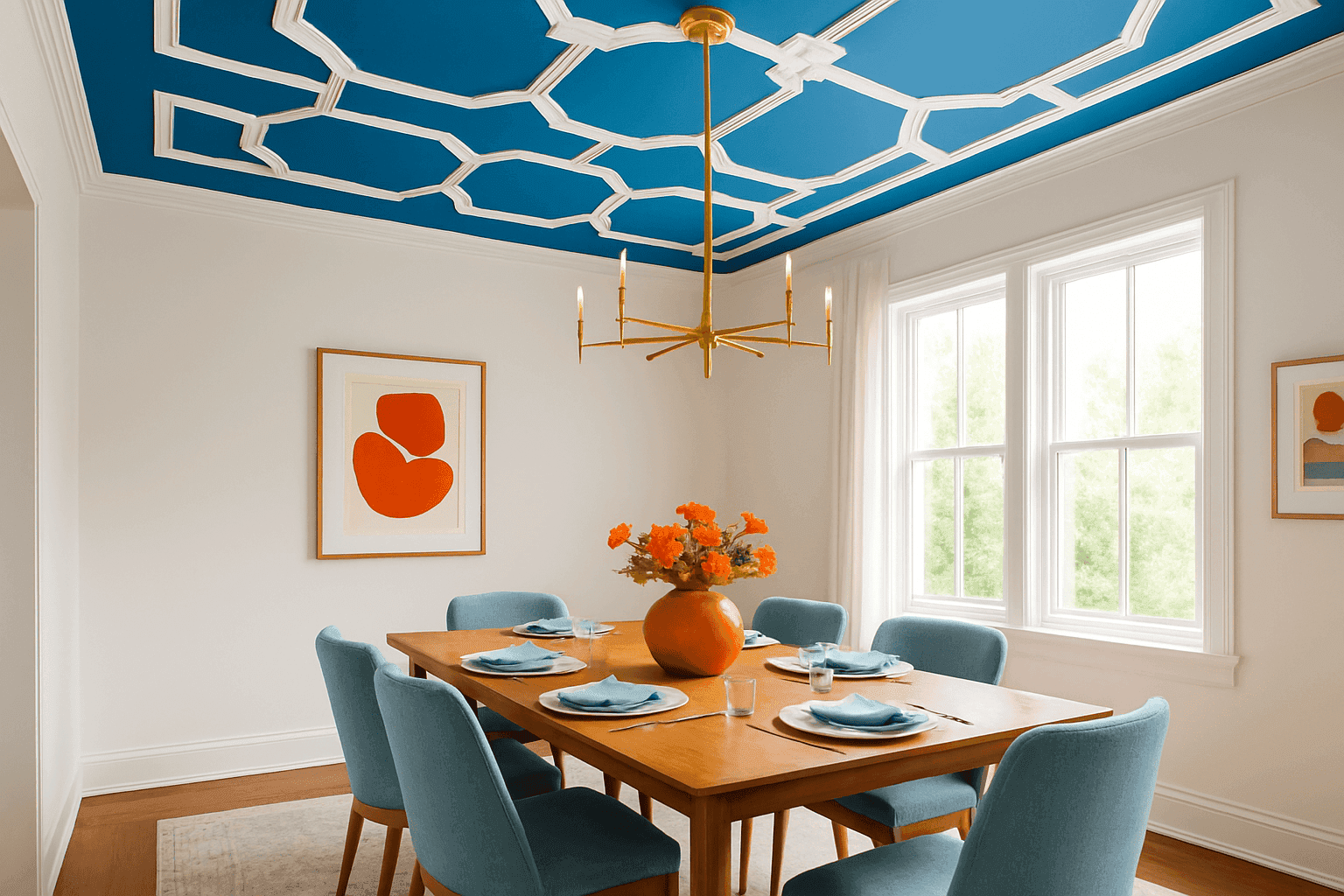
Often called the "fifth wall," ceilings represent a vast, untapped canvas in most homes. While we carefully consider wall colors, flooring materials, and furniture placement, ceilings typically receive nothing more than standard white paint. By extending your design vision upward, you can add unexpected dimension, create the illusion of height (or coziness), and introduce architectural interest even in builder-basic spaces. From simple paint treatments to more elaborate installations, ceiling design offers impressive impact for relatively modest investment.
Ceiling Treatment Options
| • Bold or contrasting paint colors |
| • Decorative molding (coffered, grid, medallions) |
| • Wallpaper or peel-and-stick decals |
| • Wood planks or shiplap |
| • Tin or pressed metal panels |
| • Exposed beams (real or faux) |
| • Painted patterns or stencils |
| • Statement lighting as focal point |
Implementation Approach
- Consider room dimensions: For low ceilings (8' or less), use lighter colors or vertical elements like beadboard. For high ceilings (10'+), darker colors or horizontal treatments can create intimacy.
- Start with proper preparation: Clean the ceiling thoroughly, repair any cracks or damage, and apply painter's tape to protect walls and fixtures before beginning any treatment.
- Choose complementary designs: Select ceiling treatments that enhance your existing décor style—coffered for traditional spaces, exposed beams for rustic rooms, or geometric patterns for contemporary settings.
- Consider lighting implications: Account for how your ceiling treatment will interact with lighting—some materials may absorb light while others reflect it. Integrated lighting can enhance certain treatments.
- Start small: If you're uncertain, begin with an accent ceiling in a powder room, dining room, or bedroom before committing to larger spaces.
For a subtle yet effective ceiling treatment, try painting your ceiling 1-2 shades lighter than your wall color rather than stark white. This creates a cohesive look while maintaining brightness. In open floor plans, use ceiling treatments to define different functional areas without erecting walls. For instance, a wood-planked ceiling over the dining area can visually separate it from the adjacent living space. Remember that ceilings don't need to be uniform—a tray ceiling can be painted differently inside the recessed area, or a wallpapered ceiling can feature a contrasting border of painted molding around the perimeter.