Memory Preservation: Save Love Notes Before They're Lost
Organize meaningful correspondence into protected keepsake systems
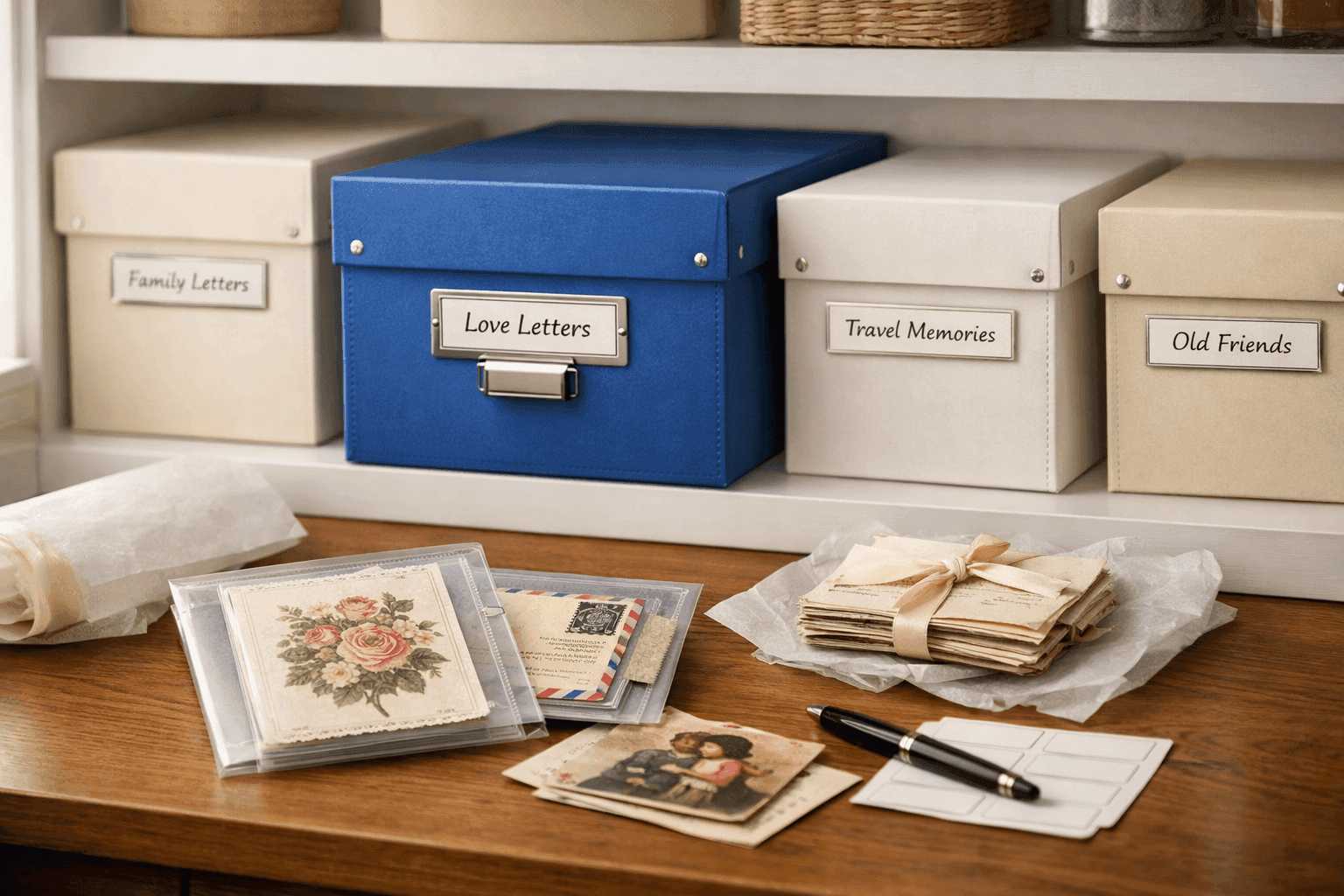
Love notes from your partner, birthday cards from departed grandparents, letters from childhood friends, congratulations cards marking major milestones—these irreplaceable pieces of your personal history sit scattered in random drawers, shoeboxes, and desk corners where they're gradually deteriorating from neglect, sunlight, humidity, and the simple passage of time. While you fully intend to organize them "someday," that meaningful correspondence continues yellowing, tearing, and getting lost in moves or purges until suddenly you can't find that specific card you desperately want to reread. One afternoon and $15-25 in archival storage materials transforms chaotic paper piles into organized keepsake systems that protect your most meaningful written memories while making them accessible for those moments when you need to remember someone's handwriting, reread encouragement from difficult times, or simply reconnect with relationships that shaped who you've become. This isn't elaborate scrapbooking requiring artistic skills and hours per page—it's practical preservation using labeled boxes, protective sleeves, and simple categorization that takes one focused afternoon but creates lasting systems preventing irreplaceable memories from literally disintegrating in forgotten corners. The emotional value of preserved correspondence cannot be measured in dollars, yet the materials protecting it cost less than dinner out, making this one of those rare projects where minimal financial investment produces disproportionate emotional returns that compound over decades as handwritten notes become increasingly rare and precious.
What You'll Need
- Storage Containers ($10-15):
- Archival-quality storage boxes (acid-free)
- Photo storage boxes work perfectly for cards
- 2-4 boxes depending on collection size
- Clear plastic bins for visibility (second choice)
- Protection Materials ($5-8):
- Acid-free tissue paper for separation
- Clear plastic sleeves for fragile items
- Divider cards or index cards for categories
- Archival-safe rubber bands or ribbons
- Organization Tools ($2-4):
- Labels or label maker for categorization
- Permanent marker for dating
- Small sticky notes for temporary sorting
- Pen for adding context notes
- Sorting Space:
- Large clear table or floor area
- Good lighting for reading
- Box of tissues (this gets emotional)
- Uninterrupted time block of 3-4 hours
Organize Your Memories
- Gather every card, letter, and note from all their hiding places throughout your home—drawers, boxes, desk corners, closet shelves—seeing your complete collection together reveals what you're actually preserving and working with.
- Sort initially by broad categories that make intuitive sense for your life: romantic correspondence, family cards, friendship letters, milestone celebrations, condolences, childhood notes, or whatever divisions reflect your actual relationships and history authentically.
- Decide what truly deserves permanent keeping versus generic store-bought cards with just signatures that lack meaningful personal content—be honest about which pieces carry genuine emotional weight worth protecting versus obligation-keeping creating clutter.
- Photograph or scan particularly fragile items before handling them extensively, creating digital backups that preserve content even if original paper eventually deteriorates despite your best archival efforts over decades.
- Place the most fragile or valuable pieces in clear protective sleeves that prevent further handling damage while allowing you to read contents without removing them from protection each time.
- Organize within categories chronologically when possible, using divider cards labeled by year or life stage to create narrative flow that lets you trace relationship evolution or revisit specific time periods easily.
- Add context notes on small slips tucked with items if needed—who sent it, what occasion, why it matters—because memory fades and future you or descendants won't automatically know significance without brief explanations.
- Store completed boxes in cool, dry locations away from direct sunlight, humidity, and temperature extremes—closet shelves work better than attics or basements where environmental conditions gradually destroy even archival materials over time.
Archivists recommend creating a master index document listing box contents by category with approximate date ranges and quantity counts—this simple inventory prevents needing to search through multiple boxes when looking for specific items while serving as insurance documentation if anything ever happens to the physical collection. For particularly precious correspondence like love letters from deceased loved ones or deployment letters, consider making high-quality scans that get stored in cloud backup systems separate from physical originals, ensuring content survives even if originals are lost to fire, flood, or other disasters beyond archival material protection. Establish an annual review tradition where you spend one evening rereading portions of your collection, which both maintains connection to these memories and provides opportunity to add new items from the past year before they get lost in daily shuffle. Include children in this process when age-appropriate, showing them cards from their births, grandparent letters, or family history correspondence that helps them understand their story and the value of preserving meaningful written communication in our increasingly digital world. The most important rule: don't let perfect organizational systems prevent you from starting—even sorting into basic categories and protecting in simple boxes beats leaving irreplaceable memories scattered in vulnerable locations where time and accident eventually destroy what could have been preserved with one afternoon's focused attention.