More Is More: Build a Maximalist Gallery Wall That Commands Attention
Forget matching frames and embrace bold, eclectic chaos that celebrates color and personality
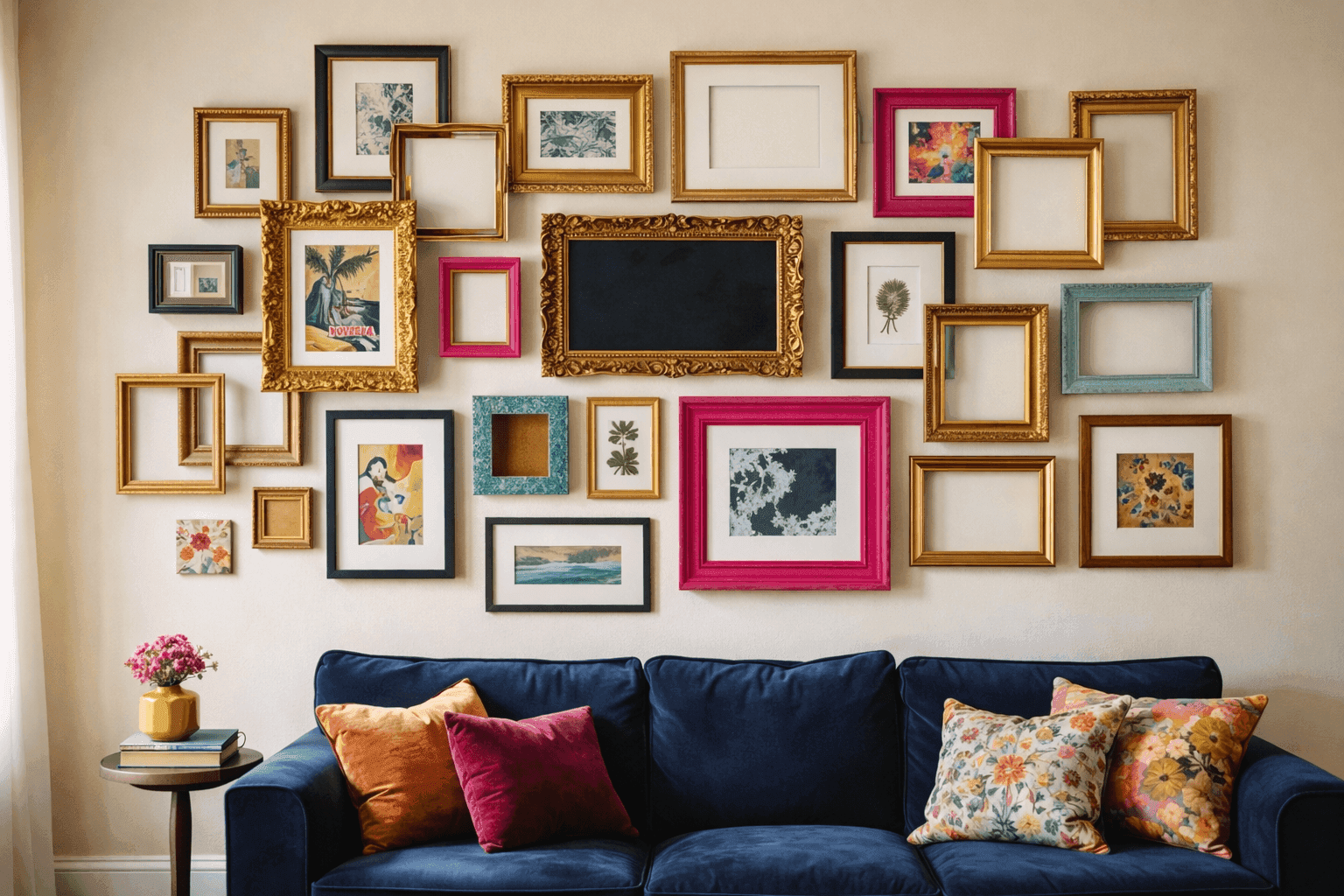
Those perfectly symmetrical gallery walls with matching frames look sterile and safe, like they were installed by someone afraid of making design choices—and honestly, they're boring as hell in a world where your walls should spark joy instead of just existing as neutral backdrops. The maximalist approach to gallery walls throws every design rule out the window, mixing thrift store gold baroque frames with sleek modern black, spray-painted hot pink with distressed turquoise, creating visual chaos that's intentional rather than accidental. This project costs $30-60 depending on thrift store luck and spray paint investment, takes about three hours including shopping and hanging, but creates a statement wall that screams personality instead of whispering polite coordination. The brilliant thing about maximalist gallery walls is they're impossible to do wrong because "more is more" means you keep adding until it feels complete rather than following rigid spacing rules, and mixing unexpected elements becomes the aesthetic rather than a mistake you're trying to hide.
What You'll Need
- Mismatched Frames: Collect 10-20 frames in wildly different styles, sizes, and materials from thrift stores ($15-30)
- Spray Paint: Bold unexpected colors like hot pink, lime green, metallic copper ($10-20 for 3-4 cans)
- Varied Content: Art prints, fabric swatches, wallpaper samples, vintage postcards, pressed botanicals
- Hanging Hardware: Picture hooks, nails, or command strips depending on wall type
- Planning Space: Large floor area for laying out arrangement before committing
- Tools: Hammer, level (optional for maximalist chaos), measuring tape, pencil
- Time Investment: 3-4 hours including thrifting, painting, and hanging
Step-by-Step Method
- Hunt thrift stores for frames with character—ornate gold baroque, chunky wood, thin modern metal, anything with personality over matching aesthetics
- Spray paint selected frames in unexpected bold colors, embracing combinations that shouldn't work but somehow do when massed together
- Gather diverse content that interests you rather than coordinated prints—vintage postcards next to modern abstracts creates tension that's visually compelling
- Lay out your entire collection on the floor mimicking wall space dimensions, playing with arrangement until the chaos feels intentional
- Start hanging from the center piece and work outward, or begin with largest frames as anchors and fill around them with smaller pieces
- Vary spacing intentionally—some frames nearly touching, others with breathing room—asymmetry is the goal, not uniform gaps
- Mix orientations freely combining vertical and horizontal frames without trying to align edges or create neat rows
- Add empty frames for dimensional interest because sometimes the frame itself is art and doesn't need content competing for attention
Interior designers who specialize in maximalist spaces recommend choosing one or two dominant colors that repeat throughout your frame collection to create cohesion within chaos—maybe hot pink appears in three frames, gold in five, creating visual threads that tie randomness together. Also, don't fill every frame with competing artwork; some frames should contain simple content like solid color fabric or one botanical specimen, giving the eye places to rest within the visual cacophony. The most successful maximalist gallery walls embrace scale variety dramatically—one oversized 24x36 inch frame commanding attention alongside clusters of tiny 4x6 frames creates hierarchy that prevents overwhelming monotony. Texture matters as much as color; mix glossy spray paint finishes with distressed wood, smooth metal with ornate plaster frames so the wall offers tactile interest beyond just visual. The cardinal rule of maximalist design is there are no rules, but the secret to making chaos work is confidence—commit fully to the "more is more" philosophy rather than hedging with half-measures that look accidentally messy instead of intentionally bold.