Nested Charm: Incorporating Delicate Birds' Nests into Spring Décor
Style authentic-looking nests with decorative eggs for subtle touches that celebrate nature's renewal
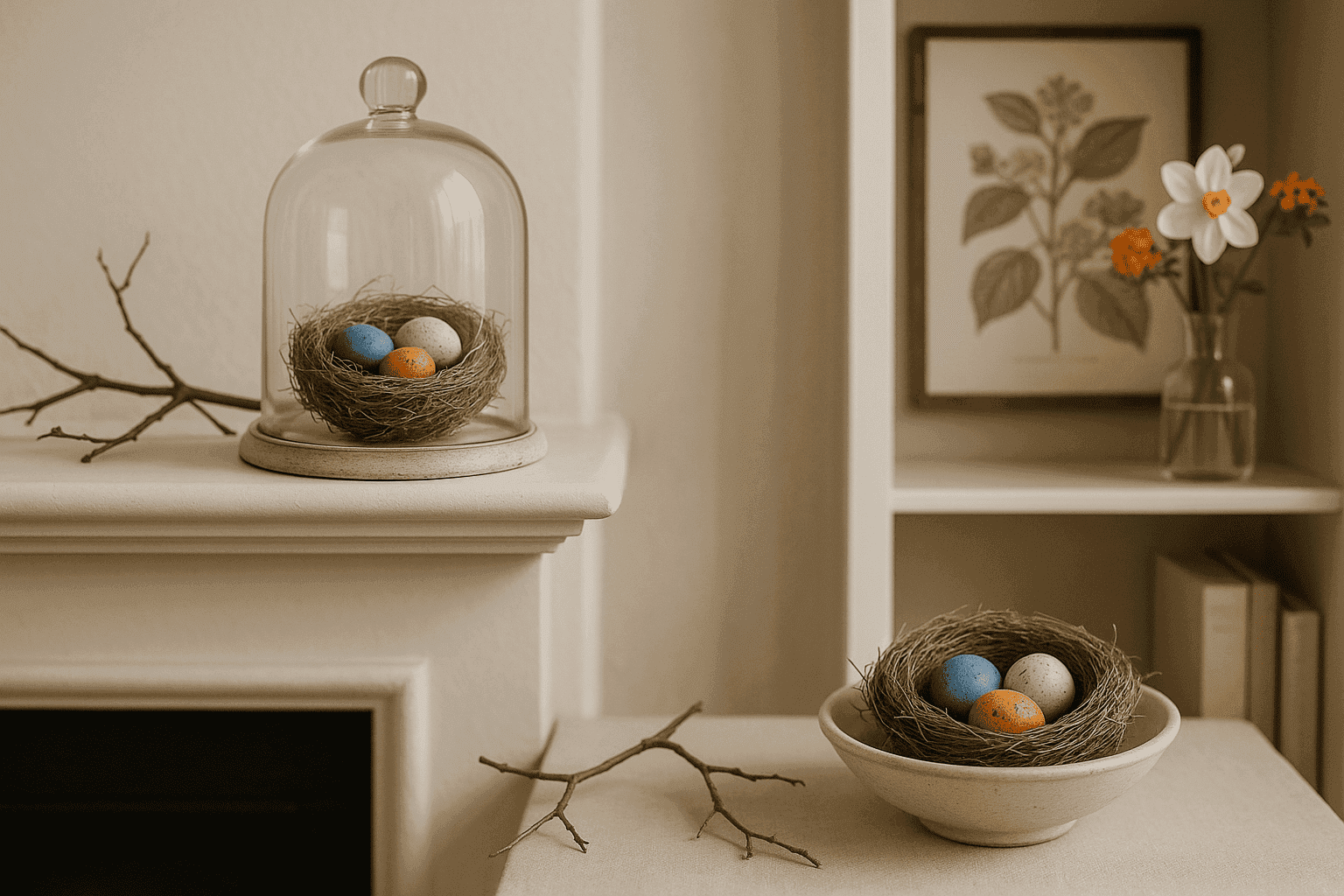
Decorative birds' nests represent the essence of spring—renewal, nurturing, and nature's intricate craftsmanship. These delicate structures bring a perfect balance of rustic texture and sophisticated symbolism to your spring décor, creating focal points that feel simultaneously precious and organic. Unlike overtly seasonal decorations, nests integrate seamlessly with almost any design style, from farmhouse to modern minimalist, adding subtle dimension without overwhelming your existing aesthetic. Paired with decorative eggs in carefully chosen colors, these arrangements become meaningful spring storytelling elements that spark conversation while remaining elegantly understated. Their natural materials also provide textural contrast to smooth, polished surfaces typically found in home interiors.
What You'll Need
| Nest Options: |
| • Realistic decorative birds' nests (craft store variety) |
| • Handcrafted grapevine or twig nests |
| • Spanish moss nests for softer texture |
| • Natural, abandoned nests (if legally and ethically collected) |
| • Woven jute or fiber nests |
| Decorative Eggs: |
| • Wooden eggs in various sizes |
| • Paper mache eggs for lightweight options |
| • Ceramic or porcelain decorative eggs |
| • Speckled quail-style eggs for realism |
| • Glass or marble eggs for elegant displays |
| Display Vessels & Surfaces: |
| • Glass cloches or bell jars |
| • Decorative bowls or shallow dishes |
| • Cake stands or risers |
| • Small trays for grouped displays |
| • Bookshelf or mantel surfaces |
| Natural Embellishments: |
| • Small feathers |
| • Dried moss or lichens |
| • Tiny spring flowers (real or silk) |
| • Small twigs or branches |
| • Decorative butterflies |
| Tools & Materials: |
| • Craft glue or low-temperature glue gun |
| • Fine wire for attaching delicate elements |
| • Small scissors or garden snips |
| • Tweezers for precise placement |
| • Craft paint and small brushes (optional) |
| Complementary Décor: |
| • Small decorative birds |
| • Botanical illustrations or prints |
| • Fresh spring flowers |
| • Vintage books or field guides |
| • Natural wood slices or coasters |
How To Do It
- Select birds' nests with authentic character:
- Choose nests with natural variations in texture and color
- Look for nests that appear sturdy but delicate
- Avoid perfectly symmetrical or overly manufactured-looking options
- Consider different sizes for various display locations
- Examine for loose materials and gently secure with clear craft glue if needed
- Choose eggs that complement your décor palette:
- Select eggs in soft, natural colors for authentic displays
- Consider speckled or marbled eggs for visual interest
- Include eggs in your existing accent colors for cohesion
- Vary sizes for natural appearance (smaller eggs in smaller nests)
- For special impact, include one distinctive egg as a focal point
- Create cloche or bell jar displays:
- Position nest on a small riser or directly on table surface
- Arrange eggs thoughtfully within the nest
- Add small natural elements like moss or tiny flowers around base
- Cover with glass cloche to create a protected vignette
- Add a small identifying tag or label for educational interest
- Style mantel or shelf arrangements:
- Position nests asymmetrically along mantels or shelves
- Combine with coordinating spring elements (books, candlesticks)
- Create height variation using risers or stacked books
- Consider placing nests in unexpected containers for visual surprise
- Layer elements, allowing nest to be partially visible for subtlety
- Design tablescape centerpieces:
- Position nests on cake stands or shallow bowls
- Surround with fresh spring flowers in complementary colors
- Add taper candles for height variation and ambient lighting
- Incorporate small nest elements at each place setting
- Consider a runner of moss or natural material beneath arrangement
- Create vignettes with botanical elements:
- Pair nests with vintage botanical illustrations
- Add small branches or twigs for natural context
- Include small decorative birds perched nearby (not in nest)
- Incorporate nature field guides or books about birds
- Add glass cloches of different sizes for collection effect
- Incorporate into existing décor arrangements:
- Tuck small nests into houseplant containers
- Add to bookshelf styling among stacked books
- Place within glass hurricane lanterns with LED candles
- Position in bathroom vignettes with natural toiletries
- Include in kitchen displays with herbs or cooking implements
- Customize nests and eggs for personal touch:
- Add tiny name cards to eggs for place settings
- Paint wooden eggs in coordinating colors for specific rooms
- Embellish plain nests with delicate dried flowers
- Create themed eggs with simple decorative techniques
- Add special meaning with small symbolic additions (feathers, stones)
- Balance with other spring elements:
- Place nests near fresh flowers for color contrast
- Pair with glass containers for textural juxtaposition
- Include with other natural elements like driftwood or stones
- Balance rustic nest texture with refined decorative pieces
- Use in conjunction with other spring symbols like butterflies
- Care for your nest displays:
- Dust delicately with canned air or soft paintbrush
- Keep away from high-traffic areas to prevent damage
- Display away from direct sunlight to prevent fading
- Store carefully in tissue paper between seasons
- Spray with diluted fabric protector for longevity (test first)
Professional stylists employ a technique called "intentional imperfection" when incorporating birds' nests into sophisticated decor. This approach involves deliberately disrupting the symmetry or perfect arrangement of eggs within a nest—perhaps placing one egg slightly apart from others or positioning the nest off-center in its display vessel. This subtle asymmetry mimics nature's organic qualities and prevents the arrangement from appearing contrived or artificial. Another designer secret is what's called "material dialogue"—ensuring that nest displays converse visually with at least one other textural element in the room, such as a jute rug, rattan furniture piece, or woven basket. This creates cohesion that makes the nest appear purposeful rather than randomly placed. For the most elegant impact, top interior designers recommend the "unexpected context principle"—placing nest elements in surprising settings (like a modern glass cocktail table or sleek bathroom vanity) rather than predictable rustic environments, creating sophisticated tension between natural and refined elements.