Payment Peace: Build a Bill Tracking System That Actually Works
Create a simple system for tracking due dates and receipts that prevents late fees and financial stress
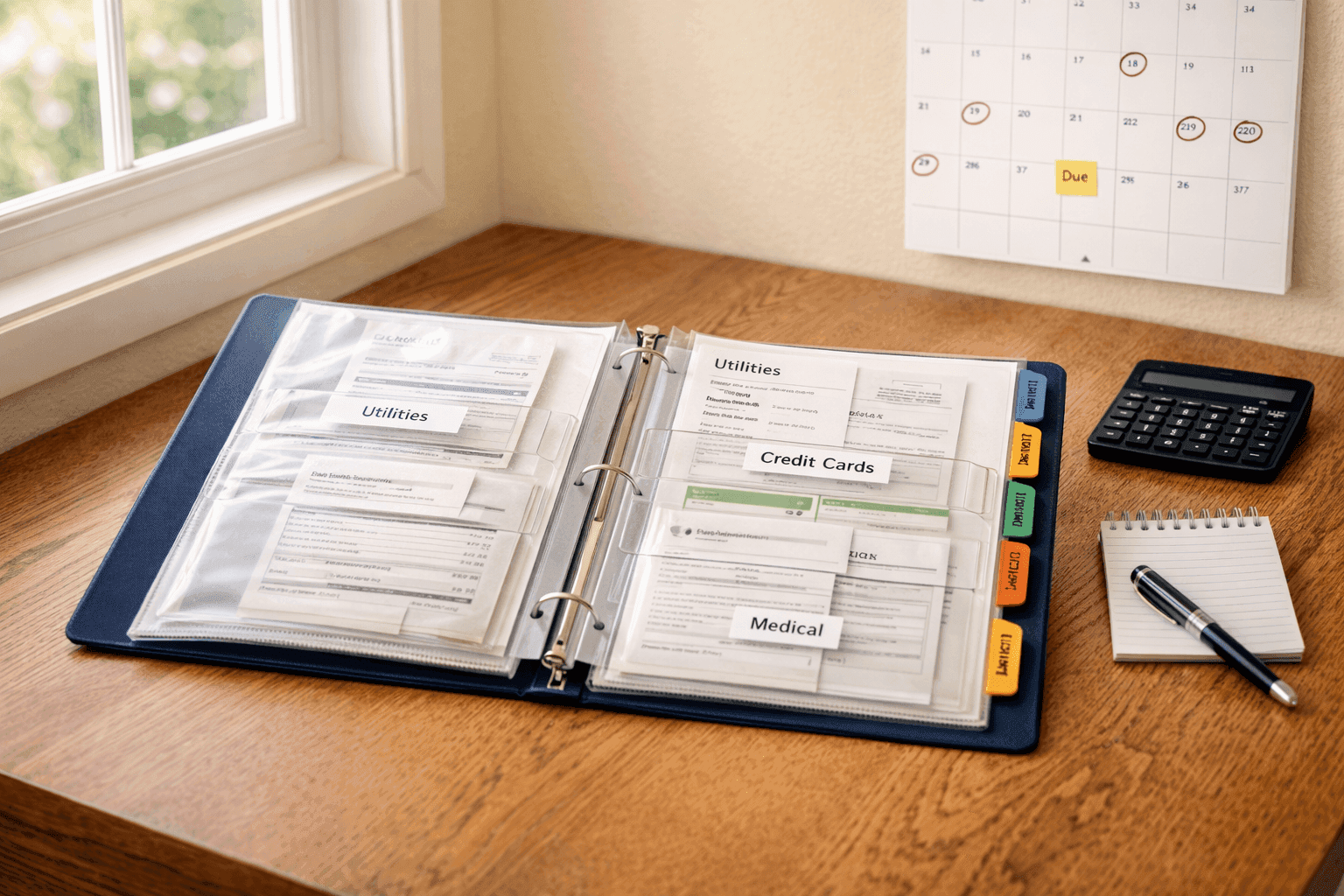
You've paid late fees because bills arrived when you weren't paying attention, scrambled to find receipts during tax time because they're scattered across email and paper statements, and experienced that low-grade stress of never quite knowing if you've paid everything or forgotten something important. This financial disorganization costs real money in late fees and interest charges, wastes time searching for documentation, and creates unnecessary anxiety about whether your finances are under control. Creating a bill payment tracking system takes about one hour to set up initially and costs $10-20 for basic supplies, but it transforms bill management from reactive chaos into proactive routine where you know exactly what's due when and can locate any payment record within seconds. This isn't about complicated budgeting software or financial apps that require constant maintenance; it's about building a dead-simple physical or hybrid system that matches how you actually manage bills rather than aspirational organization that falls apart within weeks.
What You'll Need
- Binder or Folder: Three-ring binder or accordion file for organizing bills ($5-10)
- Dividers: Tabbed section dividers for separating categories or months ($3-5)
- Sheet Protectors: Clear sleeves for storing receipts and statements ($5-8)
- Calendar System: Wall calendar, planner, or printed monthly calendar pages
- Master List: Printed or digital spreadsheet listing all bills with due dates and amounts
- Labels: For clearly identifying sections and categories
- Time Investment: 1 hour setup, 15 minutes monthly maintenance
Step-by-Step Method
- List every recurring bill you pay including utilities, insurance, subscriptions, loan payments—everything that requires regular payment
- Note each bill's due date, typical amount, payment method, and account information so everything lives in one master reference document
- Create sections in your binder or folder by category (utilities, insurance, subscriptions) or by month depending on what makes sense for your brain
- Set up a visual calendar marking all bill due dates so you can see the entire month's obligations at a glance
- Establish a routine for processing bills—perhaps every Sunday you review what's due that week and mark payments on your calendar
- File receipts and confirmation emails into appropriate sections immediately after paying rather than letting them accumulate into overwhelming piles
- Review your system monthly to catch any bills you've missed, update amounts that changed, and adjust the system if parts aren't working
- Store the binder or folder somewhere accessible where you actually do bill-paying, not hidden in a closet you never open
Financial organizers recommend setting up automatic payments wherever possible, but still tracking them in your system because autopay failures happen and you need to monitor for billing errors. Also, build in buffer time by marking bills as due 2-3 days before actual deadlines on your calendar—this prevents late fees when life gets busy and you can't pay exactly on due date. For digital payments, print confirmation emails or screenshots and file them like paper receipts; during disputes or tax time, you'll be grateful to have physical proof regardless of what's stored online. Consider color-coding your calendar by payment method—red for manual checks, blue for automatic payments, green for online bill pay—so you instantly see which bills require action versus just monitoring. The most successful bill tracking systems include regular "money dates" on your calendar—weekly 15-minute sessions reviewing upcoming bills before they become urgent rather than reactive scrambling when notices arrive. This proactive approach transforms bill management from stressful emergency response into calm routine that prevents late fees, protects your credit score, and eliminates the nagging anxiety about whether you've forgotten something important.