Reseal Leaky Windows: Stop Drafts and Save Energy Immediately
Transform drafty windows into efficient barriers with fresh caulk and proper technique
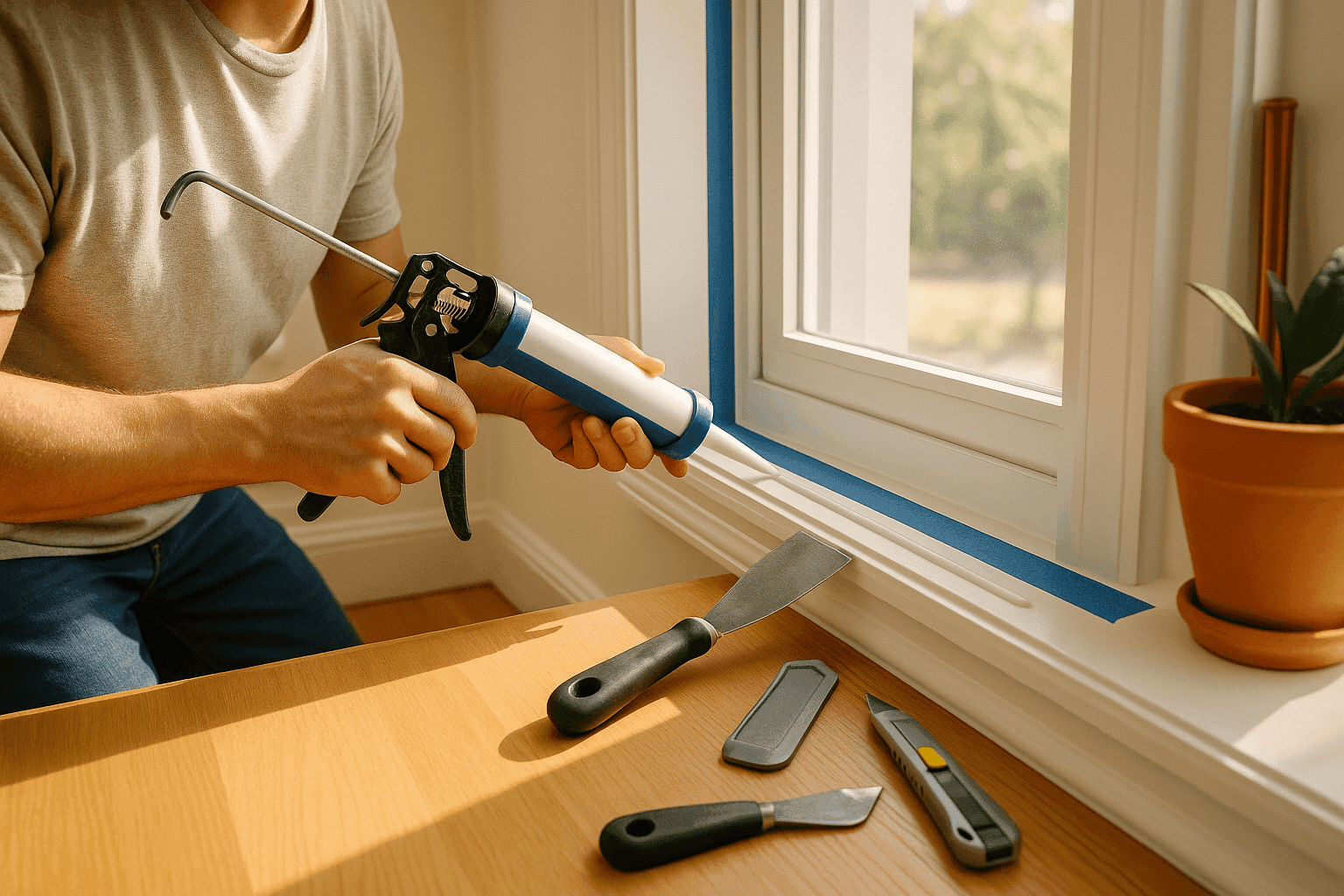
Leaky windows silently sabotage your home's comfort and energy efficiency, allowing cold drafts to seep in during winter while letting expensive heated air escape, often accounting for 10-25% of your total heating costs. Old, cracked, or missing caulk around window frames creates gaps where air and moisture infiltrate, leading not only to uncomfortable rooms and higher utility bills but also potential water damage that can cost thousands to repair if left unchecked. Resealing windows with fresh caulk is one of the highest-return home improvement projects you can tackle, typically paying for itself within a single heating season while immediately improving comfort in drafty rooms. The key to professional-looking results lies in proper preparation – removing old deteriorated caulk completely and using painter's tape to create clean, straight lines that look like they were installed by experts rather than anxious DIYers working too quickly.
Caulking Materials
- Caulk Selection: Paintable acrylic latex caulk for interior windows, silicone for exterior (one tube per 3-4 windows)
- Application Tools: Caulking gun, utility knife for opening tubes, caulk smoothing tool or plastic spoon
- Removal Supplies: Putty knife or caulk remover tool, razor blade scraper, rubbing alcohol for cleaning
- Preparation Items: Painter's tape for masking, clean rags, vacuum for debris removal
- Finishing Materials: Damp sponge for smoothing, paper towels, bucket of water
Professional Sealing Process
- Remove all old caulk completely using putty knife, scraping until you reach clean surface
- Clean the gap thoroughly with rubbing alcohol to remove residue, dust, and oils
- Apply painter's tape on both sides of gap, leaving 1/8-inch space for caulk bead
- Cut caulk tube tip at 45-degree angle, making opening slightly smaller than gap width
- Apply steady, continuous bead of caulk along entire gap without stopping
- Smooth immediately with dampened finger or tool, creating slight concave surface
- Remove painter's tape while caulk is still wet, pulling at 45-degree angle
- Allow complete drying according to manufacturer instructions before painting or exposing to moisture
Professional contractors never skip the step of completely removing old caulk before applying new – layering fresh caulk over deteriorated material creates bonds that fail quickly and look terrible. For the smoothest finish, keep a bowl of soapy water nearby and dip your smoothing finger frequently to prevent caulk from sticking and dragging. The secret to perfectly straight lines is working on one window section at a time and removing tape immediately after smoothing while caulk is still wet – waiting until it dries often pulls up the freshly applied bead along with the tape, ruining your careful work.