Seasonal Shelves: Spring Kitchen Display Styling
Transform open kitchen shelving with colorful dishes, fresh herbs, and spring-inspired accessories
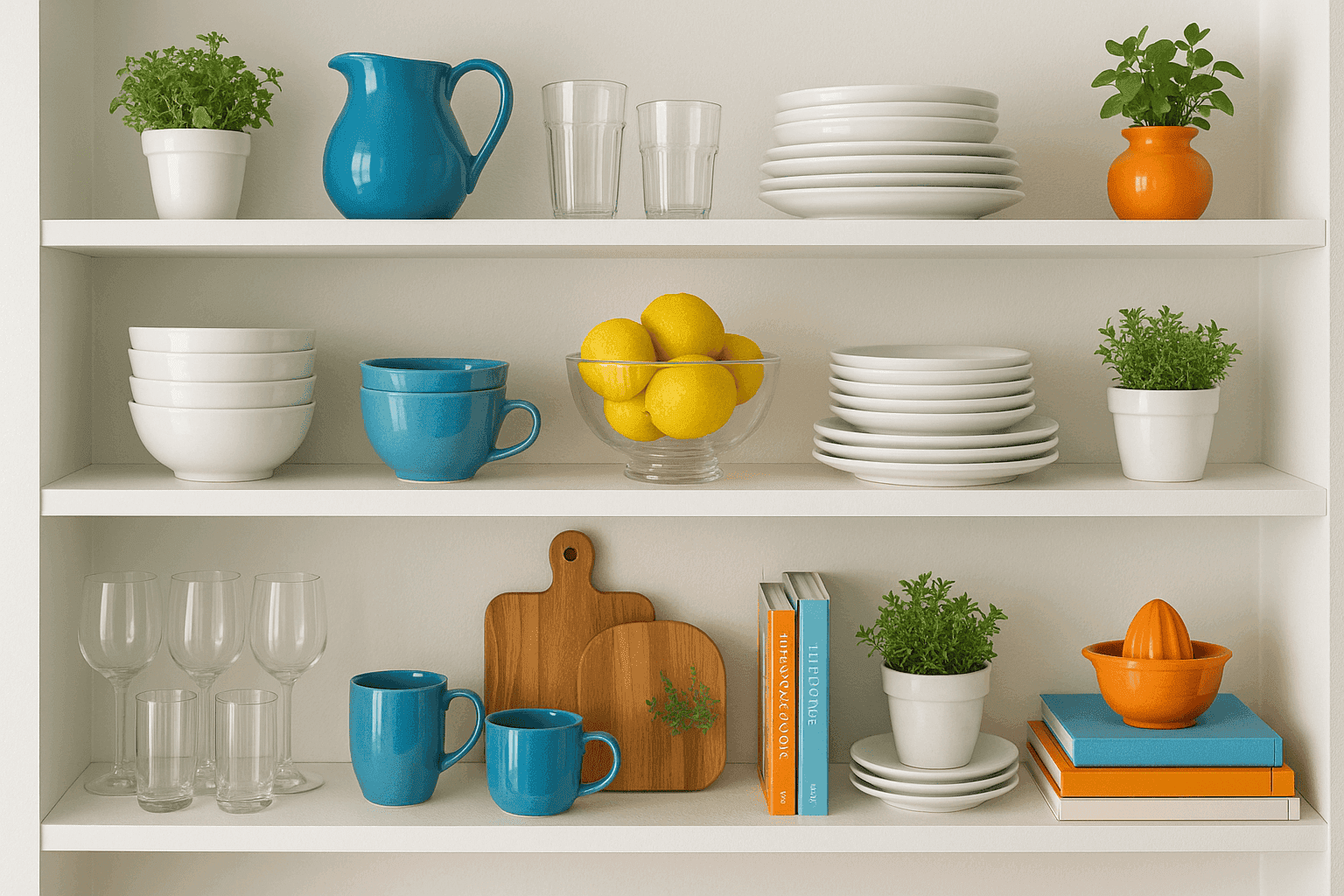
Open kitchen shelving offers the perfect canvas for seasonal styling—a place where function meets beauty in everyday life. As spring arrives, refreshing these visible storage areas creates an instant kitchen update without major renovation. By thoughtfully arranging colorful dishes, incorporating fresh herbs, and adding seasonal accents, you can transform utilitarian shelves into styled vignettes that bring joy while remaining practical. The key is balancing visual interest with functionality, creating displays that are both beautiful and usable in daily life.
What You'll Need
| Functional Elements: |
| • Everyday dishes in spring colors or patterns |
| • Clear glass or colored drinkware |
| • Serving pieces (pitchers, bowls, cake stands) |
| • Storage containers in coordinating colors |
| • Wooden cutting boards or bread boards |
| Greenery and Natural Elements: |
| • Small potted herbs (basil, mint, rosemary) |
| • Small houseplants in decorative pots |
| • Fresh flowers in small vases |
| • Lemons, limes or oranges in a bowl |
| Seasonal Accents: |
| • Decorative ceramic or glass objects |
| • Cookbooks with colorful spines |
| • Seasonal tea towels |
| • Small framed artwork or prints |
| • Decorative bowls or trays |
| Organizational Items: |
| • Woven or wire baskets for storage |
| • Glass jars or canisters for pantry items |
| • Small trays or risers for layering |
| • Labeled containers for frequently used items |
| • Hooks or small hanging elements |
How To Do It
- Start with a clean slate:
- Remove everything from your shelves
- Clean surfaces thoroughly
- Sort items into categories: everyday essentials, occasional use, and decorative
- Edit your collection, setting aside winter items and things rarely used
- Consider painting shelf backgrounds in a spring color for dramatic impact
- Create a color strategy:
- Choose a spring-inspired palette (3-4 colors maximum)
- Select items that fit within your color scheme
- Consider classic spring combinations:
- White, blue, and green for a fresh, coastal feel
- White, yellow, and green for a bright, cheerful look
- White, pink, and sage for a soft, garden-inspired palette
- Use white or clear glass as a neutral base
- Arrange by function first:
- Place everyday items at easily reachable heights
- Group similar items together (drinking glasses, plates, bowls)
- Stack dishes in visually pleasing arrangements
- Position most frequently used items at eye level or slightly below
- Reserve upper shelves for less frequently used or purely decorative items
- Create visual rhythm:
- Vary heights within each shelf for visual interest
- Use stacks of plates or bowls to create height variation
- Alternate dense groupings with open space
- Create triangular arrangements on each shelf
- Balance visual weight from left to right across shelves
- Add living elements:
- Incorporate small potted herbs in decorative containers
- Place plants where they'll receive adequate light
- Add small vases with fresh-cut flowers or branches
- Use small bowls of seasonal fruit as functional decor
- Consider plants that thrive in kitchen environments (herbs, pothos, succulents)
- Layer in decorative elements:
- Lean small artwork or cutting boards at the back of shelves
- Add a few special pieces that highlight your personality
- Incorporate seasonal items like ceramic bunnies or bird figurines
- Display a few favorite cookbooks with colorful spines
- Use decorative bowls or containers that serve both function and beauty
- Style with practical containers:
- Transfer pantry staples to matching glass jars
- Use attractive baskets to corral smaller items
- Display frequently used cooking utensils in decorative crocks
- Consider clear containers for colorful items (pasta, dried beans, tea)
- Add simple labels to storage containers for a polished look
- Perfect the arrangement:
- Step back frequently to assess the overall balance
- Take photos with your phone to evaluate the composition objectively
- Make sure the heaviest visual elements are toward the bottom
- Ensure the display doesn't look overcrowded
- Check that everyday items remain easily accessible
- Vary textures for visual interest (smooth ceramics, rough baskets, shiny glass)
- Maintain your styled shelves:
- Dust open shelving regularly
- Replace fresh elements as needed
- Adjust arrangement as you use and replace items
- Consider seasonal updates 2-4 times per year
- Store off-season items in labeled boxes for easy rotation
Professional stylists use several subtle techniques when creating magazine-worthy open shelving. First, they employ the "rule of repetition with variation"—using multiples of similar items (like a collection of white pitchers in different shapes) for visual cohesion while maintaining interest. Another designer secret is creating "micro-moments" within the larger display—small, intentional groupings of 3-5 objects that tell a mini-story, such as a mortar and pestle with a small herb plant and a salt cellar. For the most sophisticated look, incorporate what designers call "breathing space"—intentional empty areas that allow the eye to rest between groupings. This negative space is just as important as the objects themselves. Finally, for a truly curated appearance, limit the color palette to no more than 25% colorful items against a backdrop of neutrals (white dishes, clear glass, natural wood), allowing those color moments to truly shine.