Set Up Your Gift Wrap Station Before the Holiday Rush
Organize wrapping supplies now so December wrapping becomes efficient instead of chaotic and frustrating
I used to dread holiday wrapping because it meant excavating crumpled paper from three different closets, untangling ribbon that had mysteriously knotted itself, and inevitably discovering I was out of tape halfway through wrapping twenty gifts—pure chaos that turned a potentially pleasant activity into stressed scrambling. Creating a dedicated gift wrap station transformed wrapping from dreaded chore into actually enjoyable ritual, and the setup takes just one afternoon in November before the shopping and wrapping madness begins. This organized system costs $30-50 depending on containers you choose but saves countless hours of frustration and multiple emergency store runs for forgotten supplies throughout December. The beauty of setting up now, before you've started shopping, is that you can take inventory of what you already have, make a single strategic shopping trip for what you need, and establish systems while you're calm and methodical rather than panicked and rushed. I've maintained my wrap station for four years now, and the difference in my holiday stress levels is dramatic—wrapping has become a peaceful evening activity I actually look forward to rather than a frantic last-minute task I avoid until midnight before events. Beyond personal sanity, a well-organized station means better-wrapped gifts because you have all tools at hand, can easily access the right paper for each recipient, and aren't making do with whatever crumpled supplies you can find.
What You'll Need
- Space Requirements:
- Dedicated closet shelf or corner of spare room
- Minimum 3 feet wide by 2 feet deep
- Accessible height you can reach comfortably
- Near good lighting for wrapping tasks
- Storage Containers:
- Large bin or basket for wrapping paper rolls
- Tall container or door-mounted rack for vertical storage
- Medium bins for ribbons, bows, and gift bags
- Small containers for tape, scissors, tags
- Clear bins allow seeing contents at glance
- Essential Supplies to Stock:
- Wrapping paper in versatile patterns and solids
- Clear and double-sided tape
- Scissors dedicated to wrapping (never fabric scissors!)
- Ribbons in coordinating colors
- Gift tags and labels
- Gift bags in various sizes
- Tissue paper
- Pens that write on tags
- Optional Organizers:
- Label maker for categorizing bins
- Drawer dividers for small items
- Over-door shoe organizer for ribbons
- Tension rod for hanging paper rolls
- Total Cost: $30-50 for containers and basic supplies
Organization Steps
- Gather all supplies by hunting through every closet, drawer, and corner where wrapping materials have accumulated over years, bringing everything to one central location so you can see the full scope of what you own. This archaeological dig often reveals forgotten treasures and embarrassing duplicates.
- Purge ruthlessly by discarding crushed paper that's too damaged to use, dried-out tape rolls, ratty ribbons, and those gift bags you've been saving despite obvious wear. If you wouldn't want to receive a gift wrapped in it, toss it—your standards will thank you later.
- Take inventory by listing what you have in each category and what you need to purchase, noting gaps in your collection like versatile neutral patterns, small gift bags, or basic ribbon colors. This prevents impulse buying while ensuring you stock genuinely useful supplies.
- Choose your location by identifying a dedicated space that won't be disturbed by other household activities—a hall closet shelf, spare bedroom corner, or basement area works beautifully. The space should accommodate both storage and a surface for actual wrapping if possible.
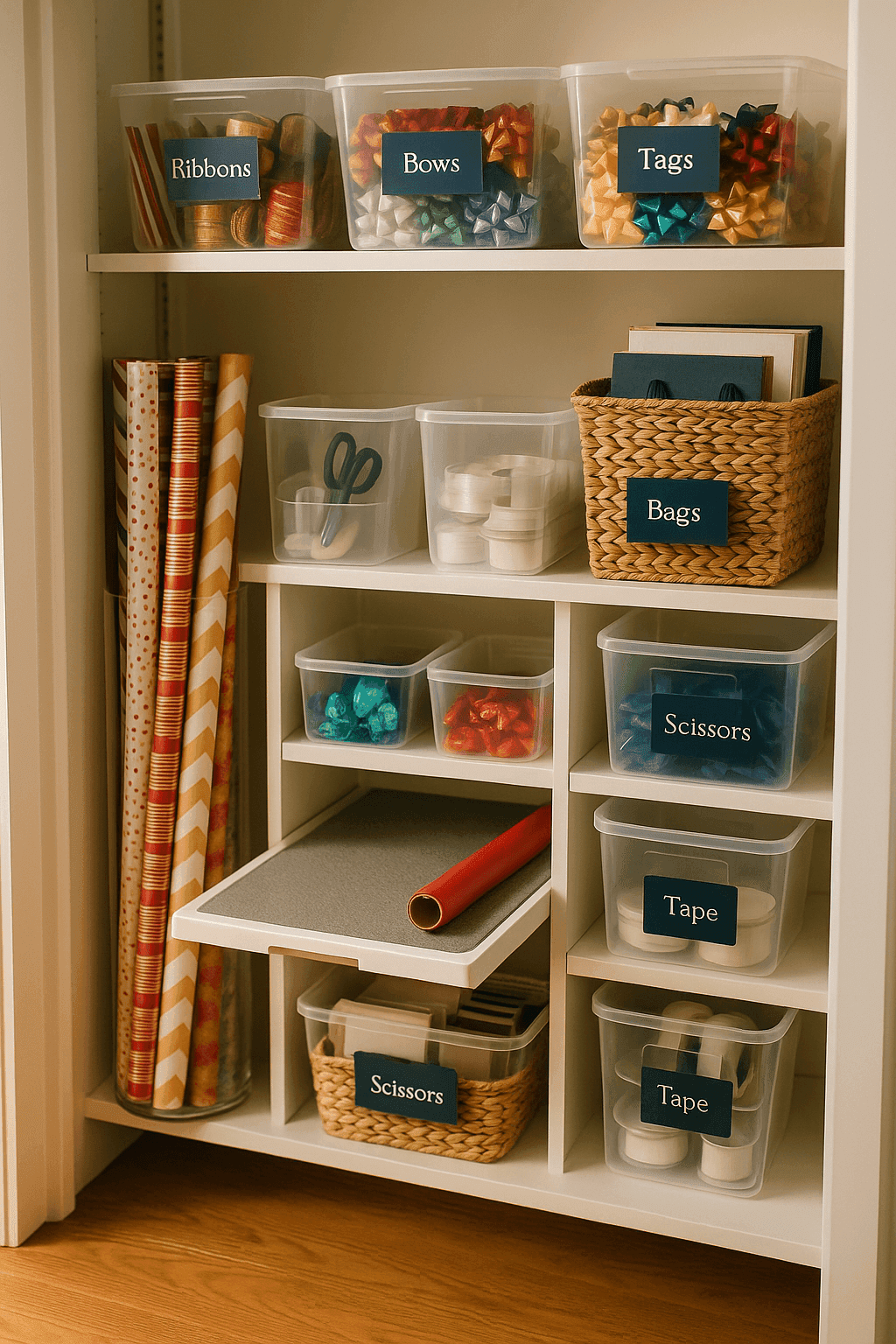
- Install vertical storage for wrapping paper by using a tall container, tension rod, or door-mounted rack that keeps rolls upright and prevents the crushing that happens when paper lies flat under other items. Vertical storage also makes finding specific patterns infinitely easier.
- Organize by category using labeled bins or containers—one for ribbons and bows, another for gift bags sorted by size, a third for tags and cards, and a small caddy holding scissors, tape, and pens together so essential tools are always findable. Category organization prevents the frustrating hunt for specific items.
- Create a supply checklist posted inside your wrap station listing standard items you should always have on hand, which makes restocking obvious and helps family members know what to grab if they're at the store. Include quantities like "3+ rolls clear tape" or "assorted gift tags" for clarity.
- Establish return protocols by training yourself and family members to return tools immediately after use rather than letting scissors, tape, and ribbons scatter throughout the house. This discipline is what keeps an organized station organized rather than slowly devolving back into chaos over December.
Professional organizers and gift-wrapping specialists recommend thinking beyond just storage to create a true "wrapping station" that functions like a mini workshop. If space allows, dedicate a small table or pull-out shelf as your wrapping surface positioned near your supply closet, with a protective mat permanently in place and a waste basket nearby for scraps. The most sophisticated setups include a ribbon dispenser—either purchased or DIY using a tension rod with ribbons threaded through—that allows one-handed cutting without tangling. Professional gift wrappers swear by the "color-coding system" where you organize paper by color family (metallics together, patterns separate from solids, holiday-specific vs. year-round) rather than just shoving rolls randomly into bins. This organization lets you quickly pull coordinating papers and ribbons for cohesive gift presentations. For ultimate efficiency, maintain a "wrapping journal" where you note what paper you used for each recipient each year—this prevents accidentally giving someone the same wrapping two years running and helps you remember which patterns people particularly loved or hated. Finally, savvy organizers stock their stations with non-traditional wrapping alternatives like fabric scraps, vintage maps, and kraft paper for creative options that expand possibilities beyond commercial paper.