Sparkle Reset: Restore Your Dishwasher's Cleaning Power
Natural deep cleaning that eliminates odors and hard water buildup
That mysterious smell coming from your dishwasher isn't just unpleasant—it's a sign that built-up grime, food particles, and hard water deposits are sabotaging your machine's cleaning power. While specialty dishwasher cleaners cost $8-12 per treatment, you can achieve even better results using simple pantry staples that cost pennies. Vinegar's acidity dissolves mineral deposits and soap scum, while baking soda neutralizes odors and provides gentle scrubbing action without damaging seals or components. This natural deep-cleaning method not only restores your dishwasher's efficiency but also extends its lifespan by preventing buildup that forces the motor and pump to work harder. A monthly maintenance routine takes just minutes of active work and transforms a struggling appliance back into the cleaning powerhouse it was designed to be, all while keeping harsh chemicals away from surfaces that touch your dishes.
What You'll Need
- Cleaning Solutions (under $5 total):
- 2 cups white distilled vinegar
- 1 cup baking soda
- Optional: 10 drops lemon essential oil
- Tools:
- Old toothbrush for detail cleaning
- Microfiber cloth or soft sponge
- Small bowl or measuring cup
- Toothpick for unclogging spray arm holes
- Optional Enhancements:
- Dishwasher-safe cup or bowl for vinegar
- Rubber gloves for hand protection
- Flashlight for inspecting hidden areas
Deep Clean Process
- Empty the dishwasher completely and remove both racks to access the filter and drain area, where most food debris and buildup accumulate over time.
- Remove and clean the filter according to your manual's instructions, scrubbing away trapped food particles with an old toothbrush under running water—this step alone can dramatically improve cleaning performance.
- Inspect the spray arms by removing them and using a toothpick to clear any clogged holes, because even a few blocked jets can create dead zones where dishes don't get clean.
- Wipe down the door edges, gasket, and interior walls with a damp microfiber cloth, paying special attention to the rubber seal where mold and mildew love to hide.
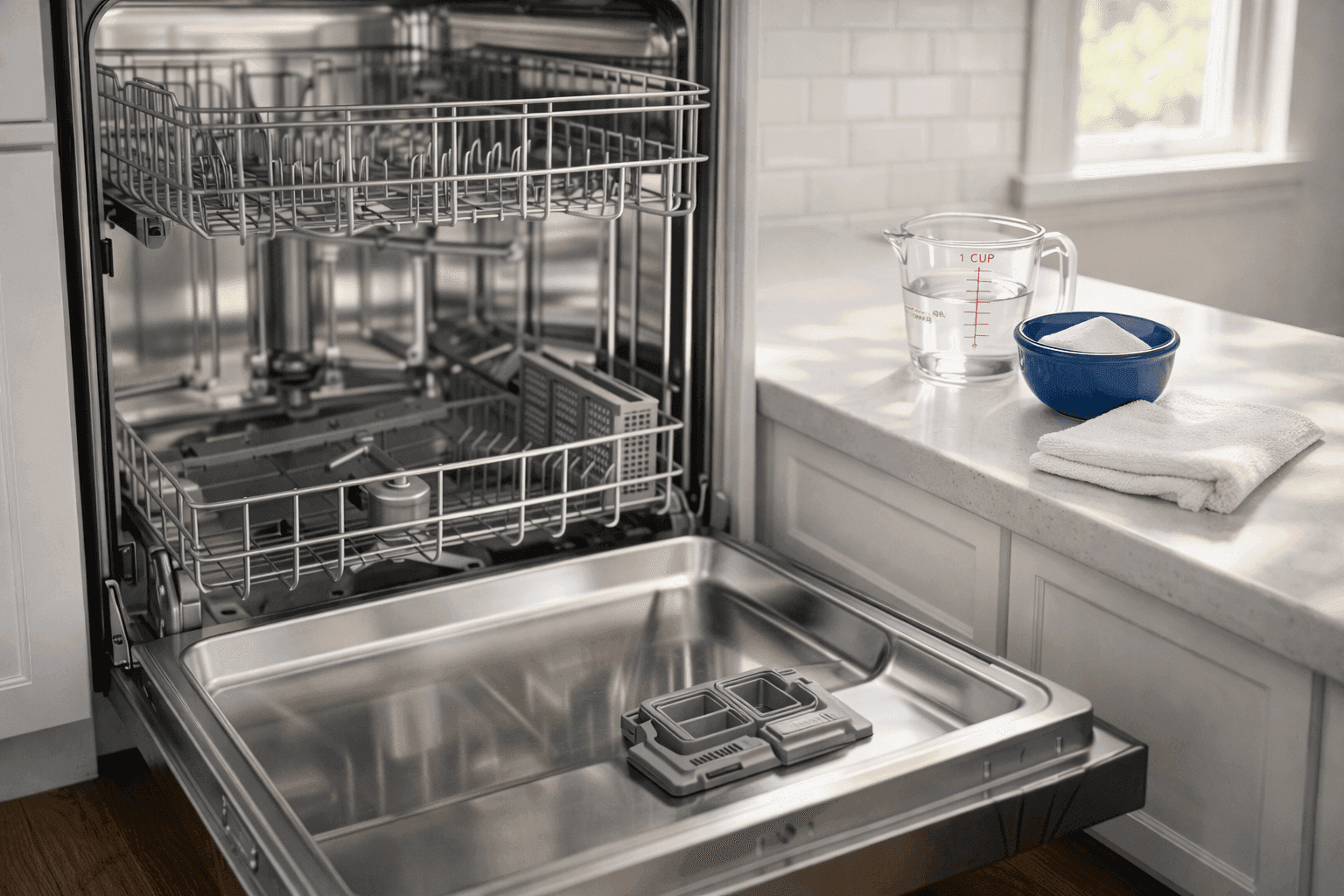
- Place a dishwasher-safe cup filled with 2 cups of white vinegar on the top rack, then run a complete hot water cycle to dissolve mineral deposits and sanitize every surface inside.
- Sprinkle 1 cup of baking soda across the bottom of the empty dishwasher once the vinegar cycle completes, letting it sit for 30 minutes to absorb lingering odors.
- Run a short hot water cycle with the baking soda still in place, which creates a gentle scrubbing action that brightens the interior and leaves everything smelling fresh.
- Reassemble the filter and spray arms, replace the racks, and run your next regular load to confirm you've restored that like-new cleaning power and eliminated every trace of funky odors.
Appliance technicians recommend performing this deep clean monthly if you run your dishwasher daily, or quarterly for lighter use—consistency prevents the kind of severe buildup that requires professional service. For particularly stubborn hard water stains on the interior, make a paste of baking soda and a few drops of water, apply it to stained areas, let it sit for 15 minutes, then scrub gently before running your vinegar cycle. If you live in an area with extremely hard water, consider adding a rinse aid to your regular routine and running the vinegar cycle every two weeks rather than monthly. The investment of literally pennies per cleaning prevents the $300-500 cost of premature dishwasher replacement caused by mineral buildup damaging internal components.