Step Up Your Style: Installing a Custom Stair Runner
Add color, pattern, and safety to your staircase with this high-impact update
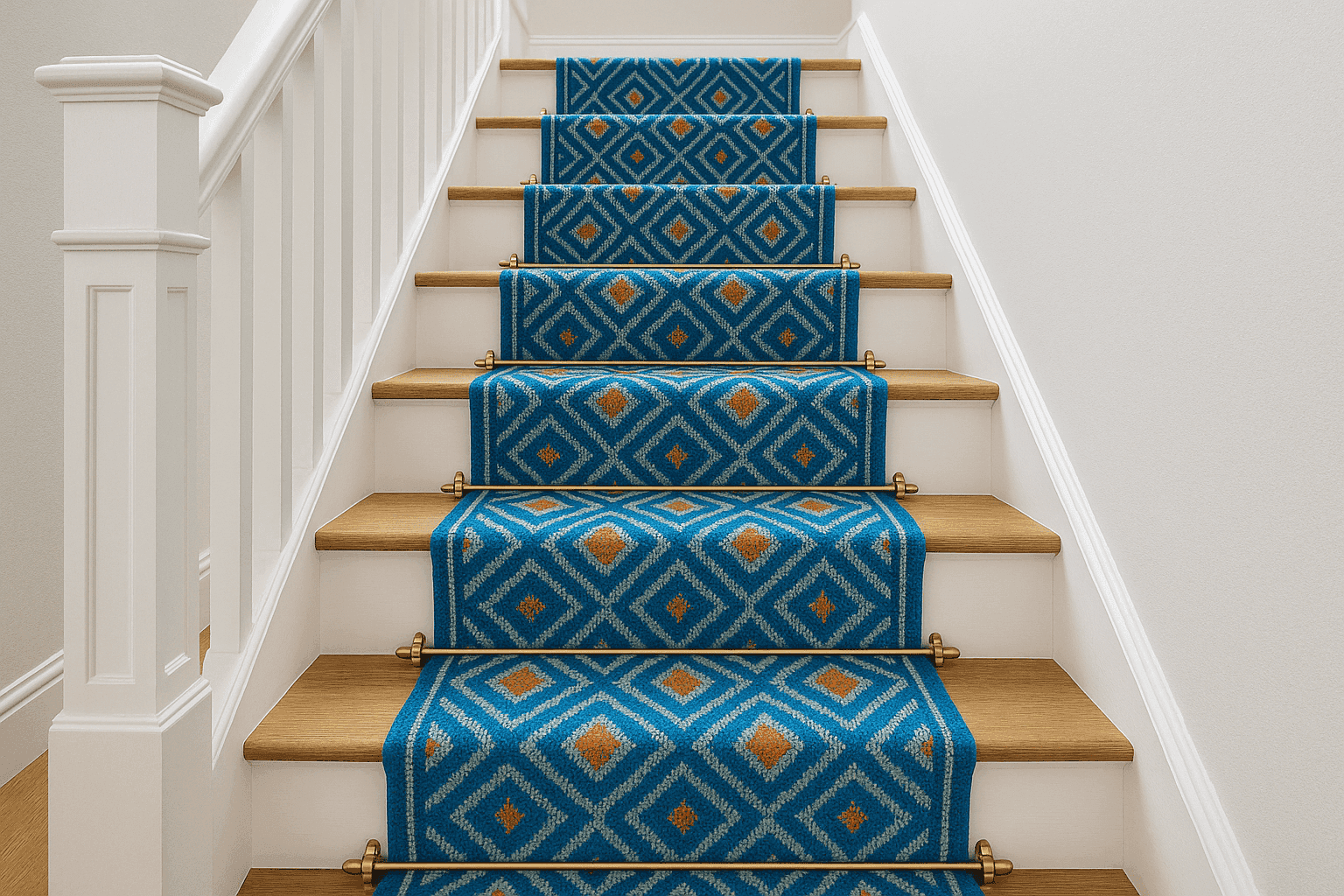
A stair runner is one of those rare home improvements that delivers on all fronts: it adds style, reduces noise, provides safety, and protects your stairs—all while being surprisingly DIY-friendly. By installing your own custom runner, you can choose exactly the pattern, color, and material that complements your home.
What You'll Need
| Carpet runner (measure staircase + 10% extra) |
| Rug pad (same width as runner) |
| Carpet tape (double-sided) |
| Staple gun (electric recommended) |
| 3/8" staples |
| Carpet knife or sharp utility knife |
| Measuring tape |
| Hammer (for tapping staples flush) |
| Painter's tape for marking |
How To Install It
- Prepare your stairs - Clean thoroughly and repair any damage. If painting, complete this before installation.
- Measure carefully - Measure the width of your stairs. Standard runners leave 3-4" of wood exposed on each side. Also measure the rise and run of each stair.
- Mark guidelines - Use painter's tape to mark where the edges of your runner will sit, ensuring it runs straight.
- Cut rug pad - Cut pieces of rug pad for each tread and riser, slightly smaller than your runner width.
- Secure rug pad - Attach rug pad to each tread with double-sided tape or staples.
- Start at the top - Begin installation from the top stair, centering your runner between your guidelines and leaving enough extra to wrap around the nosing.
- Work your way down - Staple the runner at the base of each riser, pull taut over the tread, and secure under the nosing of each step.
- Finish the bottom - At the bottom step, wrap the runner under and staple securely. Trim excess material with a sharp knife.
For a truly custom look, consider combining two narrower runners side by side with a small gap between them to create a border effect. Alternatively, use decorative stair rods or vintage carpet clips at the base of each riser to add a touch of elegance. When selecting your runner, flat weaves are easier to install than thick pile carpets, and patterns with a repeat can help you align the design consistently on each step.