Storage Revolution: Build Your Custom Closet System
Transform chaotic closets into organized sanctuaries with personalized storage solutions
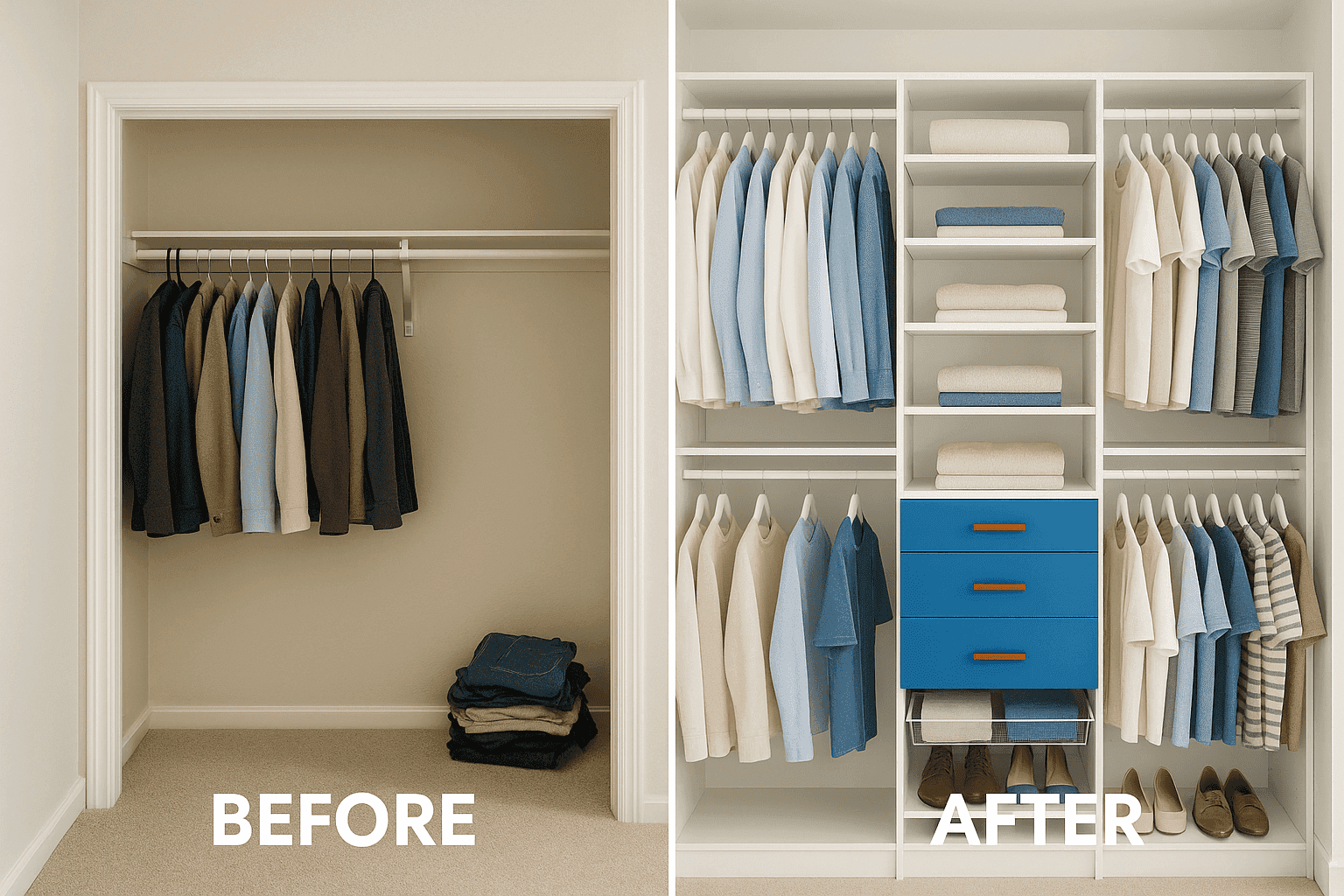
A well-organized closet transforms your daily routine, eliminating the frustration of searching for clothes and accessories while maximizing every inch of available space. While professional closet systems can cost thousands, creating your own custom solution offers comparable functionality at a fraction of the price. By designing around your specific storage needs and building with quality materials, you can craft a durable, personalized system that adapts to your changing wardrobe and lifestyle.
Materials & Components
| • Primary Structure: Plywood or melamine boards (¾") |
| • Support System: Wall cleats, standards, or brackets |
| • Hanging Components: Closet rods, rod supports |
| • Drawer Materials: Drawer slides, drawer fronts, handles |
| • Hardware: Screws, wall anchors, shelf pins |
| • Edge Finishing: Iron-on edge banding, wood trim |
| • Tools: Circular saw, drill, level, stud finder |
| • Safety Gear: Safety glasses, dust mask, gloves |
| • Finishing Supplies: Paint, primer, sandpaper |
Building Process
- Analyze your storage needs. Take inventory of your clothing and accessories. Measure lengths of hanging clothes (shirts, pants, dresses), count items requiring folded storage, and note specialty storage needs like shoes, ties, or jewelry.
- Measure your closet space. Record the dimensions: width, depth, height, and note any obstacles like vents, outlets, or sloped ceilings. Measure the door opening to ensure large components can be brought in during installation.
- Create a detailed design. Sketch your system, incorporating standard measurements: 84" from floor for double hanging rods, 42" for single rods, 14" minimum shelf depth, and 12-14" between shelves. Include roughly 24" of hanging space for shirts, 40" for dresses, and 50" for coats.
- Choose your construction method. Decide between:
- Floor-based system: Units rest on the floor, providing maximum stability for heavier items
- Wall-mounted system: Attached to wall cleats, creating a floating appearance and easier floor cleaning
- Track-based system: Uses vertical standards with adjustable brackets for maximum flexibility
- Prepare the closet. Remove existing shelving, patch and paint walls, and install any desired lighting upgrades before beginning construction. Consider painting the closet interior a light color to improve visibility.
- Cut materials precisely. Use a circular saw with a straightedge guide or have boards cut at your home improvement store. For melamine, use a blade designed for clean cuts in laminate to prevent chipping.
- Assemble basic units. Start with vertical dividers and fixed shelves to create the framework. Use pocket hole screws for invisible joinery or confirmat screws designed specifically for melamine and particleboard.
- Install support structure. Mount horizontal wall cleats into wall studs at appropriate heights to support your system. For track-based systems, ensure vertical standards are perfectly plumb for proper shelf alignment.
- Add functional elements. Install closet rods, adjustable shelving, and pull-out accessories like belt or tie racks. For drawers, assemble boxes carefully, ensuring they're square before attaching drawer slides.
- Finish all exposed edges. Apply iron-on edge banding to raw plywood or melamine edges for a professional appearance. Trim with a sharp utility knife and sand smooth if needed.
- Add final touches. Install drawer fronts, cabinet doors, and decorative hardware. Add specialized organizers like shoe racks, jewelry trays, or hampers to complete your custom system.
For maximum versatility, design your closet with adjustability in mind. Consider installing two rows of holes for shelf pins along vertical surfaces, allowing shelving heights to be modified as your storage needs change. When planning drawer placement, position frequently used items between waist and shoulder height for easiest access, with less-used items stored higher or lower. For visual appeal in walk-in closets, incorporate one signature design element—perhaps a distinctive hardware style, an accent color on the back wall, or a central island with a contrasting countertop—transforming your closet from purely functional to professionally designed.