Strategic Mirror Placement for Light, Space, and Style
Harness the design power of mirrors to transform your rooms visually and functionally
Mirrors are among the most versatile and powerful tools in interior design, offering both practical function and decorative impact. Beyond their obvious utility, strategically placed mirrors can visually double your space, amplify natural light, highlight architectural features, and serve as striking focal points. With thoughtful selection and placement, mirrors can transform challenging rooms—making small spaces feel expansive, dark corners brighter, and ordinary walls extraordinary.
Mirror Options & Styles
| • Oversized leaning floor mirrors |
| • Decorative framed statement mirrors |
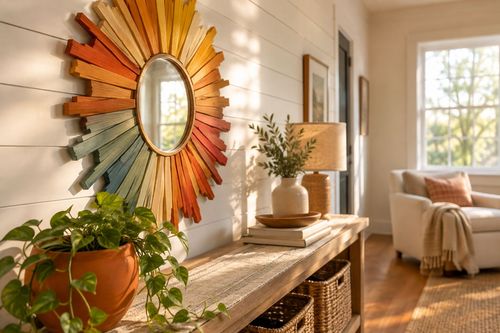
| • Sunburst or starburst designs |
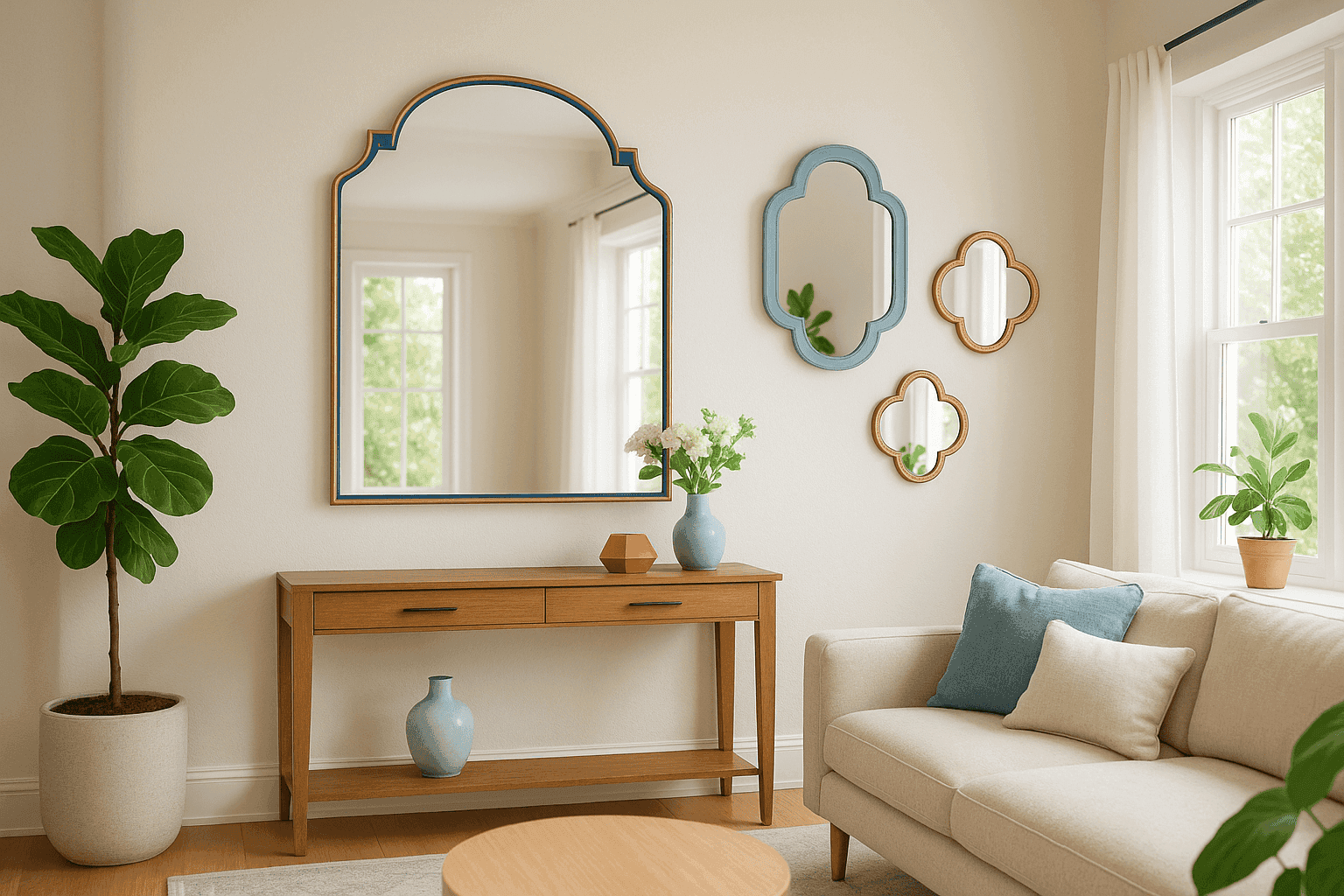
| • Mirror gallery walls |
| • Architectural window-style mirrors |
| • Antiqued or foxed glass mirrors |
| • Tinted mirrors (smoke, bronze, gold) |
| • Full-wall mirror applications |
Strategic Placement
- Maximize natural light: Position mirrors directly across from windows to bounce daylight deeper into the room. For maximum effect, the mirror should be large enough to capture most of the window's reflection and be placed at a height where it will reflect the light rather than just the window frame.
- Expand narrow spaces: In hallways or tight rooms, place a mirror along the longest wall to create the illusion of width. For dining rooms, consider a mirror that reflects the table to visually double your entertaining space and chandelier sparkle.
- Create a focal point: Use a statement mirror with an interesting frame or shape above mantels, console tables, or beds in place of artwork. Choose a size proportional to the furniture it's complementing—generally 2/3 to 3/4 the width of the piece below it.
- Highlight architectural features: Position mirrors to reflect interesting architectural elements like crown molding, exposed beams, or statement light fixtures to maximize their visual impact in the space.
- Consider reflections carefully: Be strategic about what your mirror will reflect—aim to capture attractive views, artwork, or light sources rather than clutter or blank walls. The reflection is effectively another "window" into your space.
For a designer-worthy mirror wall, mix mirrors of different shapes and frames within a cohesive color palette rather than using matching pieces. Group odd numbers of mirrors (3, 5, 7) for the most visually appealing arrangement. When working with oversized mirrors, consider their installation carefully—large mirrors are heavy and require proper wall anchoring or professional mounting. For budget-friendly transformations, explore thrift stores and estate sales for unique mirror frames that can be easily refreshed with paint. If the mirror glass is flawless but the frame is dated, a coat of spray paint in a contemporary metallic finish can completely transform its look.