Sunlit Sanctuary: Building a Custom Window Bench
Transform underutilized window space into a comfortable reading nook with hidden storage
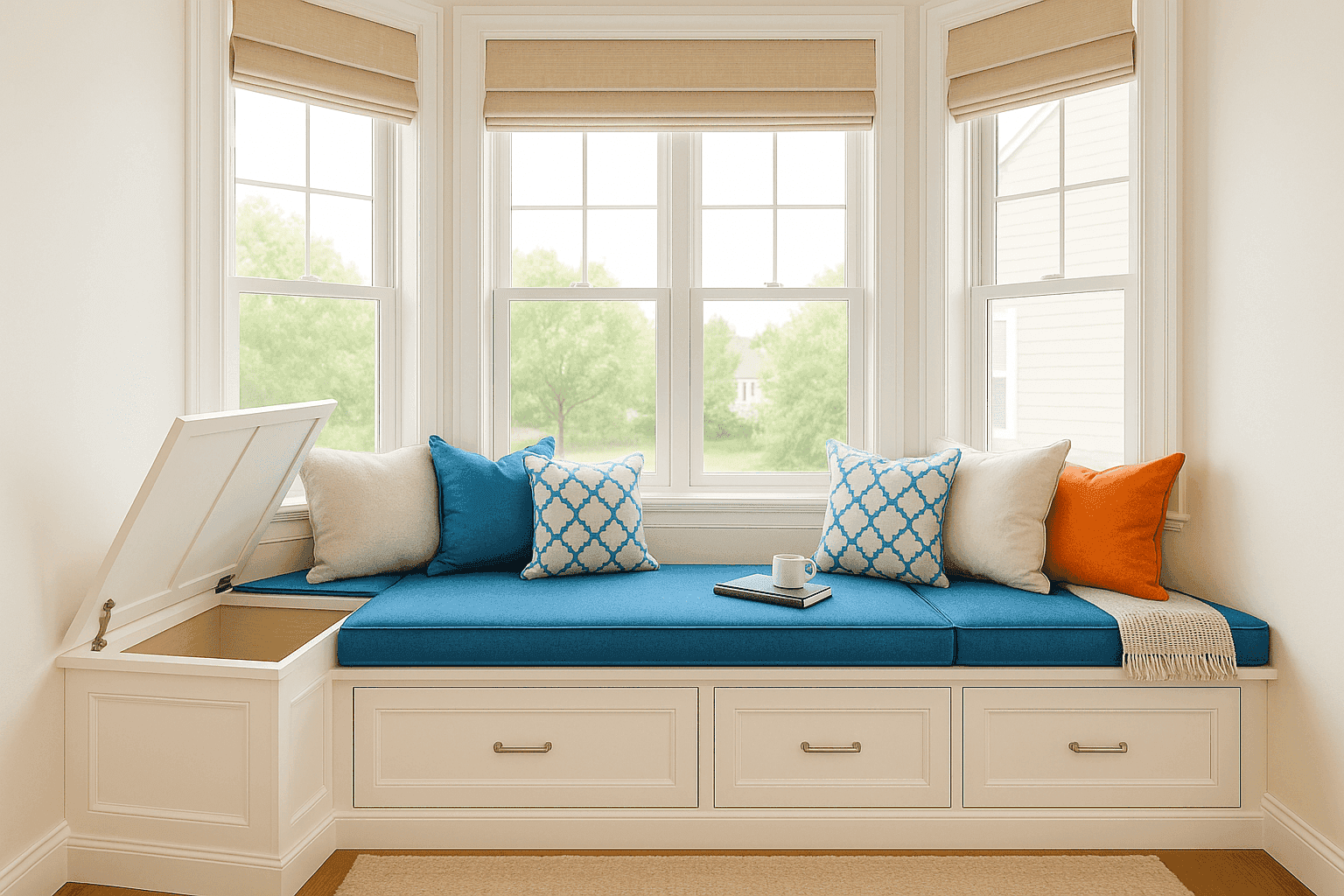
Window benches transform underutilized space into cozy retreats while adding architectural interest and valuable storage to any room. Whether built into a bay window, beneath a picture window, or along a dormer, these custom seating areas create inviting spots for reading, relaxing, or simply enjoying the view. With basic carpentry skills and thoughtful planning, you can create a window bench that serves as both a functional storage solution and a charming focal point that enhances your home's character.
Materials & Components
| • Framework: 2x4s for base structure |
| • Bench Surface: ¾" plywood for sturdy seating |
| • Face Materials: ½" plywood, beadboard, MDF |
| • Storage Options: Hinges, lift supports, drawers |
| • Decorative Elements: Trim, molding, paneling |
| • Fasteners: Wood screws, finish nails, brackets |
| • Tools: Circular saw, drill, level, stud finder |
| • Comfort Elements: Foam, batting, fabric, cushions |
| • Finishing Materials: Primer, paint, caulk, wood filler |
Construction Process
- Measure and design your space. Determine the length, depth, and height of your bench. Standard dimensions include:
- 16-18 inches for comfortable seating height
- 16-20 inches for adequate depth (deeper for lounging)
- Length determined by your window dimensions
- Plan your storage approach. Decide between:
- Lift-top bench: Simplest design with maximum storage
- Cabinet doors: Easier access without removing cushions
- Drawers: Most convenient but more complex to build
- Prepare the area. Remove baseboards in the installation area and locate wall studs. Mark stud positions with painter's tape for reference during construction.
- Build the base frame. Create a sturdy framework using 2x4s, with vertical supports every 16-24 inches. For a built-in look, secure the frame directly to wall studs on two or three sides. For freestanding benches, construct a four-sided frame with corner braces.
- Address existing obstacles. Work around heating vents by either relocating them to the front of the bench or creating a channel within the bench structure to maintain airflow. Leave access panels for electrical outlets if needed.
- Install the bench top. Cut ¾" plywood to size for the seating surface. For lift-top storage, attach using hinges along the back edge. For fixed tops, secure directly to the framework using screws from underneath.
- Create the face frame. Build a face frame using 1x2s or 1x3s to match your home's existing trim style. For drawer installations, plan precise openings according to drawer dimensions.
- Add decorative elements. Install beadboard, paneling, or trim to the front face for visual interest. Consider adding decorative corbels underneath the bench top or including details that match existing architectural elements in your home.
- Install storage components. For lift tops, add gas pistons or lid supports to prevent slamming. For drawers, install drawer slides according to manufacturer's instructions. For cabinet doors, attach using concealed hinges for a clean look.
- Apply finishes. Fill nail holes with wood filler and sand all surfaces smooth. Caulk gaps and joints, then prime and paint to match your room's décor or existing trim color.
- Create comfortable cushions. Measure your completed bench and cut foam to size, typically 2-4 inches thick for adequate comfort. Layer with batting for a softer appearance, then wrap with durable, washable fabric secured using a staple gun on the underside.
- Add finishing touches. Complete your window bench with accent pillows, throw blankets, and perhaps integrated lighting for evening reading. Consider adding electrical outlets within the bench if permitted by local building codes.
For a truly custom window bench that looks professionally designed, continue architectural elements from your room into the bench construction. If your room has board-and-batten walls, incorporate matching battens into the face of your bench. For multiple cushions, consider using French mattress-style cushions with tufting and boxing for a high-end look that doesn't slide around. When selecting fabric, choose indoor/outdoor materials in darker colors or patterns that hide stains, especially in high-traffic areas or homes with children and pets. This practical approach extends the life of your cushions while maintaining your window seat's appeal.