Test Holiday Lights Now to Avoid Decorating Day Disasters
Check every strand for dead bulbs and safety issues before climbing ladders so decorating day runs smoothly
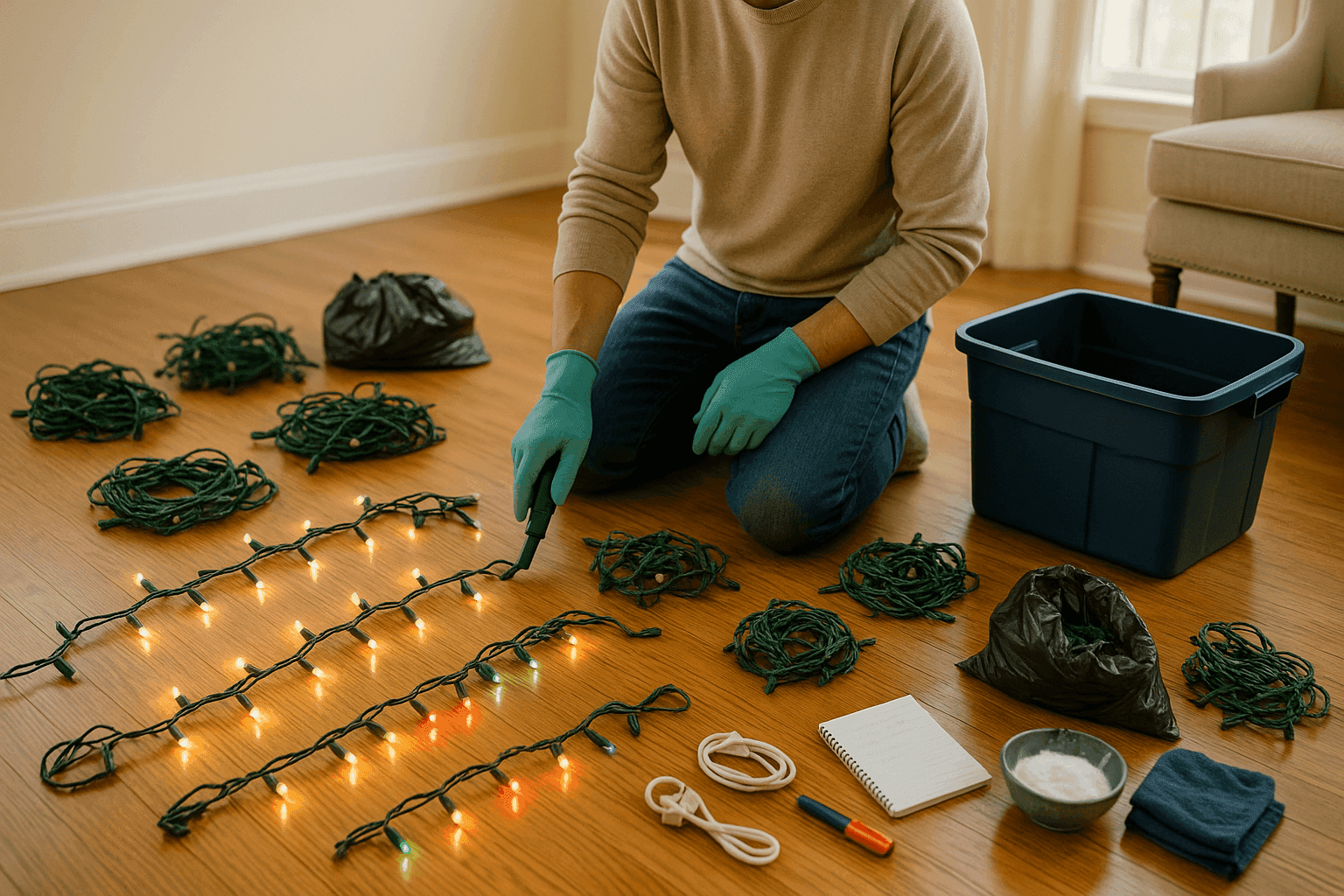
I will never forget the Christmas I spent three hours meticulously hanging lights across my roofline only to discover when I plugged them in at dusk that an entire section was dead—a soul-crushing moment that meant either living with half-dark eaves or climbing back up the ladder to troubleshoot and replace strings in the cold and dark. Testing every light strand before decorating day is the unglamorous prep work that saves enormous frustration, wasted time, and potential safety hazards from faulty wiring discovered only after strings are already hung. This pre-season check takes 1-2 hours depending on your collection size but prevents the cascading disasters of discovering problems mid-decoration when you're already committed, cold, and running out of daylight. The process costs nothing if your lights are fine, or flags exactly which strands need replacing so you can make one strategic shopping trip rather than multiple emergency runs after stores have been picked clean of popular styles. I now religiously test lights the weekend after Thanksgiving while I'm still indoors and motivated, creating piles of "works perfectly," "needs new bulbs," and "retire immediately"—this triage system means decorating day becomes efficient installation rather than frustrated troubleshooting. Beyond preventing decoration-day meltdowns, pre-testing identifies genuine safety issues like frayed wires, cracked sockets, or damaged plugs that could cause fires or electrical shocks once powered up outdoors in wet weather conditions.
What You'll Need
- Testing Supplies:
- All stored holiday light strings
- Multiple extension cords for reaching outlets
- Large floor space for laying out strands
- Masking tape and marker for labeling
- Trash bags for disposing damaged strings
- Replacement Parts:
- Replacement bulbs matching your light types
- Light tester tool for finding dead bulbs
- Fuses for strings with replaceable fuses
- Wire cutters for trimming frayed sections
- Electrical tape for minor repairs
- Safety Check Items:
- Reading glasses if needed for close inspection
- Flashlight for examining wire insulation
- Notepad for tracking what needs purchasing
- Organization Tools:
- Plastic bins or bags for storing good strands
- Cord winders or cardboard for neat wrapping
- Labels for identifying indoor vs outdoor
- Total Cost: $0-40 depending on replacements needed
Testing Steps
- Gather all strings from storage locations, bringing every strand to one large testing area where you can spread them out completely and reach outlets easily. This centralized approach prevents the frustration of multiple trips to storage and ensures nothing gets overlooked or forgotten.
- Inspect before plugging in by carefully examining each strand's entire length for obvious damage—cracked or missing bulbs, exposed wires, damaged sockets, melted insulation, or corroded plugs. Any visible damage means immediate retirement regardless of whether lights actually illuminate when tested.
- Test each strand individually by plugging into a working outlet and confirming that all bulbs illuminate properly, not just checking that some lights work. A partially lit strand with a dead section often indicates problems that will worsen once exposed to outdoor conditions and temperature fluctuations.
- Identify dead sections using a light tester tool if portions of a strand remain dark, which helps locate the specific failed bulb preventing current flow to subsequent lights in series wiring. Replacing that single culprit bulb often revives an entire section instantly.
- Check for flickering by watching each lit strand for 2-3 minutes, noting any intermittent flickering or dimming that indicates loose connections or failing components. Flickering lights that seem fine initially often fail completely once subjected to outdoor temperature swings and wind movement.
- Test outdoor rating by verifying that strings intended for exterior use are clearly marked for outdoor application and have proper weatherproof connections. Using indoor-only lights outside is a genuine fire and shock hazard that insurance won't cover if something goes wrong.
- Create sorting piles by separating tested strings into three categories: perfect working condition, repairable with new bulbs or fuses, and unsafe for any use requiring immediate disposal. This triage system prevents decision paralysis later and creates clear action items for each category.
- Make replacement list noting how many strands you're discarding and what specifications you need for replacements—length, bulb color, spacing, LED vs incandescent, indoor vs outdoor rating. Bring this list shopping to buy exactly what you need rather than guessing in the store.
- Repair what's fixable by replacing obviously dead bulbs, checking and replacing fuses in fuse-holder plugs, and making minor repairs to loose connections. However, be honest about when repair costs more time than replacement—your time has value, and new LED strands last years.
- Store properly after testing by wrapping working strands neatly around cord winders or cardboard, securing with twist ties, and labeling clearly with masking tape noting "tested/working," location intended for, and any special notes about length or issues to watch.
Professional holiday lighting installers and electricians have insider knowledge that can save homeowners hundreds in replacement costs and prevent dangerous situations. The most important tip: if you're replacing any strands, strongly consider upgrading entirely to LED lights despite higher upfront cost—they use 90% less energy, last 25 times longer than incandescent, stay cool to touch reducing fire risk, and don't blow fuses from overloading circuits when you connect multiple strands. Professional installers never exceed manufacturer specifications for connecting strings end-to-end (typically 3 strands maximum), because doing so creates fire hazards from overloaded wires even if your circuit breaker doesn't trip. For long-term storage that preserves light lifespan, wrap strands around purpose-made cord winders or even plastic clothes hangers rather than cramming into boxes where bulbs get crushed and wires get kinked. The pros also recommend photographing or sketching where each strand hangs on your home during takedown, labeling accordingly, so next year's installation becomes straightforward rather than puzzling out which length goes where. Finally, maintain a "replacement reserve" by purchasing one extra strand of your most-used type each year—when a strand fails mid-season, you'll have an exact match ready to install rather than settling for whatever mismatched option the store has left in stock.