Winter Prep: Replace Your Humidifier Filter in 20 Minutes
This simple annual maintenance prevents dry winter air while improving your heating system's efficiency
I spent years wondering why my skin felt like sandpaper every winter and my sinuses were constantly irritated, never connecting it to that crusty, mineral-caked humidifier filter quietly failing in my basement. Replacing your whole-house humidifier pad is one of those invisible maintenance tasks that dramatically affects your comfort but gets forgotten because it's tucked away where you never see it. This simple 20-minute job costs about $15-25 annually and prevents that miserable dry winter air that cracks your skin, aggravates respiratory issues, and makes your home feel colder than it actually is. Beyond comfort, a clean humidifier filter improves your furnace's efficiency by helping heated air feel warmer at lower temperatures—you can actually turn your thermostat down a degree or two when humidity levels are proper. I mark my calendar every October now, and the difference in winter comfort is so noticeable that I can't believe I neglected this task for so many years.
What You'll Need
- Replacement Filter:
- Humidifier pad/filter specific to your unit model
- Check manufacturer info on existing unit before buying
- Generic filters available but OEM parts fit best
- Costs $15-25 depending on brand and size
- Cleaning Supplies:
- White vinegar for mineral deposit removal
- Bucket or large bowl
- Soft brush or old toothbrush
- Clean rags or paper towels
- Spray bottle for applying vinegar solution
- Tools Required:
- Screwdriver (usually Phillips head)
- Flashlight for seeing inside unit
- Camera or phone for reference photos before disassembly
- Work gloves to protect hands from sharp edges
- Total Cost: $15-25 annually
Replacement Steps
- Turn off power to your furnace at the breaker box and shut off the water supply to the humidifier, usually via a small valve on the water line leading to the unit. Safety first means eliminating any risk of electrical shock or water spraying during disassembly.
- Locate your humidifier mounted on the side of your furnace ductwork, typically looking like a rectangular metal box with a small water line running to it. Take a reference photo of how everything connects before touching anything—this saves confusion during reassembly.
- Remove the cover by unscrewing or unclipping the front panel according to your model's design, setting screws in a safe place where they won't roll away and disappear. Some units have covers that simply slide off once you locate the release mechanism.
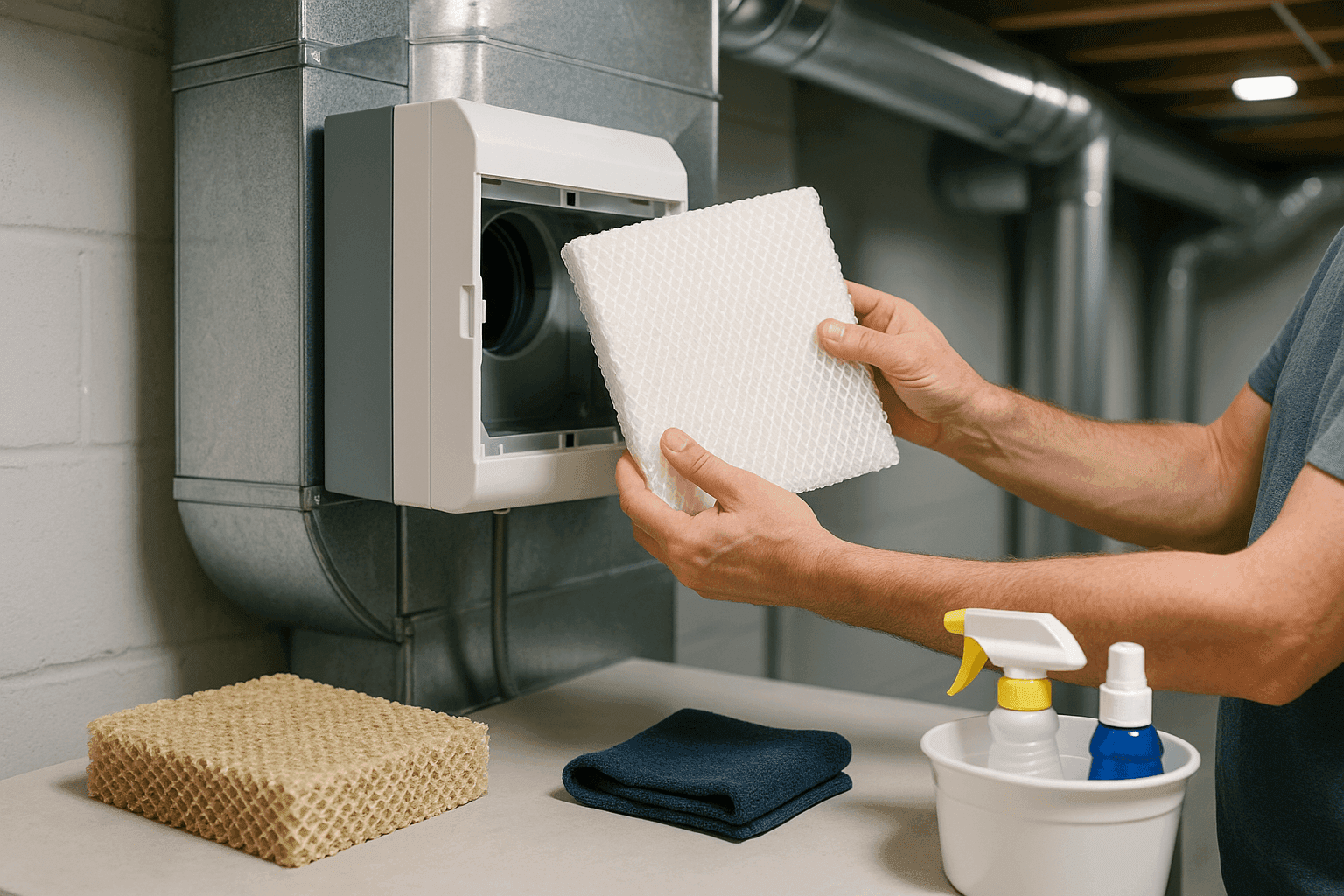
- Extract the old filter by sliding it out of the frame, noting which direction it faces and how it sits in the mounting brackets. Don't be surprised if it's crusty, discolored, and generally disgusting—that's exactly why you're replacing it before another winter of poor performance.
- Clean the housing thoroughly by spraying with white vinegar solution and scrubbing away mineral deposits, scale, and buildup from the water reservoir and distribution tray. This step is crucial because a clean housing makes your new filter last longer and work more efficiently.
- Inspect water components including the float valve, distribution tubes, and drain line for any clogs or damage that could affect performance. Clear away any mineral buildup or debris—these components need to function properly for the humidifier to work at all.
- Install the new filter by sliding it into the frame in the same orientation as the old one, making sure it seats fully in the mounting brackets and sits level in the water reservoir. A properly positioned filter ensures even water distribution and maximum humidification efficiency.
- Reassemble and test by replacing the cover, turning water supply back on, and checking for leaks before restoring power and running a test cycle. Adjust the humidistat setting to 35-45% relative humidity for optimal winter comfort without condensation problems on windows.
HVAC professionals recommend going beyond basic filter replacement by doing a complete system evaluation while you have the unit open. Check the humidistat calibration by comparing it to a separate hygrometer reading—these controls drift over time and may be calling for humidity levels that are too high (causing window condensation and potential mold) or too low (defeating the humidifier's purpose). Also inspect the furnace filter at the same time, since a clogged furnace filter reduces airflow and makes your humidifier work harder to achieve proper moisture levels. Professional technicians often suggest upgrading to higher-quality aftermarket filters with antimicrobial coatings if you have hard water—they last longer and resist mineral buildup better than standard pads, making this annual maintenance task even easier next year.